

Key takeaways
- Head shape: Brands run intermediate oval, round or long oval. Reviewers describe the Schuberth C5 as an intermediate oval, for example. Try helmets on for at least ten minutes.
- Sizing: Measure the head around the brow and compare it to the maker’s chart. A helmet should be snug, with no pressure points.
- Comms slots: Many models are comms-ready, but not every intercom fits every helmet. Check the intercom maker’s compatibility list.
- Glasses: Modular helmets make glasses easy to wear, but check eyewear channels.
- Visor system: Pinlock-ready means the visor accepts an anti-fog insert, which may be sold separately.
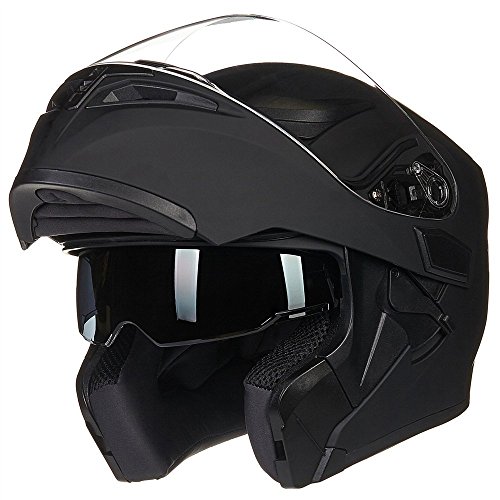
The best modular motorcycle helmet for most riders in 2026 is the Shoei Neotec 3 for all-round commuting and touring, the Schuberth C5 for riders who put quietness first and accept a premium cost, the HJC RPHA 91 for a composite shell at a lower tier, and the HJC i100 or LS2 Advant X for riders on a tighter budget. Pick by head shape, certification, weight and how you plan to use the chin bar, not by looks.
Our top picks


As an Amazon Associate we earn from qualifying purchases at no extra cost to you.
What a Modular Helmet Is and Who Needs One
A modular, or flip-up, helmet has a chin bar that rotates up so you can talk, drink, refuel or put on glasses without removing the helmet. That convenience attracts commuters, touring riders, riders who wear glasses and anyone who stops often. The trade-off is more moving parts, usually more weight and often more wind noise than a full-face lid. A full-face helmet is generally simpler and lighter, so a modular is a choice for convenience, not a safety upgrade.
Safety certification matters. Under the ECE 22.06 standard, some modular helmets carry both P and J homologation, meaning they are tested for protection with the chin bar closed (P) and, in the J case, as an open-face helmet. Makers such as Schuberth, Shoei and AGV state dual P/J homologation for their flagship models. A helmet that is certified only for use closed should never be ridden with the chin bar up. Always ride with the chin bar locked unless the manual states otherwise.
At a Glance: Helmets Compared
| Helmet | Best for | Key stated specs | Budget tier | Limits |
|---|---|---|---|---|
| Schuberth C5 | Quiet touring | Maker lists first flip-up with P/J dual homologation under ECE 22.06; fibreglass shell with carbon; 85 dB(A) at 100 km/h per the maker; about 1660 g in size 59; two shell sizes; pre-wired for comms | Premium | Heavier on larger sizes; reviewers note the sun visor can drop suddenly |
| Shoei Neotec 3 | All-round commuting and touring | ECE 22.06 with P/J homologation; drop-down sunshield; three shell sizes; reviewers measured about 1715 to 1750 g in medium | Premium | Wider than the Neotec 2; some reviewers find the faceshield hard to lock |
| HJC RPHA 91 | Composite shell at a lower tier | DOT and ECE 22.06; composite shell; drop-down sun visor; Pinlock-ready; about 1730 g | Mid-range to premium | Chin bar lock can be finicky with gloves, per one reviewer |
| AGV Tourmodular | Touring with a carbon blend | ECE 22.06, P and J; carbon, aramid and fibreglass shell; maker claims 1620 g for the smallest shell | Premium | Aftermarket comms are tricky; visor latch takes practice |
| HJC i100 | Budget flip-over | Polycarbonate shell; full-rotation chin bar; ECE 22.06 certified per reviewers; sun visor; Pinlock-ready | Budget to mid-range | Weight figures vary between sources |
| LS2 Advant X | Budget with dual visors | Listed at about 1600 g; 180-degree flip-back chin bar; dual visors; Pinlock-ready | Budget to mid-range | Slightly bulky shape, per one roundup |
| Sena Impulse | Built-in intercom | Mesh intercom, Harman Kardon speakers, retractable sun visor, integrated tail light; group mesh up to 24 riders per the maker | Mid-range to premium | Heavy at about 5 lb 10 oz per one retailer; ECE status unclear in listings |
The Premium Group
Schuberth C5
The C5 is regularly described by reviewers as the quietest modular on sale. Schuberth states 85 dB(A) at 100 km/h, and its dual P/J homologation under ECE 22.06 is listed as a first for a flip-up. The shell uses direct fibre processing with carbon reinforcement, and the helmet comes pre-wired for a communication system. The weight on the maker’s page is about 1660 g in size 59 and 1810 g in size 61, so larger heads feel more of it. The C5 is an excellent fit for long highway days. The drawbacks are the cost and a sun visor that one review says may drop suddenly.
Shoei Neotec 3
The Neotec 3 is often named as the best all-round street and commuter pick. It updates the Neotec 2 to ECE 22.06, keeps P/J homologation, adds a slightly taller drop-down sunshield and uses three shell sizes. Reviewers measure a medium at roughly 1715 to 1750 g and describe it as heavy but tolerable. One review reports it scored well in SHARP testing, while noting the chin guard stayed locked in most but not all tests. Fit is key: because ECE 22.06 made helmets bigger, it is noticeably wider than before, so try it on if possible. Some riders say the faceshield occasionally does not lock with an audible click.
AGV Tourmodular
AGV claims 1620 g for the smallest shell size, and reviewers’ measured mediums land close to 1665 to 1703 g. The shell blends carbon, aramid and fibreglass and the helmet is homologated for both P and J use. Reviewers praise the chin bar fastening and sunshield coverage. The negatives are that fitting aftermarket comms is awkward and the visor latch has a learning curve. It suits riders who value light weight in a premium modular.
The Value and Budget Group
HJC RPHA 91
This model has a composite shell, a drop-down sun visor, Pinlock readiness and ECE 22.06 certification. One ranking reports it as very quiet for a modular at about 96 dB at highway speeds, though measurement methods differ between outlets so do not compare numbers across tests. It is heavier than the Schuberth and Shoei in some listings at about 1730 g. A reviewer says the chin bar lock can be finicky with thick gloves.
HJC i100
The i100 is a polycarbonate-shell flip-over with a full-rotation chin bar. One review reports it as the first flip-over helmet to be ECE 22.06 certified. It includes a sun visor and a Pinlock-ready shield. Weight claims range from about 1459 g from the maker to roughly 1.9 kg from a reviewer, so sizes and test conditions matter. It suits riders who want a lower budget with core features.
LS2 Advant X
Listed at about 1600 g, the Advant X is one of the lighter models, with a 180-degree flip-back chin bar and two visors. Reviewers describe the noise level as good and the shape as slightly bulky.
Sena Impulse
The Impulse is for riders who want communications built in. It has a mesh intercom, Bluetooth, Harman Kardon speakers and a retractable sun visor. Group mesh supports up to 24 riders, according to the brand. It is heavy, and listings are not consistent about whether it carries ECE 22.06, so read the label and the manual before buying if that certification matters to you.
Fit, Size and Comms Compatibility
- Head shape: Brands run intermediate oval, round or long oval. Reviewers describe the Schuberth C5 as an intermediate oval, for example. Try helmets on for at least ten minutes.
- Sizing: Measure the head around the brow and compare it to the maker’s chart. A helmet should be snug, with no pressure points.
- Comms slots: Many models are comms-ready, but not every intercom fits every helmet. Check the intercom maker’s compatibility list.
- Glasses: Modular helmets make glasses easy to wear, but check eyewear channels.
- Visor system: Pinlock-ready means the visor accepts an anti-fog insert, which may be sold separately.
Safety and Care Notes
Replace any helmet after a crash, even if it looks fine, and generally follow the maker’s replacement interval, which is often around five years. Do not use solvents or paint on the shell. Clean with mild soap and water. Never ride with the chin bar open unless the helmet is certified for it and the manual allows it. If you are unsure about certification or fit, ask a dealer who fits helmets.
Pick X If… Decision Table
| Pick this | If you want | Why |
|---|---|---|
| Schuberth C5 | The lowest noise on long rides | Maker lists 85 dB(A) at 100 km/h |
| Shoei Neotec 3 | One helmet for every ride | P/J homologation, ECE 22.06, drop-down sunshield |
| AGV Tourmodular | Lighter premium touring | Carbon blend, claimed 1620 g smallest shell |
| HJC RPHA 91 | A composite shell for less | ECE 22.06 and sun visor |
| HJC i100 | The lowest cost with ECE 22.06 | Flip-over chin bar, Pinlock-ready |
| LS2 Advant X | Dual visors on a budget | Listed around 1600 g |
| Sena Impulse | Built-in group intercom | Mesh and Bluetooth in one |
Budget Tiers
- Budget tier: HJC i100 and LS2 Advant X. Good for new riders and short commutes.
- Mid-range tier: HJC RPHA 91 and the Sedici Sistema 3, which reviewers list as ECE 22.06 with stainless steel visor components.
- Premium tier: Schuberth C5, Shoei Neotec 3 and AGV Tourmodular.
Alternatives
Adventure modular. The Scorpion EXO AT960 is named by one roundup for riders who want a peak visor and a dual-sport look. Full-face helmets. They are usually lighter and quieter if you do not need a flip-up chin bar. Dual-sport open-face. Offers airflow but gives less facial protection, so many riders choose full coverage.
Frequently Asked Questions
Are modular helmets as safe as full-face helmets?
A certified modular helmet passes the same standards when the chin bar is closed, but its hinge and lock add complexity. Full-face helmets are simpler, and some riders prefer them for that reason. Check that the helmet carries the certification for your region.
What does P/J homologation mean?
It means the helmet is tested both as a full-face (P) and as an open-face (J) helmet. Only helmets with both ratings are approved for riding with the chin bar up, and only when the manual says so. Without it, ride with the chin bar locked.
Which modular helmet is quietest?
Reviewers often name the Schuberth C5, which the maker lists at 85 dB(A) at 100 km/h. Test methods vary, so comparisons between outlets are rough. Wearing earplugs also helps protect hearing.
Are modular helmets heavier?
Generally yes, because of the hinge and extra hardware. Premium models measure around 1.6 to 1.75 kg in medium. The weight range depends on size and shell material.
How do I choose the right size?
Measure your head, compare with the maker’s chart and try the helmet on. It should feel snug without pressure points. Brands differ in head shape, so a size medium in one brand may fit differently in another.
When should I replace my helmet?
Replace it after any crash or heavy impact and follow the maker’s guidance on age, often about five years. Damage may not be visible. Store it away from heat and chemicals.






Write Your Review
No reviews yet. Be the first to share your experience!