

Key takeaways
- Five low-profile earbuds that fit under a motorcycle helmet, from earplug hybrids with rated noise reduction to in-ear monitors for music and GPS audio.
Most earbuds were designed for trains and offices, not for the inside of a full-face helmet. Anything with a stem, a chunky charging-case shape, or a housing that sits proud of the ear turns into a pressure point within a few miles and gets dragged halfway out when the helmet comes off. Earbuds that work on a bike share a different set of traits: a flush, in-ear fit, tips that seal like earplugs, and cables or neckbands that route out of the way instead of fighting the liner.
This guide covers five low-profile in-ear models that riders actually use under helmets. Three are earplug-earbud hybrids with certified noise reduction ratings, built for riders who want hearing protection and audio in one piece of gear. The other two are slim in-ear monitors borrowed from the stage world, where a low-profile shell and over-ear cable are standard. None of them is a helmet speaker kit and none is a plain earplug; each one plays music, navigation prompts, or calls while sitting inside the ear.
As an Amazon Associate, we earn from qualifying purchases.
Quick answer
For certified hearing protection with wireless audio, the Plugfones Liberate 2.0 is the most complete package, with rated noise reduction, a microphone, and a 12-hour battery. The ISOtunes PRO 2.0 adds output limiting and longer runtime. On a wire, the Plugfones Guardian is the simple protective pick, while the Shure SE215 PRO and MEE Audio M6 Pro suit riders who value sound quality over a formal rating.
Plugfones Guardian

The Guardian is where the earplug-earbud hybrid idea started: a wired earphone whose tips are genuine, rated earplugs. Plugfones lists noise reduction ratings of 23 dB with the silicone plugs and 26 dB with the foam plugs, and the set ships with one pair of each, so you can pick the seal you prefer. Because the earpieces are shaped like plugs rather than buds, they sit deep and flush inside the ear.
There is no battery to charge and no Bluetooth radio to pair. A reinforced 3.5 mm plug connects to a phone in a jacket pocket, a handlebar-mounted player, or a bike’s audio output with an adapter where needed. The cable has a double-reinforced jack and a management clip, and the kit includes a waterproof case that keeps the plugs clean in a tank bag or pocket.
The trade-offs are simple: this version is listen-only, with no microphone for calls, and the wire needs routing that will not snag when you turn your head. In return you get rated protection, a fit that survives helmet removal better than most buds, and nothing to remember to charge before a ride. For riders whose main worry is wind-noise fatigue on long highway days, the Guardian remains the straightforward answer.
Plugfones Liberate 2.0

The Liberate 2.0 takes the same earplug-first idea and cuts the cord to the phone. Bluetooth 5.0 connects to your handset while a short cable between the earpieces carries the battery and the QuickDraw control module, far easier to press with gloves than a button on an earbud housing. Plugfones rates battery life at up to 12 hours, enough for a full day of riding between charges.
Noise reduction is the headline: the foam plugs carry a 29 dB rating and the silicone plugs 27 dB, and both types are included, with two pairs of each in the box. An IsoTalk noise-isolating microphone handles calls and voice commands, and the SoundSeal design aims to keep wind roar from swamping the audio at speed, so you can run lower volume instead of turning everything up to compete with the road.
Fit under a helmet is good because the earpieces are the same plug shape as the wired Guardian. The cable and control pod sit below the helmet’s edge, so routing matters: most riders clip the pod inside a jacket collar. If you want protection, wireless audio, and phone calls from one low-profile set, this is the most rounded option here.
ISOtunes PRO 2.0
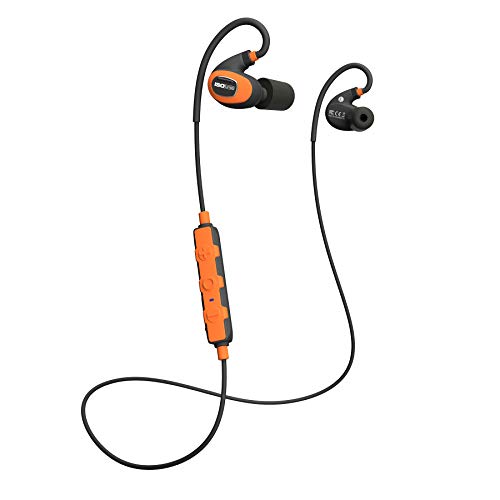
ISOtunes builds hearing protection for industrial work, and the PRO 2.0 shows it. The earbuds use heat-activated memory foam tips that expand in the canal like disposable foam plugs, giving an ANSI-certified 27 dB noise reduction rating. Bluetooth 5.0 with aptX handles the audio link, and the battery is rated for more than 16 hours of music and talk time.
The feature riders should notice most is SafeMax technology, which limits maximum output to 85 dB. Wind noise tempts everyone to nudge the volume up; a hard ceiling removes that risk. A noise-suppressing microphone with echo cancellation keeps calls usable, and the IP67 rating means dust, sweat, and rain are non-issues on a bike. Four sizes of foam tips plus a pair of triple-flange silicone tips are included for dialing in the seal.
The PRO 2.0’s earpieces ride on short cables from a neckband-style control section, which keeps the in-ear part small but means there is hardware resting on your collar under a jacket. Riders who already wear a neck gaiter or buff usually find it unobtrusive. For maximum certified protection with a volume limiter and the longest runtime in this group, the PRO 2.0 is the pick.
Shure SE215 PRO

The SE215 PRO comes from the stage-monitor world, where singers need a small earpiece that stays put under much worse conditions than a helmet. The single dynamic MicroDriver sits in a low-profile shell shaped to rest inside the ear bowl, and the cable routes up and over the ear with a formable memory wire. That over-ear routing is why the SE215 survives helmet fitting so well: there is nothing hanging down for the liner to catch.
Shure’s sound isolating design, which relies on a tight sleeve seal rather than electronics, blocks up to 37 dB of outside noise with the right tips. That is a manufacturer isolation figure, not a certified hearing-protection rating, and the distinction matters if rated protection is your priority. The fit kit includes foam and silicone sleeves in several sizes, and the detachable cable can be replaced on its own if it wears out.
Sound quality is the reason to choose it: clear, full audio that makes music and spoken navigation prompts easy to follow at moderate volume. There is no battery, no Bluetooth, and no microphone on the standard cable. As a wired, sound-first option that disappears under a helmet, it is hard to beat.
MEE Audio M6 Pro
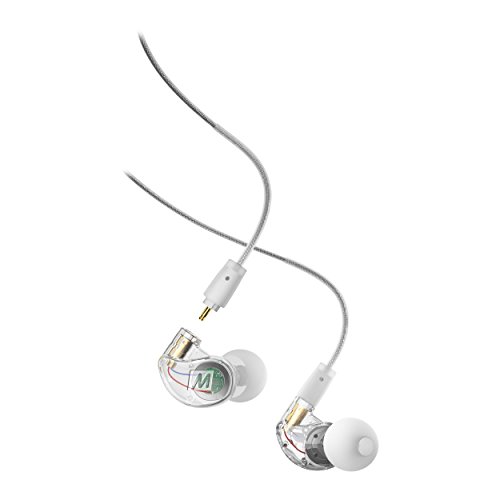
The M6 Pro, now in its second generation, is another stage monitor with the right shape for riding. The housings are slim and sit close to the ear, and flexible memory-wire earhooks keep them seated when a helmet liner slides past. Sealed in-ear construction plus the included Comply memory foam tips give strong passive isolation, backed up by six pairs of silicone tips for finding the right fit.
MEE includes two detachable cables in the box: a plain stereo cable and a headset cable with a microphone and remote for calls and media control. Both cables are replaceable, and the earpieces are sweat-resistant with an IPX5 rating, which suits summer riding. A carrying case and quarter-inch adapter round out the kit.
Like the Shure, the M6 Pro offers passive isolation rather than a certified noise reduction rating, so its hearing protection depends entirely on getting a deep, consistent seal with the foam tips. What it adds over the SE215 is the second cable with a microphone and a slightly more secure earhook fit. For riders who want one wired set for music, calls at stops, and navigation audio, it covers the bases well.
How to choose
Start with profile. The earbud must sit inside the ear bowl without protruding; if it sticks out past the ear, helmet padding will press on it, and the result is pain on long rides and a seal that breaks every time you move your head. Foam tips that compress for insertion and expand in the canal give the most reliable seal and the best isolation, while silicone tips are easier to clean and faster to fit.
Next, decide what kind of noise control you need. Earplug hybrids such as the Plugfones and ISOtunes models carry certified noise reduction ratings and are tested as hearing protectors, which matters on loud bikes and long highway stretches where wind noise alone can damage hearing over time. In-ear monitors such as the Shure and MEE isolate well but are not rated protectors, so treat their isolation as comfort, not certification.
Then choose wired or wireless honestly. Wired sets never need charging and cannot drop a connection, but the cable needs routing that will not snag. Bluetooth sets free the phone to stay in a pocket, yet add batteries and controls that must work with gloves. Finally, check the law where you ride: rules on earbuds and headphones while riding vary by state and country, and some allow only one ear. Whatever you choose, keep the volume low enough to hear traffic, sirens, and your own engine.
Who should skip
Skip earbuds entirely if you need rider-to-rider or rider-to-passenger intercom; that job belongs to a dedicated helmet Bluetooth system with helmet speakers, which is a different product category. Skip them if local law prohibits earbuds in both ears where you ride, and skip them if your helmet has generous speaker pockets and you already know you prefer speakers to anything in your ears.
Also think twice if you cannot get a consistent seal. Every design here depends on tips fitting your ear canals; ears that reject standard foam and silicone tips will get poor isolation and a loose fit. And if you ride in heavy city traffic and rely on fine auditory cues, consider whether any in-ear audio is appropriate at all, or limit it to navigation prompts at low volume.
FAQ
Are earbuds legal to wear while riding a motorcycle?
It depends on where you ride. Some states allow earbuds in both ears, some allow a single earbud only, and some prohibit them while operating a motorcycle; several countries restrict them as well. Check the current rules for your state or country before riding with audio in both ears, and follow the stricter rule when touring across borders.
Do earplug earbuds block out traffic noise completely?
No. Rated earplug earbuds reduce the overall sound level reaching your ear, much like ordinary earplugs, but they do not create silence. Sirens, horns, and nearby vehicles remain audible, especially at moderate volume. Their job is to cut the constant wind and engine roar that causes fatigue and hearing damage, not to seal you off from the road.
Will earbuds stay in place when I put my helmet on?
Low-profile designs with foam tips and over-ear or plug-style fits are far more likely to stay seated. Seat the earbuds first, then ease the helmet on while holding its straps wide so the liner slides past your ears instead of dragging across them. A thin skull cap or balaclava over the ears also helps keep everything in place during fitting.
Are earbuds or helmet speakers better for hearing protection?
For protection, earbuds win. Helmet speakers sit outside the ear and do nothing to reduce the wind noise reaching it, so riders often raise the volume to compete, which adds more sound exposure. Earplug-style earbuds reduce outside noise before it reaches the ear, which means clearer audio at lower, safer listening levels on long rides.
Final verdict
The right pick depends on what you ask the earbuds to do. For certified protection with wireless convenience, the Plugfones Liberate 2.0 is the most complete answer, and the ISOtunes PRO 2.0 is the better choice if you want a hard volume limit and the longest battery life. The wired Plugfones Guardian keeps things simple and protective for riders who dislike charging anything. If sound quality comes first and you understand the difference between isolation and a certified rating, the Shure SE215 PRO and MEE Audio M6 Pro are proven low-profile monitors that fit under helmets without a fight.
Product and ASIN Reference
| Product | ASIN |
|---|---|
| Plugfones Guardian | B00RC4OEO0 |
| Plugfones Liberate 2.0 | B074NDTR1D |
| ISOtunes PRO 2.0 | B081K6KPS2 |
| Shure SE215 PRO | B004V3Q1ZA |
| MEE Audio M6 Pro | B07B4PDF6K |
More from Amazon
Programs that pair well with the guide above. Offers and eligibility are set by Amazon and may change.
Free shipping on eligible items, Prime Video and more. Eligible new members can start with a free trial.
Start a Prime free trialA Prime membership for ages 18-24 with a trial period. Eligibility is set by Amazon.
See Prime for Young AdultsAudiobooks and podcasts to listen to on the go. Eligible new members can start with a free trial.
Try Audible freeAd-free music streaming. Eligible new subscribers can start with a free trial.
Try Music Unlimited freeAs an Amazon Associate we earn from qualifying purchases.


Write Your Review
No reviews yet. Be the first to share your experience!