

Key takeaways
- Compare five motorcycle steering dampers for cutting headshake and wobble, with guidance on length, brackets, click adjustment and fitment checks.
A steering damper is a small hydraulic unit that sits between the frame and the front end and slows down sudden handlebar movements before they grow into headshake or a full wobble. It does not steer the bike for you, and it cannot fix worn steering-head bearings or a bent wheel, but on a healthy motorcycle it adds a layer of calm at highway speed, over broken pavement and under hard acceleration. This guide compares five dampers that riders can actually buy today, from compact 10-inch universal units to a longer 13-inch option and a front-mount damper built for enduro and dirt bikes.
As an Amazon Associate, we earn from qualifying purchases.
Quick answer
Start with the damper length and mounting layout your bike can accept, then pick the adjustment style you prefer. The JFG RACING 10-inch suits most street and sport bikes, the Krace adds click-by-click tuning, the JFG RACING 13-inch gives longer-stroke leverage, the KIMISS ships with a bracket, and the PROOTOM front damper targets enduro and dirt machines with a wide numbered adjustment range.
JFG RACING 10-Inch Universal Steering Damper
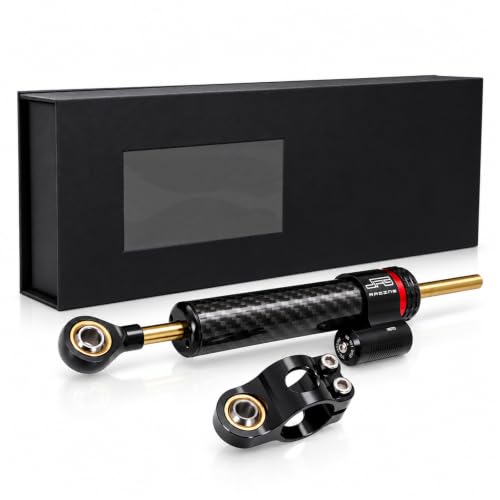
The JFG RACING 10-inch damper is the straightforward starting point for street and sport bike riders. The body is CNC machined from 6061-T6 aluminum with an anodized carbon fiber look finish, and the maker describes a complete damping system that uses speed-sensitive technology, so resistance builds as steering movement gets faster rather than fighting slow parking-lot turns. At roughly 1.1 pounds it adds little weight to the front end.
Fitment is listed as universal for most motorcycles, with sport and road racing bikes named as the design target. The important caveat is hardware: this damper ships without mounting brackets, so the damper alone is not a finished installation. Budget time to source a bracket that matches your frame and fork, and check clearance at full steering lock on both sides before the first ride. Riders who already have a bracket solution, or who are replacing a worn damper body of the same length, will find this the simplest swap in the group.
The finish deserves a note as well. The carbon fiber wording in the listing refers to the appearance of the anodized surface rather than a structural carbon body, so judge it as a styling choice. What matters mechanically is the machined aluminum construction and the maker claim of ultra-precise machining, which is what keeps the action consistent from one steering input to the next.
Krace CNC Steering Damper Stabilizer

The Krace CNC damper, model KX-ZNQ-024, is built around its adjuster. Instead of a smooth, unmarked dial, it uses precise clicks between settings, which makes it easy to return to a known setup after experimenting. Krace also describes speed-sensitive damping, so the unit is meant to stay light during slow steering and firm up when the bars get knocked at speed.
The body is T6061-T6 aluminum with a CNC finish, measures about 25.5 cm long, weighs 460 grams and uses a top-mount layout. Krace recommends it for motorcycles over 600 cc, which makes it a better match for middleweight and large sport bikes than for small commuters. Like the JFG unit, it arrives without a mounting kit or installation instructions, so it suits an experienced installer who is comfortable sourcing the correct top-mount bracket and confirming fork and tank clearance before ordering.
JFG RACING 13-Inch Universal Steering Damper

The 13-inch JFG RACING damper, model Y15180005, is the longer-stroke sibling of the 10-inch version. It shares the same CNC-machined 6061-T6 aluminum construction and anodized finish, and the extra length gives the damper more leverage over steering movement, which can suit larger sport bikes, aggressive street riding and fast, open corners where small inputs have more time to build.
That length is also the main reason to measure before buying. A 13-inch damper needs more room along the frame or fork than a compact unit, and it still ships without mounting brackets. Riders planning a custom installation, or replacing an existing long damper, get the most from this model. If your current setup is tight around the steering head, the 10-inch version is the safer fit. Weight is listed at about 1.41 pounds, and the maker describes adjustable, speed-sensitive damping aimed at reducing fatigue on longer rides.
KIMISS Steering Damper With Bracket

The KIMISS damper stands out in this group because the package includes a bracket alongside the damper, which removes one sourcing step that the other universal units leave to the buyer. The aluminum damper uses what the maker calls a linear reversed safety control layout with a complete, speed-sensitive damping system, and it is listed as a universal fit for most motorcycles.
There are still fitment homework items. KIMISS notes that old and new versions of the product may ship, and some motorcycles will still need a model-specific bracket for a correct installation, so treat the included bracket as a starting point rather than a guarantee. After fitting, turn the bars fully right and fully left and confirm the damper has room to work through its stroke without binding or contacting bodywork. For riders who want the fewest separate purchases, this is the most complete kit here, provided the bracket matches the bike.
PROOTOM Front Steering Damper Stabilizer

The PROOTOM front damper is the off-road pick. Built from CNC billet aluminum with an anodized gold finish, it mounts at the front of the bike and is aimed at enduro, pit and dirt machines, with the CRF, YZF, EXC, RMZ and KLX families named in the listing. At 14.4 ounces it is light enough for bikes where front-end weight matters on trails.
Its clearest advantage is the adjustment scale: damping can be set anywhere from 1 to 24, and the maker suggests choosing a setting based on the weight of the motorcycle and the speed being ridden. That numbered range makes experimentation repeatable, which trail riders changing between slow technical sections and fast open ground can use. Different models need different brackets, and the listing does not promise one in the box, so confirm the bracket for your exact bike before ordering. Street riders can use it too, but its front-mount, dirt-first design brief is what sets it apart.
How to choose
Start with fitment, not features. Measure the space where the damper will live, decide whether your bike takes a top-mount, side-mount or front-mount unit, and confirm that a bracket exists for your exact model and year. Universal fit describes the damper body, not the installation, and most units in this guide ship without brackets. A damper that cannot move through full steering lock without binding is worse than no damper at all.
Next, match length to the bike. Ten-inch dampers fit compact layouts and most street and sport bikes. A 13-inch damper adds leverage but demands more mounting room, so it belongs on larger bikes or planned custom installs. Then consider adjustment style. Click adjusters, like the Krace unit, and numbered ranges, like the PROOTOM scale from 1 to 24, make settings repeatable. Speed-sensitive designs aim to stay unobtrusive at low speed and resist fast, unwanted movement.
Finally, inspect the bike before blaming the steering. A damper manages symptoms; it does not repair them. Check tire condition and pressure, wheel balance, steering-head bearing play and suspension settings first. One more caution: a European safety alert in late 2026 recalled certain WP Suspension steering dampers because a screw connection could loosen and let the damper slip in its bracket. None of the five dampers in this guide is part of that recall, but it is a reminder to torque mounting hardware correctly and re-check it after the first rides.
Plan for upkeep as well. Every damper here works in a dirty, high-vibration environment, so put the mounting bolts on your regular inspection list alongside chain and tire checks. Wipe grit from the exposed shaft before it gets dragged past the seals, and treat any oil weeping, notchiness in the stroke or new free play at the mounts as a sign to service or replace the unit rather than turning the adjustment up to hide it.
Who should skip
Skip a steering damper if your motorcycle has a mechanical problem you have not diagnosed yet, such as worn steering-head bearings, a bent rim or cupped tires. Masking those faults delays the real repair. Also skip the universal units here if you are not willing to source and verify a model-specific bracket, since none of the JFG RACING, Krace or PROOTOM dampers includes one. Riders of small-displacement commuters should note that the Krace is recommended for bikes over 600 cc. And if your bike already has a well-set-up factory damper in good condition, an inexpensive universal replacement is unlikely to be an upgrade.
FAQ
Does a steering damper stop tank slappers completely?
No damper can promise that. A steering damper resists rapid handlebar movement and can calm the onset of headshake, but severe instability usually has an underlying cause such as tire, suspension or bearing problems. Treat a damper as added stability on a healthy bike, not as a cure for a mechanical fault.
Can I install a universal damper without a bracket?
No. The damper body needs a bracket that connects it to the frame and the fork or triple clamp. Most universal dampers, including several in this guide, are sold without that hardware. Confirm a bracket exists for your model before buying, and check full-lock clearance after installation.
What is the difference between 10-inch and 13-inch dampers?
The figure describes the damper length, which affects leverage and the mounting space required. A 13-inch unit can offer more control leverage on larger bikes but needs more room to operate. Length alone does not mean stronger damping, so choose based on your mounting layout and the maker specifications for your bike.
What does speed-sensitive damping mean?
It means the damper is designed to resist fast steering movements more strongly than slow ones. Gentle inputs, such as parking maneuvers, stay relatively free, while a sudden kick from a pothole or a crosswind gust meets more resistance. Several listings in this guide describe this behavior, though the internal designs differ by brand.
Final verdict
For most street and sport riders, the JFG RACING 10-inch is the simplest place to start, with the Krace close behind for anyone who values click-by-click adjustment and owns a bike over 600 cc. The JFG RACING 13-inch suits larger builds with room for a longer unit, the KIMISS reduces parts hunting by including a bracket, and the PROOTOM is the natural pick for enduro and dirt riders who want a numbered adjustment range. Whichever you choose, verify the bracket and clearance for your exact motorcycle before ordering, because fitment decides whether any damper works at all.
Product and ASIN Reference
| Product | ASIN |
|---|---|
| JFG RACING 10-Inch Universal Steering Damper | B097DN4Y94 |
| Krace CNC Steering Damper Stabilizer | B07NN8RSL1 |
| JFG RACING 13-Inch Universal Steering Damper | B0B9N64B55 |
| KIMISS Steering Damper With Bracket | B08BY6D72F |
| PROOTOM Front Steering Damper Stabilizer | B09T38BDR7 |
More from Amazon
Programs that pair well with the guide above. Offers and eligibility are set by Amazon and may change.
Free shipping on eligible items, Prime Video and more. Eligible new members can start with a free trial.
Start a Prime free trialA Prime membership for ages 18-24 with a trial period. Eligibility is set by Amazon.
See Prime for Young AdultsAudiobooks and podcasts to listen to on the go. Eligible new members can start with a free trial.
Try Audible freeAd-free music streaming. Eligible new subscribers can start with a free trial.
Try Music Unlimited freeAs an Amazon Associate we earn from qualifying purchases.



Write Your Review
No reviews yet. Be the first to share your experience!