

Key takeaways
- Buying a headset before the helmet. Start with the helmet, then check compatibility.
- Assuming all intercoms interconnect. Verify with your riding partners.
- Ignoring legal rules. Local rules on headphones and distractions vary, so check them.
- Setting volume too high. Prolonged loud sound can damage hearing and reduce awareness.
If you want a modular helmet with Bluetooth that works out of the box, the Sena Stryker and Sena Outrush R are the simplest options, while the Shark Evo-GT, Schuberth E2 and similar models are comms-ready for a separate headset. Built-in systems save installation time, but a comms-ready helmet gives you more freedom to upgrade later.
| Pick | Best for | Key feature |
|---|---|---|
| Sena Stryker | Group riders who want built-in mesh | Integrated communication system with a modular chin bar |
| Sena Outrush R | Budget-minded riders wanting built-in comms | Bluetooth module built into the shell |
| Shark Evo-GT | Comms-ready flexibility | Speaker pockets and a smooth flip-up design |
| Schuberth E2 | Adventure riders | Peak visor, sun shield and communication-friendly interior |
| Nolan N100-6 | Comms fans who value comfort | Rounded shape designed for headset installation |
1. Sena Stryker
The Sena Stryker modular helmet includes an integrated communication system, so you do not have to mount a separate unit. Riders can pair it with a phone, play music and talk with other riders using the supplied system. It is convenient, but integrated electronics mean the headset cannot be swapped easily if technology advances. It also sits in a different price category than a basic helmet. Look at battery life and charging requirements before buying.
2. Sena Outrush R
The Sena Outrush R modular helmet is the entry point for built-in communications. It offers a comfortable shell with an internal sun visor and an integrated Bluetooth module. Reviewers like the simplicity of a pre-installed system, but the shell is less refined than premium helmets, and intercom features are more basic than those of dedicated high-end headsets. A good option for someone new to rider communication.
3. Shark Evo-GT
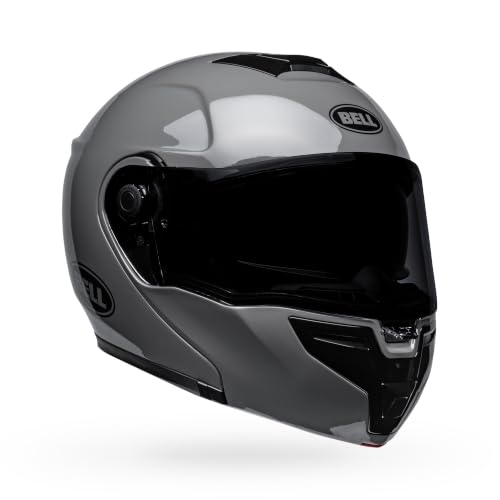
The Shark Evo-GT modular helmet is designed to accept a communication headset, with speaker recesses and a clean cable path. Its flip-up mechanism is smooth, and it has an internal sun visor. Owners report that it is comfortable on long rides, but weight is a consideration because the chin bar adds mass. The advantage over built-in options is that you can choose any compatible headset.
4. Schuberth E2
The Schuberth E2 adventure modular helmet combines a peak, an internal sun shield and an interior prepared for comms. It is aimed at riders who explore mixed terrain and want a quiet helmet. It is a premium product, and the shape fits longer oval heads better. Consider whether you need the adventure styling or whether a more road-focused helmet would do.
5. Nolan N100-6
The Nolan N100-6 modular helmet is built to accept communication systems from the same family, and the interior is shaped for headsets. It has a comfortable fit and a good sun visor. Availability can vary by region, and some riders find the chin bar mechanism stiff at first. Check size charts closely.
Built-in or comms-ready?
Built-in systems offer convenience. You do not drill holes, route cables or struggle with adhesive mounts. The downside is that technology moves quickly and the helmet will not be upgradeable. A comms-ready helmet lets you pick a headset that matches your riding group and swap it when something better appears. If you ride with friends who all use the same brand, compatibility with their units may decide the question for you.
How to choose
Intercom compatibility
Different brands do not always pair with each other. If you ride in a group, find out which system they use. Some universal pairing modes exist, but they are often limited.
Battery life and charging
Check how long the system lasts, whether you can charge while riding and how it performs in cold weather.
Wind noise and speaker clarity
Speakers can only compete with the noise inside the helmet, so a quiet shell makes the system far better. Earplugs designed for speakers may help.
Fit first
No amount of technology compensates for a bad fit. Make sure the helmet is comfortable before considering features.
Common mistakes
- Buying a headset before the helmet. Start with the helmet, then check compatibility.
- Assuming all intercoms interconnect. Verify with your riding partners.
- Ignoring legal rules. Local rules on headphones and distractions vary, so check them.
- Setting volume too high. Prolonged loud sound can damage hearing and reduce awareness.
Quick buying checklist
- Confirm the helmet is certified for road use in your region.
- Check whether the chin bar is certified only in the closed position.
- Decide between built-in communication and a separate headset.
- Ask your riding partners which systems they use.
- Try the helmet with your glasses, if you wear them.
- Check how the visor, sun shield and chin bar levers feel with gloves on.
Wind noise on modular shells
Modular helmets are not always louder than other designs, but their parts need good seals to keep noise down. Look for a chin curtain and a breath box that fit well, and a neck roll that closes gaps. Speakers inside a loud helmet have to be turned up, which is bad for hearing, so a quieter shell is the foundation of good audio.
Frequently asked questions
Do I need a special helmet for a communicator?
No, but a comms-ready helmet is easier because it has speaker pockets and cable paths.
Can Bluetooth helmets use GPS directions?
Yes, most pair with a phone and play navigation prompts through the speakers.
How far does the intercom reach?
Range depends on the system and conditions, and it is shorter in cities with lots of interference. Check the manufacturer’s information for your model.
Are built-in systems waterproof?
Many are designed to resist rain, but they are not necessarily designed for immersion. Read the specifications.
Getting the best audio inside a modular shell
Modular helmets create a few audio challenges. The chin bar joint can leak air, and wind noise inside the helmet competes with your speakers. A few small changes make a big difference.
- Position the speakers directly over your ears. Even a short offset reduces clarity. Use the foam spacers that come with the unit or thicker pads if needed.
- Use a windscreen on the microphone. Boom microphones in particular pick up breath and wind, and a foam cover reduces that.
- Tuck cables cleanly. Loose cables rub against the liner and add to fatigue. Use the channels built into the helmet where available.
- Wear earplugs that allow speech through. Some riders use musician-style plugs that reduce volume evenly, so you can listen at a lower level.
Safety and awareness
Listening to music or navigation prompts reduces how well you hear traffic, sirens and your own bike. Keep volume at a moderate level, avoid long phone calls in dense traffic and set your phone to a ride mode that blocks notifications. Check local rules, because some areas restrict wearing earphones while riding.
Mounting and removing a headset
If you buy a comms-ready helmet and a separate headset, take time with installation. Clean the mounting surface, test the clamp before committing to adhesive and make sure the unit does not interfere with the visor or chin bar travel. A poorly placed unit can press against your head and ruin a good helmet. If the thought of fitting it yourself is unappealing, many motorcycle shops will install it for a modest fee.
Conclusion
For plug-and-play communication, the Sena Stryker and Outrush R are straightforward. For flexibility and long-term upgradeability, a comms-ready helmet like the Shark Evo-GT or Schuberth E2 is wiser. Choose fit first, check compatibility with your group, and keep volume reasonable.
As an Amazon Associate we earn from qualifying purchases.
More from Amazon
Programs that pair well with the guide above. Offers and eligibility are set by Amazon and may change.
Free shipping on eligible items, Prime Video and more. Eligible new members can start with a free trial.
Start a Prime free trialA Prime membership for ages 18-24 with a trial period. Eligibility is set by Amazon.
See Prime for Young AdultsAudiobooks and podcasts to listen to on the go. Eligible new members can start with a free trial.
Try Audible freeAd-free music streaming. Eligible new subscribers can start with a free trial.
Try Music Unlimited freeAs an Amazon Associate we earn from qualifying purchases.




Write Your Review
No reviews yet. Be the first to share your experience!