

Key takeaways
- A shell that feels as thin as a plastic bowl and flexes easily.
- Very little foam inside, or only soft padding with no dense liner.
- No manufacturer label, size label or date of manufacture inside.
- A DOT sticker that looks like an afterthought, peels off easily or sits on the outside.
- A price that seems too low for the build.
To choose a DOT-approved half helmet, verify the certification label inside the shell, measure your head, pick the size that fits snugly without pressure points, and avoid novelty helmets that lack genuine labeling. A half helmet can be a legitimate option for slow riding, but only if it is certified and fitted properly.
| Pick | Best for | Key feature |
|---|---|---|
| Bell Rogue | Warm-weather riding | Ventilated shell and a comfortable interior |
| Vega Warrior | Budget certified option | Simple, light shell with a DOT label |
| Daytona Cruiser | Classic styling | Low profile with removable padding |
| Outlaw T-72 | Riders who like visible graphics | Lightweight build in many designs |
Step 1: Understand what DOT means
In the United States, helmets sold for road use are expected to meet a federal safety standard, and manufacturers self-certify and apply a DOT symbol. It is a baseline, not a guarantee of quality. A real label is permanently marked on the helmet, usually at the back, and the inside often carries a sticker with the manufacturer’s name, model, size and date of manufacture. Elsewhere, other standards such as ECE apply, so check your local requirements.
Step 2: Spot a fake or novelty helmet
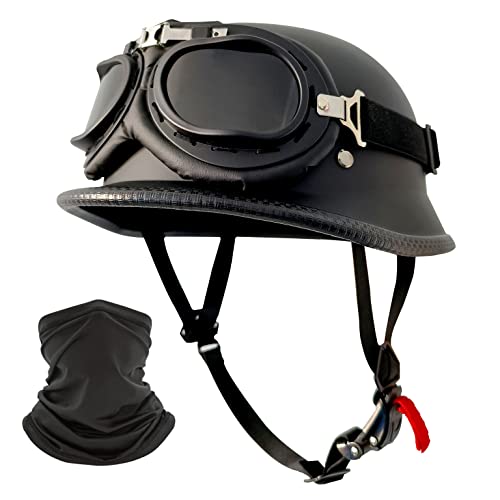
Novelty helmets are very thin shells with little padding, and they are sold as costume pieces. They are not designed to absorb impacts. Warning signs include:
- A shell that feels as thin as a plastic bowl and flexes easily.
- Very little foam inside, or only soft padding with no dense liner.
- No manufacturer label, size label or date of manufacture inside.
- A DOT sticker that looks like an afterthought, peels off easily or sits on the outside.
- A price that seems too low for the build.
If in doubt, buy from a reputable retailer and compare the helmet with known brands.
Step 3: Measure your head
Wrap a soft tape measure around your head, about a finger’s width above your eyebrows and over the widest part at the back. Take the measurement two or three times and use the largest reading. Compare it with the maker’s size chart, because sizes differ between brands. If you fall between sizes, try the smaller one first and see whether it can be made comfortable.
Step 4: Test the fit
The helmet should feel snug all around with no hot spots and should sit level on your head, with the front edge just above your eyebrows. Fasten the strap and shake your head from side to side. The helmet should not shift independently of your skin. Try to push it forward and back by gripping the edges, and it should resist rolling. A half shell that sits too high or tilts backward leaves the forehead exposed.
Step 5: Check the strap and hardware
Look for a double-D ring or a quality quick-release buckle. The strap should be wide and well-stitched, and the hardware should feel solid. A strap that is hard to adjust or that slips will let the helmet move in the wind.
Four certified half helmets to consider
These models are widely available and are marketed as DOT certified. Always verify the label on the actual helmet you receive.
Bell Rogue
The Bell Rogue DOT half helmet emphasizes ventilation and a comfortable interior. It suits riders who do short rides in warm weather. Coverage remains limited, as with any half shell.
Vega Warrior
The Vega Warrior half helmet is a budget-friendly certified option with a simple look. It is a decent first helmet, though comfort padding and finish are basic.
Daytona Cruiser
The Daytona Cruiser half helmet has a classic low-profile look and removable padding for cleaning. Check the shell size, as the fit can feel snug for larger heads.
Outlaw T-72
The Outlaw T-72 half helmet is light and comes in many graphics. It is useful for riders who want expression without losing certification. Look closely at the interior comfort.
Eye protection to pair with it
Because a half shell has no shield, plan eye protection from the start. Wraparound riding glasses such as Global Vision Eliminator riding glasses are light and come with interchangeable lenses, including clear ones for night. Choose impact-rated lenses, and make sure the arms do not press into your head under the helmet padding.
Common mistakes
- Assuming any sticker means certified. Verify the label’s placement and quality.
- Buying online without measuring. A wrong size is hard to correct.
- Ignoring eye protection. A half helmet has none.
- Using the helmet for fast highway riding. Coverage becomes a bigger issue.
- Keeping a helmet that has been dropped hard. Hidden damage is possible.
When to retire a half helmet
Replace a helmet after any significant impact, even if it looks fine. Foam can compress without visible signs. Also replace it when the liner is flattened, the strap is frayed or the shell has deep cracks or chips. Manufacturers often suggest replacing helmets after several years of use, since sweat, sunlight and heat degrade materials.
Buying online versus in a store
Buying in a store lets you try several sizes and shapes and have staff check the fit. Online buying offers wider selection and often better prices, but you must rely on your own measurements. If you buy online, choose a retailer with a clear return policy, since many sellers will not accept returns on helmets that have been worn outdoors. Try the helmet indoors for a good length of time and check it for pressure points before committing.
Questions to ask the seller
- Is the helmet certified to the standard required where I ride?
- When was it manufactured?
- Is the helmet new and in original packaging?
- What is the return policy if the fit is wrong?
Signs of a poor fit
Headaches within a few minutes, red marks on your forehead, a helmet that tilts backward or a chin strap that cannot be tightened properly all point to a poor fit. Do not ignore these signs, and do not rely on a helmet softening over time to fix a size that is clearly wrong.
Weight, ventilation and comfort
Half helmets are light, but weight still matters on longer rides. Check that the liner is soft, the interior has no seams that rub, and the shell has enough clearance around the ears. A little extra padding can improve comfort without altering the fit.
Final fit check before you ride
Once you have chosen a helmet, ride a short distance at low speed and pay attention to how it behaves in the wind. If it lifts, shifts or presses painfully, return it for a different size or style.
Frequently asked questions
Is a DOT sticker enough proof of safety?
It is a baseline. The label should be a permanent part of the helmet, and the helmet should come from a reputable maker. Independent testing programs exist that go beyond the minimum.
Can I wear a half helmet if my state allows it?
Legally you may, but consider the protection you give up. Many riders choose more coverage for highway use.
What size should I buy if I am between sizes?
Try the smaller size first, since padding settles with use. If it hurts after fifteen minutes, move up.
Should I add a visor or goggles?
Yes. Protecting your eyes from debris and wind is essential.
Conclusion
Choosing a DOT-approved half helmet comes down to a real certification label, an accurate measurement and a secure fit. Start with a reputable model, avoid novelty shells and pair it with eye protection.
As an Amazon Associate we earn from qualifying purchases.
More from Amazon
Programs that pair well with the guide above. Offers and eligibility are set by Amazon and may change.
Free shipping on eligible items, Prime Video and more. Eligible new members can start with a free trial.
Start a Prime free trialA Prime membership for ages 18-24 with a trial period. Eligibility is set by Amazon.
See Prime for Young AdultsAudiobooks and podcasts to listen to on the go. Eligible new members can start with a free trial.
Try Audible freeAd-free music streaming. Eligible new subscribers can start with a free trial.
Try Music Unlimited freeAs an Amazon Associate we earn from qualifying purchases.



Write Your Review
No reviews yet. Be the first to share your experience!