

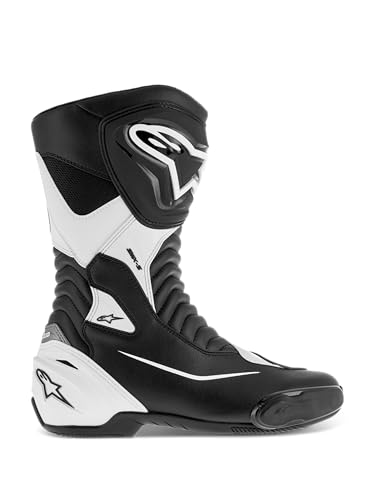
For most male riders, the Alpinestars SMX-6 V3 or Forma Ice Pro is the best all-round sport-touring boot, the Sidi Adventure 3 is the pick for long-distance and off-pavement riding, and the TCX Street 3 WP is the easiest everyday boot to live with. The right choice depends less on brand than on how far you walk in them, how much rain you ride through, and whether you need race-level ankle bracing or just a boot that survives a low-side slide. This guide sorts current men’s models by riding style and explains what the specs mean.
Our top picks

As an Amazon Associate we earn from qualifying purchases at no extra cost to you.
Quick Comparison of the Best Men’s Motorcycle Boots
| Pick | Best for | Key features | Price range |
|---|---|---|---|
| Alpinestars Supertech R | Track days, aggressive sport riding | Race-level ankle bracing, replaceable sliders, thin sole | Premium |
| Forma Ice Pro | Sport-touring, mixed street and canyon | Ankle hinge system, more walkable than race boots | Mid to upper-mid |
| Alpinestars SMX-6 V3 | Entry-level sport protection | Microfiber upper, TPU shin and ankle protection | Mid-range |
| Sidi Adventure 3 | Adventure and long-distance touring | Waterproof membrane, replaceable sole, walkable shaft | Premium |
| TCX Infinity 3 | Budget touring | Waterproof liner, mid-height shaft | Budget to mid |
| TCX Street 3 WP | Daily commuting | Sneaker-style, CE-rated, waterproof liner | Budget to mid |
| Forma Legacy | Classic leather look | Heritage styling, leather upper | Mid-range |
Price ranges are general market bands and shift with sales, so check current pricing before buying.
Best Overall for Sport Riding: Alpinestars Supertech R
Race-boot references such as RevZilla’s buying guide treat the Supertech R as the benchmark for track use. Its structure limits ankle twisting, forward flex and hyperextension, which are the injuries race boots are designed to reduce. The cost is comfort off the bike: the sole is thin, the fit is snug, and a long walk to the pit lane is tolerable but not pleasant. Choose it if you ride hard on twisty roads or do track days. Skip it for commuting, where a softer boot makes more sense.
Best Mid-Range Sport-Touring: Forma Ice Pro
WebBikeWorld places the Forma Ice Pro in the middle of the sport-boot range, between entry-level and top-tier racing models. It gives you a hinged ankle-protection system and a sturdier shaft without the stiff walking gait of a pure race boot. It suits riders who spend a weekend in the mountains, stop for lunch, and walk around town in the same footwear. Its trade-off is that it is less ventilated than vented race boots, so very hot climates may call for a perforated alternative.
Best Entry-Level Sport Boot: Alpinestars SMX-6 V3
The SMX-6 line is often named the entry point to proper sport protection. It uses a microfiber upper with molded protection at the ankle, shin and toe, and a vented version exists for summer. It is a sensible first purchase for a new sportbike owner who rides several times a week. The compromise is less rigid ankle control than the Supertech R, which matters mainly at track speeds.
Best for Adventure and Touring: Sidi Adventure 3
Bikes and Bays and other adventure-gear reviewers describe the Sidi Adventure 3 as a benchmark for touring and adventure riders. The shaft is tall enough for protection but flexes enough that you can stand on the pegs and walk across a campsite. A waterproof membrane keeps feet dry through multi-day rain, and the sole can be replaced when it wears, which lowers the cost per mile over several seasons. It is a premium boot, and it is heavy compared with a street shoe, so it is overkill for short commutes.
Best Budget Touring Boot: TCX Infinity 3
Where the Sidi sits at the top of the market, the TCX Infinity 3 is regularly mentioned as the value pick for riders who want a waterproof touring boot without spending much. You give up some durability and refinement: expect softer ankle support and a sole that wears sooner. For a rider doing a few hundred miles a month in mixed weather, it is a reasonable compromise.
Best for Daily Commuting: TCX Street 3 WP
GearJunkie highlights the TCX Street 3 WP as a CE-rated, leather high-top that looks like a sneaker. It has a waterproof liner and impact protection at the ankle, so you can wear it to the office without clomping. The limits are real: the low shaft gives less shin protection and less ankle bracing than a full boot, and a waterproof liner will run warm in summer. For urban riding at moderate speeds, it is a practical choice.
Best Classic Style: Forma Legacy
RevZilla points to the Forma Legacy for riders who want a traditional leather boot look. It suits cruisers, standards and retro bikes, where a race-style boot looks out of place. Leather needs conditioning to stay supple and water-resistant, so factor in a little maintenance time.
How to Choose: Match the Boot to Your Riding
| Your situation | Look for | Avoid |
|---|---|---|
| Track days, over 100 mph regularly | Ankle bracing, replaceable sliders, race certification | Short sneaker-style boots |
| Daily commute under 30 miles | CE rating, walkable sole, waterproof liner | Rigid race boots |
| Multi-day touring | Waterproof membrane, tall shaft, replaceable sole | Fully vented summer-only boots |
| Hot climate | Perforated upper, mesh panels | Thick insulated liners |
| Wide feet or thick calves | Boots with adjustable closure, try before you buy | Narrow race fits |
Check the safety rating
Look for CE certification to EN 13634, the European standard for motorcycle footwear. Level 1 and Level 2 describe the tested abrasion and impact performance; higher is better, though the label does not guarantee fit. Always read the label on the exact model rather than assuming the brand name carries a rating.
Sizing and break-in
Most motorcycle boots run slightly narrow and need a short break-in period. Try them with the socks you ride in, and check that your toe does not touch the front when your foot is flexed. A boot that is too loose lets your foot slide, while one that is too tight cuts circulation on long rides.
Ownership realities
The first things to wear are the sole edge, the heel and the toe slider. Replaceable soles, available on boots like the Sidi Adventure line, extend lifespan. Waterproof liners eventually fail if the outer leather is cracked or dirty, so clean and treat boots every few months. Replace any boot that has taken a hard impact, even if it looks fine, since internal armor can be damaged.
Frequently Asked Questions
Do I need motorcycle boots, or are hiking boots enough?
Hiking boots are not designed for crash loads. They lack reinforced ankle structures and impact-rated protection. A CE-rated riding boot or shoe is a better choice, even for short trips.
Are waterproof liners worth it?
If you ride in rain or cold mornings, yes. Be aware that liners reduce airflow, so they feel hot in summer, and some riders keep a vented pair for hot months.
How long do motorcycle boots last?
With regular use, a good pair often lasts several years. The sole and stitching typically fail first, and replaceable-sole models extend the life.
What is the difference between sport and touring boots?
Sport boots prioritize ankle bracing and a tight fit for aggressive riding. Touring boots favor comfort, waterproofing and walkability.
Can I wear motorcycle boots all day?
Touring and street models are designed for it. Race boots are usually less comfortable for walking, so keep them for track sessions or shorter rides.




Write Your Review
No reviews yet. Be the first to share your experience!