

Key takeaways
- Pro: direct fit keeps the install reversible.
- Pro: larger cone area than the stock driver adds mid-bass.
- Pro: the maker also sells amplifier kits for the same bikes.
- Con: the factory head unit limits output unless you add an amplifier.
- Con: listed wattage varies, so rely on fitment and sensitivity.
The best speakers for a Honda Gold Wing depend on the generation: the J&M ROKKER XXR is a bolt-in replacement for 2018 to 2026 bikes, while 2006 to 2017 GL1800s use a different, larger front opening that J&M covers with a separate kit. On Indian touring bikes, plan on 5.25-inch speakers in Chieftain and Roadmaster fairings and 6.5-inch speakers in Challenger and Pursuit fairings. This guide is based on manufacturer listings, installer notes and owner threads, which sometimes disagree, so the fitment steps below matter as much as the picks.
Our top picks


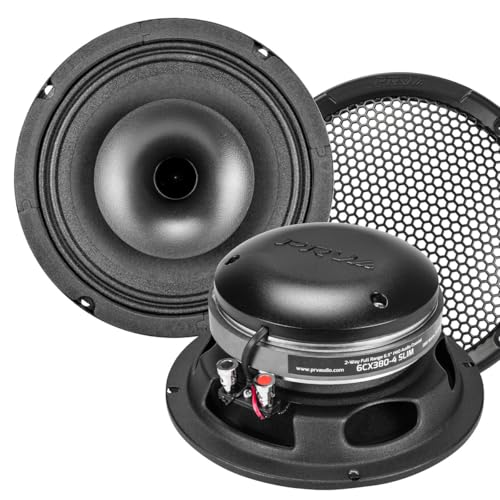

As an Amazon Associate we earn from qualifying purchases at no extra cost to you.
Fitment first: speaker sizes by touring model
| Bike | Front fairing speaker | Reported size and note | Practical path |
|---|---|---|---|
| Gold Wing 2018 to 2026 | Small round opening | Aftermarket listings describe about 4.5 in stock; J&M offers a 5.17 in exact-size replacement | ROKKER XXR, or adapter rings for 5.25 in |
| GL1800 2006 to 2017 | Larger opening | J&M kit is 6.29 in, 10 mm larger than stock on the same hole pattern; other sources say 5.5 to 6.5 in | J&M fairing kit, then an amp |
| GL1800 2001 to 2005 | Smaller front | Sources report around 4 to 5 in | Adapter rings or small replacements |
| Indian Chieftain and Roadmaster | 5.25 in | 6.5 in does not fit the fairing; bag lids take 6.5 in | 5.25 in coaxials in front, 6.5 in in lids |
| Indian Challenger and Pursuit | 6.5 in | Factory speakers have built-in class D amps | Pre-amp harness plus aftermarket 6.5 in |
| Victory Cross Country and Vision | Not confirmed here | Model-year specific | Measure the opening before buying |
Sizes vary by source, and forum posts across Gold Wing generations conflict. Treat the table as a starting point, and confirm with a parts diagram or by measuring the opening.
J&M ROKKER XXR: best bolt-in for 2018 to 2026 Gold Wings
Spec line: 5.17 in coaxial made as an exact-size replacement for the stock Gold Wing speaker opening, weather resistant, with a retailer-listed power rating in the 200 W range (a peak figure).
Best for: owners who want a better driver without cutting or redrilling the fairing.
Skip if: you ride a 2017 or older bike, since the front opening differs.
- Pro: direct fit keeps the install reversible.
- Pro: larger cone area than the stock driver adds mid-bass.
- Pro: the maker also sells amplifier kits for the same bikes.
- Con: the factory head unit limits output unless you add an amplifier.
- Con: listed wattage varies, so rely on fitment and sensitivity.
J&M ROKKER fairing speaker kit for 2006 to 2017 GL1800: best for the previous generation
Spec line: 6.29 in front fairing speaker with a cone 10 mm larger than stock, using the same mounting hole pattern as the factory unit.
Best for: 2006 to 2017 Gold Wings and F6B owners who want a simple front upgrade.
Skip if: your bike is a 2018 or newer model, because the fairing openings differ.
- Pro: same hole pattern, so no new drilling.
- Pro: bigger cone for more bass than the stock unit.
- Pro: pairs with the maker’s amplifier kits.
- Con: reports on stock size vary, so verify before ordering.
- Con: needs a decent amplifier to show its potential.
Rockford Fosgate Power 5.25 in coaxials: best brand-name option with adapter rings
Spec line: 5.25 in coaxials used in several Gold Wing installs, often paired with a four-channel Power Series amplifier; they require CNC adapter rings to mount in the Gold Wing openings.
Best for: riders who want a recognised brand and are comfortable fitting adapters.
Skip if: you want a no-modification swap.
- Pro: 5.25 in is a common size with plenty of alternatives.
- Pro: Rockford’s Power Series suits motorcycle use.
- Pro: easy to pair with matching amplifiers.
- Con: adapters add cost and a second part to fit.
- Con: the published install write-ups are several years old, so confirm current model numbers.
Hertz component set: best for a tuned, detailed front stage
Spec line: a Hertz HSK130 component set in the factory location and a Hertz HMX 6.5 in speaker in a custom pod, as reported by one owner using a JL Audio amplifier and subwoofer.
Best for: experienced installers building a custom Gold Wing system with a separate amplifier.
Skip if: you want a plug-and-play route.
- Pro: component design improves imaging with a separate tweeter.
- Pro: flexible for custom pods.
- Pro: scales to a subwoofer system.
- Con: premium tier and more installation work.
- Con: the evidence is an owner report, not a maker’s fitment chart.
Diamond Audio MP525 and Cicada CHX525: best 5.25 in coaxials for Indian Chieftain and Roadmaster
Spec line: 5.25 in pro coaxials sold by specialist retailers as drop-in options for Indian fairings.
Best for: Chieftain and Roadmaster fairings, where an installer reported that 6.5 in will not fit.
Skip if: your bike is a Challenger or Pursuit, which take 6.5 in fairing speakers.
- Pro: correct size for the Thunderstroke fairing.
- Pro: specialist makers offer good value in the mid tier.
- Pro: easy to pair with matching 6.5 in lid speakers.
- Con: needs an external amplifier because the factory speakers have built-in amplifiers.
- Con: may need a pre-amp harness to bypass the factory amp.
Precision Power IND.652 and IND.SBS: best plug-and-play for Indian Challenger and bag lids
Spec line: 6.5 in speakers sold as 100 W RMS plug-and-play parts for Indian fairings and saddlebags.
Best for: Challenger and Pursuit owners who want a direct upgrade and a clean look.
Skip if: you ride a Chieftain or Roadmaster with 5.25 in fairing openings.
- Pro: 100 W RMS rating suits a four-channel amp.
- Pro: plug-and-play fit reduces fabrication.
- Pro: matched sets for fairing and lids.
- Con: the factory built-in amplifier means you still need a pre-amp harness or a system kit.
- Con: fitment varies by model year, so check the retailer’s chart.
Best amplifier and system kits for touring bikes
Several specialist retailers sell complete Indian packages. Davidson Audio’s PowerPlus kits include a pre-amp fairing harness, a DSP and an amplifier, and they are listed for 2020 to 2025 Challenger and Pursuit and for 2025 Chieftain and Roadmaster. Indian also sells factory fairing speaker sets in 50 W 5.25 in, 50 W 6.5 in and 100 W 6.5 in Powerband versions for the Challenger. On the Gold Wing side, J&M offers 400 W and 1,000 W amplifier kits to pair with the ROKKER speakers.
How to choose speakers for a touring bike, with numbers
1. Size the opening and the depth
Measure the diameter and the free depth. A 5.17 in speaker for a Gold Wing is designed to the opening, while a standard 5.25 in speaker has a different mounting pattern from the factory opening, which is why adapter rings exist. Depth matters in fairings where the speaker sits close to the inner shell.
2. Work out the power you need
| Riding style | Speaker RMS | Amplifier per channel | Reason |
|---|---|---|---|
| Short rides, mostly under 55 mph | 25 to 50 W | Factory or 25 to 50 W | Noise is low, so sensitivity is enough |
| Mixed riding with some freeway | 50 to 75 W | 50 to 100 W | Headroom for 65 mph noise |
| Long-distance touring at 70+ mph | 75 to 100 W | 75 to 150 W | Volume above wind noise and a fairing that buffets |
3. Weigh the windscreen
On a tall-windscreen touring bike, the air stream is partly redirected over your head, so the noise at your ears is lower than on a naked bike. Fairing speakers work better on these bikes than anything else, and that is why a larger, sealed fairing speaker is the right answer here.
4. Check the factory amplifier
Some bikes use speakers with built-in amplifiers (Indian’s factory units are an example). Aftermarket speakers cannot connect directly in that case, and you need a pre-amp harness. Skipping this step leads to a system that does not play or plays at a very low level.
5. Add the passenger and the trunk
Two-up riding changes the right design. A trunk or saddlebag lid speaker lets the passenger hear the music clearly, and 6.5 in lid speakers on a Chieftain or Roadmaster fill that role. Plan for four speakers and a four-channel amplifier from the start, even if you only fit the front pair first.
Upgrade path by budget and goal
| Goal | Gold Wing 2018+ | Indian Chieftain / Roadmaster | Indian Challenger / Pursuit | Price tier |
|---|---|---|---|---|
| Cheapest improvement | ROKKER XXR front pair | 5.25 in coaxial pair in fairing | Factory 100 W 6.5 in Powerband set | Entry to mid |
| Big volume upgrade | ROKKER pair plus 400 W amp kit | Fairing coaxials plus pre-amp harness and amp | Davidson-style PowerPlus kit | Premium |
| Passenger sound | Rear speaker kit and amp channels | 6.5 in lid speakers | Saddlebag 6.5 in pair | Mid |
| Best sound quality | Component front set with a separate amp | Component 5.25 in plus DSP | 6.5 in components plus DSP | Premium |
Worked example: a two-up Gold Wing audio upgrade
Suppose a 2020 Gold Wing Tour with a rider and passenger, riding 65 to 75 mph for most of a trip. A sensible plan is to fit the ROKKER XXR pair in the front, add a four-channel amplifier with at least 75 W RMS per channel, and keep the rear speakers on the same amplifier for the passenger. The amplifier’s power draw is about 25 to 35 A at full output and about 4 to 6 A at normal volume, which the Gold Wing’s large charging system covers without trouble. The cost is split between the speakers, the amplifier kit and wiring, so staging the work (front pair first, amplifier second, rear speakers third) spreads the spending and lets you judge each step before moving on.
On a Chieftain Roadmaster, the same logic applies with 5.25 in front speakers and 6.5 in lid speakers, and the pre-amp harness is the extra part that makes the system work with the bike’s built-in amplifiers. On a Challenger, a pre-amp harness plus 6.5 in speakers in the fairing is the direct equivalent.
Installing touring speakers: what usually goes wrong
- Wrong size assumed. A GL1800 from 2005 and one from 2010 do not share front speakers, so check the year.
- Adapters misaligned. A ring off by a few millimeters leaves an air gap that kills the bass.
- Grille contact. A tweeter that touches the grille buzzes at high volume.
- Weak ground. A shared ground with lighting produces whine at engine speed.
- Skipping the seal. Gaskets or foam rings around the speaker keep the bass in the fairing and not the cockpit.
Measuring a fairing opening in five steps
- Remove the grille or trim panel. Use plastic trim tools so the clips and paint stay intact.
- Measure the cutout diameter. Use calipers on the inside edge of the opening, not the outer trim ring, and write down both numbers.
- Measure the bolt circle. Distance between opposite mounting holes tells you whether a standard 5.25 or 6.5 in pattern fits, or whether a bike-specific bracket is needed.
- Measure usable depth. Check from the mounting surface to the nearest obstruction, such as the inner fairing, a vent or a cable. Compare with the speaker’s published mounting depth, for example 2.3 in on a Memphis MXA62HD.
- Check clearance for the grille. A tweeter that sits within 2 to 3 mm of the grille will buzz at high volume.
Doing this once takes ten minutes, and it replaces guesswork across forum posts that disagree about generations. It is also the best defense against buying a speaker that is nominally the right size and still does not fit.
Photograph the opening and the wiring before you disconnect anything, and keep the factory speakers in a labeled bag. If you sell the bike, reinstalling the originals is simple, and a buyer who sees a documented, reversible upgrade tends to trust the rest of the bike’s maintenance more readily.
Frequently Asked Questions
What are the best speakers for a Honda Gold Wing?
For 2018 and newer bikes, the J&M ROKKER XXR is an exact-size replacement for the front openings. For 2006 to 2017 bikes, J&M’s larger fairing kit uses the stock hole pattern. Adding an amplifier is the step that makes the biggest difference.
What size speakers does a Gold Wing use?
It depends on the generation. Owner reports and retailers describe 2006 to 2017 fronts at about 5.5 to 6.5 inches, and 2018 and newer fronts at about 4.5 inches. Confirm with your parts diagram before ordering.
What speakers fit an Indian Chieftain or Roadmaster?
Installers report 5.25-inch fairing speakers for these bikes, with 6.5-inch drivers in the saddlebag lids. A 6.5-inch speaker does not fit the fairing, so choose 5.25-inch coaxials such as the Diamond Audio MP525 or Cicada CHX525 class.
Can I use 5.25-inch speakers in a Gold Wing?
Yes, with adapter rings, because the Gold Wing opening is smaller than a standard 5.25-inch mounting pattern. Several retailers sell CNC rings for this purpose, but a direct-fit 5.17-inch speaker avoids the extra step.
Do I need an amp for touring bike speakers?
For freeway riding, yes. Wind noise at 70 mph exceeds what a factory head unit can deliver cleanly, and a 50 to 100 W per channel amplifier gives the headroom.
What about Victory touring bikes?
Victory Cross Country and Vision speaker sizes vary by model year, so measure the opening or consult a model-specific fitment chart. A 5.25-inch or 6.5-inch coaxial in weather-resistant construction is the usual class, but confirm before you buy.
More from Amazon
Programs that pair well with the guide above. Offers and eligibility are set by Amazon and may change.
Free shipping on eligible items, Prime Video and more. Eligible new members can start with a free trial.
Start a Prime free trialA Prime membership for ages 18-24 with a trial period. Eligibility is set by Amazon.
See Prime for Young AdultsAudiobooks and podcasts to listen to on the go. Eligible new members can start with a free trial.
Try Audible freeAd-free music streaming. Eligible new subscribers can start with a free trial.
Try Music Unlimited freeAs an Amazon Associate we earn from qualifying purchases.


Write Your Review
No reviews yet. Be the first to share your experience!