

Key takeaways
- Pro: JBL drivers are noted by reviewers for strong bass and loud peaks.
- Pro: the preset audio profiles let you shape the sound without an equalizer.
- Pro: IP67 rating handles heavy rain and washing.
- Con: premium price tier.
- Con: 40 mm drivers still depend on how well the helmet pocket seals around your ear.
For music inside a helmet, the best sound comes from a communicator with 40 mm to 45 mm drivers, and the Cardo Packtalk Edge and Sena 60S are the two strongest all-round choices on published specs. Cardo’s JBL drivers lean toward bass and volume at highway speed, while Sena’s Harman Kardon drivers lean toward a warmer, more detailed midrange for voices and podcasts. The deciding factor is often not the brand but whether the driver physically fits your helmet’s ear pockets, so this guide treats fit as seriously as sound. It is based on manufacturer specs and published reviews, not personal listening.
Our top picks


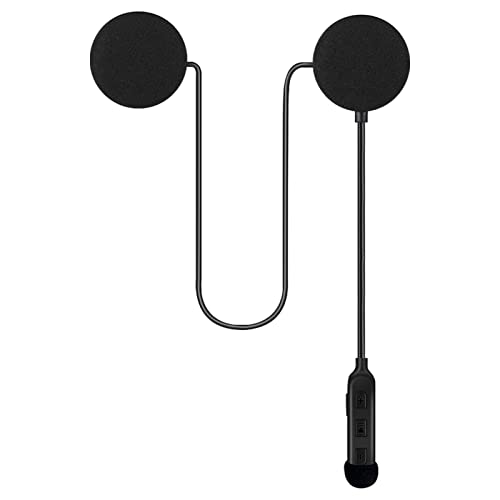
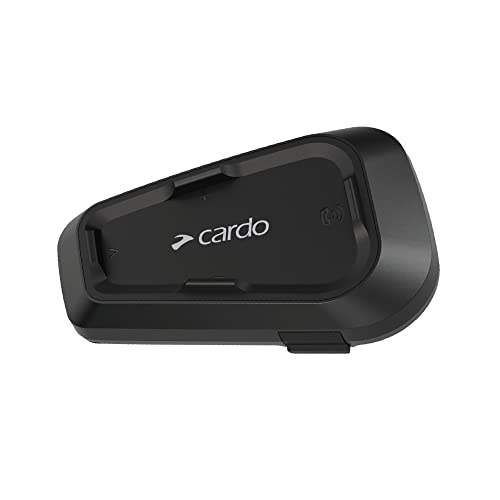
As an Amazon Associate we earn from qualifying purchases at no extra cost to you.
What “helmet speakers” actually means
Almost every helmet speaker is part of a Bluetooth communicator. A thin pair of drivers goes into the helmet’s ear pockets, a boom or wired microphone sits near the mouth, and a control unit clips to the shell. Some riders buy the communicator with its stock drivers, and others swap in upgraded driver sets. A few budget options are simple wired or Bluetooth speaker pads, but the models below are the ones with documented specs and current availability.
Comparison table: drivers, battery and weather rating
| Model | Driver | Battery (talk time) | Weather rating | Group connection | Price tier |
|---|---|---|---|---|---|
| Cardo Packtalk Pro | 45 mm JBL | About 13 h | IP67 | DMC mesh, up to 31 riders | Premium |
| Cardo Packtalk Edge | 40 mm JBL | About 13 h | IP67 | DMC mesh, up to 31 riders | Premium |
| Cardo Packtalk Neo | 40 mm JBL | About 13 h | IP67 | DMC mesh, up to 31 riders | Mid to premium |
| Cardo Spirit HD | 40 mm HD | About 13 h | IP65 | Bluetooth, 2 riders | Entry |
| Sena 60S | 40 mm Harman Kardon (2nd gen) | 17 h mesh, 24 h Bluetooth | IPX7 | Mesh 3.0 plus Wave | Premium |
| Sena 50S | 40 mm Harman Kardon (1st gen) | 13 h mesh, 16 h Bluetooth | Water resistant | Mesh 2.0, 24 riders | Mid to premium |
| Sena 50R | Harman Kardon, low profile | 11 h mesh, 13 h Bluetooth | Water resistant | Mesh 2.0 | Mid |
| Sena 30K | Sena HD | 14 h mesh, 17 h Bluetooth | Water resistant | Mesh 3.0, 24 riders | Mid |
Battery and group figures come from the makers’ pages and retailer listings, and different sources disagree by an hour or two or on group size, so use them as a guide and confirm on the maker’s page before buying.
Cardo Packtalk Edge: best for bass and highway volume
Spec line: 40 mm JBL speakers, IP67, about 13 hours talk time, second-generation DMC mesh for up to 31 riders, magnetic Air Mount, three audio profiles (Bass Boost, High Volume, Vocal).
Best for: riders who listen to music at 70 mph and want volume headroom.
Skip if: you mostly listen to spoken audio and want a warmer midrange.
- Pro: JBL drivers are noted by reviewers for strong bass and loud peaks.
- Pro: the preset audio profiles let you shape the sound without an equalizer.
- Pro: IP67 rating handles heavy rain and washing.
- Con: premium price tier.
- Con: 40 mm drivers still depend on how well the helmet pocket seals around your ear.
Cardo Packtalk Pro: best if your helmet allows 45 mm drivers
Spec line: 45 mm JBL speakers, IP67, about 13 hours talk time, crash detection, DMC mesh up to 31 riders.
Best for: riders with generous ear pockets who want the largest drivers in a stock communicator.
Skip if: your helmet has narrow ear recesses, because the larger drivers need more room.
- Pro: bigger drivers move more air for fuller low end.
- Pro: the most feature-rich Cardo, including charge-while-riding.
- Pro: a longer warranty than the Neo, according to Cardo’s comparison.
- Con: the highest price tier of the Cardo range.
- Con: driver depth can crowd your ear in a slim helmet, which makes it uncomfortable on long rides.
Cardo Packtalk Neo: best value in the mesh range
Spec line: 40 mm JBL speakers, IP67, DMC mesh, about 13 hours talk time, clickable mount instead of Air Mount.
Best for: riders who want the same speakers and mesh as the Edge without the premium price.
Skip if: you want charge-while-riding or the magnetic mount.
- Pro: keeps the JBL driver and mesh hardware of the higher models.
- Pro: priced below the Edge and Pro.
- Pro: compatible with Cardo’s 40 mm driver upgrade sets.
- Con: shorter warranty than the Pro, per Cardo’s comparison.
- Con: no charge-while-riding.
Sena 60S: best for midrange clarity and long battery
Spec line: 40 mm second-generation Harman Kardon speakers, Mesh 3.0 plus Wave intercom, 17 hours mesh and 24 hours Bluetooth talk time, IPX7, Bluetooth range about 2 km.
Best for: riders who value voice clarity, podcasts and long days between charges.
Skip if: you want the loudest and most bass-heavy sound.
- Pro: Harman Kardon tuning gives a warmer, more detailed midrange according to reviewers.
- Pro: 24 hours of Bluetooth talk time is among the longest of the range.
- Pro: the Wave intercom pairs with riders on any brand through the app.
- Con: premium price tier.
- Con: reviewers report slightly less bass than Cardo’s JBL option at highway speed.
Sena 50S and 50R: best mid-tier choices
Spec line: 50S has first-generation Harman Kardon 40 mm speakers, 13 hours mesh and 16 hours Bluetooth, Mesh 2.0 for up to 24 riders, jog dial. The 50R uses a slimmer, low-profile unit with Harman Kardon sound and 11 hours mesh and 13 hours Bluetooth.
Best for: riders who want Sena’s sound without paying flagship money, with the 50R suiting sport helmets because of its flush mount.
Skip if: you want the newest mesh version or the longest battery.
- Pro: Harman Kardon audio at a lower price tier than the 60S.
- Pro: the 50R is easier to mount on a streamlined shell.
- Pro: the 50S has a physical jog dial, easy to use with gloves.
- Con: older mesh generation than the 60S.
- Con: shorter battery than the flagship.
Sena 30K and Cardo Spirit HD: best entry options
Spec line: the Sena 30K uses Sena HD speakers with Mesh 3.0, 14 hours mesh and 17 hours Bluetooth; the Cardo Spirit HD uses 40 mm HD drivers, Bluetooth for two riders, IP65, with FM radio and three sound profiles.
Best for: riders who mainly want music and calls, with limited need for large mesh groups.
Skip if: you ride with a big group and need a long-range mesh network.
- Pro: lower price tiers than the flagships.
- Pro: the Spirit HD adds FM radio and sound profiles.
- Pro: the 30K gets Mesh 3.0 at a mid price.
- Con: HD drivers are not the premium JBL or Harman Kardon sets.
- Con: the Spirit HD’s weather rating (IP65) is lower than Cardo’s mesh range.
Driver upgrades: best helmet speakers for better sound
If you already own a communicator, swapping the drivers is the cheapest route to better sound. Cardo sells 40 mm JBL sets that work with the Freecom 2X, Freecom 4X, Packtalk Neo and Packtalk Edge, and a 45 mm JBL set with a deeper, bass-forward character. Sena sells HD speakers with a beveled, low-profile design for the 20S EVO, 30K and 50S. Most aftermarket drivers use a standard 3.5 mm connector, so some can work across brands, but check the plug type for your model.
The trade-off is thickness. A forum post reported that the speaker openings in some Shoei modular and sport-touring helmets are only about 40 mm, which makes 45 mm drivers a poor fit. Always measure your pocket diameter and depth.
How to choose helmet speakers with numbers
1. Measure the ear pocket
Take the pad out and measure the diameter and depth of the recess. A 40 mm driver typically needs a pocket around 40 to 42 mm wide and 10 mm or more deep, and a 45 mm set may need about 15 mm of depth. If the pocket is shallower, the driver presses on your ear and creates pain within an hour.
2. Match the sound signature to what you listen to
| You mainly listen to | Better fit | Why |
|---|---|---|
| Rock, hip-hop, electronic | Cardo JBL (Edge, Pro) | More bass and loud peaks |
| Podcasts, audiobooks, navigation voice | Sena Harman Kardon (60S, 50S) | Warmer, clearer midrange |
| Mixed, budget-conscious | Cardo Neo or Sena 30K | Balanced at a mid price |
| Sport or race helmet with tight pockets | Sena 50R or slim driver set | Low-profile fit |
3. Calculate your ride time
If your longest day in the saddle is 8 hours and the communicator is also running navigation and a phone call, a 13-hour talk-time rating leaves a margin of about 5 hours. Real-world battery falls when volume is high and the cold air reduces capacity, so choose a unit with a margin of at least 30 percent over your typical ride.
4. Plan around noise
At highway speed, wind noise inside a helmet commonly runs in the 85 to 100 dB range depending on helmet and windscreen. Speakers with high maximum output help, but earplugs with a low noise reduction rating reduce the background so you can run the volume lower, which protects your hearing and extends battery life.
Three worked examples
Commuter on a full-face helmet, 45 minutes each way. Daily use is about 1.5 hours, so even a 13-hour battery lasts most of a week between charges. The priority is a quick-charge feature and a stable mount. A Cardo Packtalk Neo or Sena 50S covers this at a mid price tier, and Cardo says 20 minutes of fast charging returns roughly 2 hours of talk time.
Weekend tourer with a modular helmet and a passenger. A 9-hour riding day with navigation prompts, music and an intercom call needs at least 11 to 12 hours of real battery. The Sena 60S, with its 17 hours of mesh talk time, or a Cardo Edge, both leave margin. Choose by sound preference, because bass lovers will prefer the JBL set and podcast listeners the Harman Kardon set.
Track-day rider with a snug race helmet. Ear pockets are shallow and the shell is aerodynamic, so a bulky unit is a poor idea. A low-profile Sena 50R or a slim driver set is the better match, and the rider may skip music entirely in favor of pit communication.
How to check driver fit before you commit
- Remove the cheek pad and the ear-pocket cover. This exposes the recess where the speaker sits.
- Measure the diameter with calipers or a ruler. Compare it with the driver diameter, and leave about 1 mm of margin.
- Measure the depth. Add the thickness of the driver and the foam, and make sure the total is less than the recess depth, otherwise the speaker pushes your ear.
- Place the speaker over your ear canal, not the helmet’s center. Mounting a speaker even 10 mm off the ear canal costs noticeable volume and bass.
- Use a thin layer of hook-and-loop tape. It holds the driver in place without glue, so you can adjust the position after a test ride.
- Sit with the helmet on for ten minutes. If you feel pressure on the ear, the driver is too deep or too large for that helmet.
Calls, navigation and what else the speakers must do
A helmet speaker has to do more than play music. It also has to carry turn-by-turn voice prompts, phone calls and intercom audio, and these use mostly the midrange. This is why a speaker with warm mids, such as the Harman Kardon set, can feel better for navigation, even though a JBL set measures louder on bass. Check that the communicator offers audio multitasking, so a navigation prompt can lower the music volume instead of cutting it, and that the microphone has a wind-noise filter. Cardo and Sena both supply a boom mic and a wired mic for full-face helmets, and the wired type suits helmets with tight chin bars.
Ownership realities
- Sweat and grime. Ear pocket pads trap sweat, and corrosion at the speaker contacts can cause crackling. Wipe the contacts every few weeks.
- Cable strain. Speaker cables fatigue at the connector, so route them without tight bends.
- Firmware. Both brands update through an app, and mesh compatibility between versions can change after an update.
- Helmet changes. Moving the communicator to a new helmet often means new pockets and sometimes new cable lengths.
Frequently Asked Questions
What are the best motorcycle helmet speakers for music?
The Cardo Packtalk Edge and Pro are strong for bass-heavy music because of their JBL drivers. The Sena 60S is a strong choice for a balanced, detailed sound. The right one depends on whether your helmet’s ear pockets suit the driver.
Do bigger helmet speakers always sound better?
Not always. A 45 mm driver can produce fuller bass, but it needs a deeper pocket, and a poor seal against your ear removes the benefit. A properly seated 40 mm driver can sound better than a poorly fitted 45 mm one.
Can I use any helmet speakers with any communicator?
Often, yes, if the connector matches. Many aftermarket sets use a 3.5 mm plug, and some work across brands, but several communicators use proprietary connectors. Check the maker’s compatibility list for your model.
Are Bluetooth helmet speakers safe on the road?
Laws vary by region, and the practical advice is to keep the volume low enough to hear traffic and sirens. Use voice navigation, avoid fiddling with controls while moving, and consider a lower-volume setting with earplugs.
How long do helmet speakers last?
The drivers themselves are small and often last for years, while the pads, cables and connectors wear first. Replacing the ear pads and cleaning the contacts typically restores performance.
Do I need a communicator, or can I use standalone speakers?
Standalone speaker pads exist, but a communicator gives you a microphone, controls and intercom options. For most riders, a communicator with upgradeable drivers is the more flexible route.
More from Amazon
Programs that pair well with the guide above. Offers and eligibility are set by Amazon and may change.
Free shipping on eligible items, Prime Video and more. Eligible new members can start with a free trial.
Start a Prime free trialA Prime membership for ages 18-24 with a trial period. Eligibility is set by Amazon.
See Prime for Young AdultsAudiobooks and podcasts to listen to on the go. Eligible new members can start with a free trial.
Try Audible freeAd-free music streaming. Eligible new subscribers can start with a free trial.
Try Music Unlimited freeAs an Amazon Associate we earn from qualifying purchases.


Write Your Review
No reviews yet. Be the first to share your experience!