

Key takeaways
- Measure around your head about one inch above the eyebrows and compare with the maker’s chart.
- The chin bar should not press your face when your mouth is closed.
- A two-finger gap under the chin strap indicates a good tension.
- Try the helmet with your goggles and, if you wear one, a neck brace.
- Replace after any significant crash. Follow the maker’s age guidance and avoid solvents when cleaning.
- Pair the helmet with other protective gear such as pads and gloves. A helmet reduces risk but does not remove it.
The Troy Lee Designs Stage suits riders who want the lightest full-face that still meets the downhill testing standard, the Fox Proframe RS suits riders who want airflow and an adjustable fit, the Smith Mainline Mips suits bike park and race riders who want a plush, protective helmet, and budget options such as the Demon Podium X MIPS and Fly Racing Rayce suit newcomers or younger riders. Whatever you choose, the single most useful check is that the helmet lists ASTM F1952, the downhill-specific standard, on the maker’s page and inside the shell.
Our top picks



As an Amazon Associate we earn from qualifying purchases at no extra cost to you.
Downhill Helmet Picks at a Glance
| Helmet | Best for | Reported specs | Main limit |
|---|---|---|---|
| Troy Lee Designs Stage | Light weight with DH certification | Pinkbike lists about 685 g; certified to ASTM F1952, ASTM F2032, CPSC and CE; reviewers count 25 vents | Older design; less airflow than the Fox |
| Fox Proframe RS | Ventilation and fit adjustment | Fox lists about 790 g plus or minus 50 g in medium; ASTM F1952; BOA fit | Heavier; looks large on the head |
| Smith Mainline Mips | Bike parks and racing | OutdoorGearLab measured 811 g in large; Koroyd and MIPS; ASTM F1952 | Runs warm; modest impact test score in one lab |
| Fox Rampage Pro Carbon MIPS | Pro-level downhill | Carbon shell, MIPS, 17 vents, ASTM F1952 per one roundup | Premium price |
| Leatt Gravity 6.0 Carbon | Race use | Carbon shell, 22 vents, about 870 to 975 g, ASTM F1952 per one roundup | Premium price |
| iXS Trigger FF | Lightweight enduro | 595 g, MIPS, ASTM F1952 per one roundup | Thin padding in some sizes |
| Bell Super DH MIPS | Convertible use | Removable chin bar; certified as a full-face when attached | Chin bar off means not a downhill helmet |
| Demon Podium X MIPS | Budget | MIPS, ASTM F1952, under 750 g per one roundup | Fewer fit refinements |
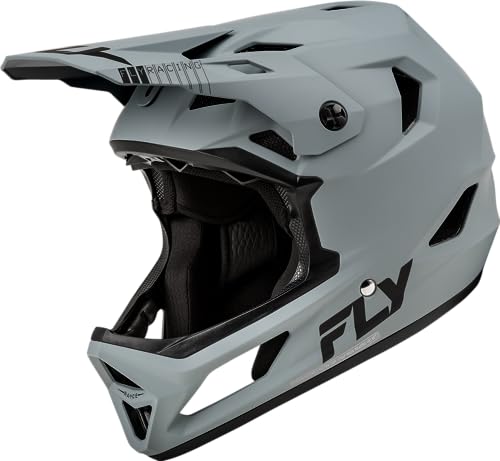
| Fly Racing Rayce | Younger or lighter riders, budget | About 930 g in medium; ASTM F1952-15, CPSC and CE EN1078 per one roundup | Heavier |
Several figures above come from affiliate-style roundups, so confirm the certification and weight on the maker’s own product page before buying. Weights also vary with size and shell.
Why ASTM F1952 Matters
Standard bicycle helmet testing under CPSC does not include the chin bar or the higher impact energies seen in downhill crashes. ASTM F1952 is the downhill mountain bike standard, and it adds tests aimed at that use, including chin bar strength. One buyer’s guide states it plainly: if you ride lift-accessed downhill, bike parks or aggressive enduro, you want that certification. Many lightweight full-faces skip it to save weight, and some highly ranked helmets do not carry it. Read the specification line rather than assuming a full-face shape means a downhill rating.
What Else to Look For
Rotational impact protection
MIPS and similar liners are designed to reduce rotational forces in an angled impact. The Mainline pairs MIPS with a Koroyd honeycomb liner; reviewers say the Smith’s design can creak when you move your head. A rotational layer does not replace a proper fit or the right certification.
Weight and neck fatigue
Lighter helmets reduce strain on long days. One guide says sub-700 g designs help but may sacrifice padding thickness or ventilation, and sub-600 g designs need careful fit checks. Its summary: a helmet that sits securely at 750 g will feel better than an ill-fitting 595 g model.
Ventilation
Full-faces run hot. Bike198 describes the Proframe RS as strongly ventilated, and compares it with the Mainline, which it says has plusher padding but runs hotter. For summer bike park days, airflow is a real factor in comfort and concentration.
Goggle and visor fit
Take your goggles to try on the helmet. The goggle strap should sit securely on the shell, and the frame should not press your nose. Check that the visor adjusts high enough for your preferred sight line.
Head shape
Some helmets have an oval bias. One guide says the Smith Mainline and Demon Podium fit oval heads better and may not suit rounder shapes. Interchangeable pads help tune the fit.
Best Light Option: Troy Lee Designs Stage
Pinkbike calls the Stage the lightest helmet on the market meeting the full DH testing standards at roughly 685 g. It is certified to ASTM F1952 and F2032, CPSC and CE according to the roundup, and Switchback Travel selected it as its best full-face. Bike198 notes the design dates to 2018 and has less ventilation than the Proframe RS. It suits riders who spend long days pedalling to the top of a descent.
Best for Airflow and Fit: Fox Proframe RS
Bike198 and Pinkbike both describe it as one of the best-ventilated enduro full-faces. Fox lists about 790 g in medium and the helmet is ASTM F1952 certified, which Bike198 stresses because many light full-faces are not. Weights reported in reviews range from roughly 820 g to 896 g. Reviewers say it looks large and some riders size down. If you ride hot climbs and want a micro-adjustable fit, this is a strong option.
Best for Bike Parks and Racing: Smith Mainline Mips
Most roundups name the Mainline as a top downhill pick. Gravel Pursuit says it combines Koroyd, MIPS and ASTM F1952, CPSC and NTA8776 certifications. OutdoorGearLab measured about 811 g in a large and says it blends comfort, ventilation and weight well, though it gave a modest 3.8 on its impact test. Gravel Pursuit lists it at 1.45 kg, which conflicts with other figures, so confirm the weight with the maker. Bike198 suggests the Mainline for comfort and the Proframe RS for airflow and adjustable fit.
Premium Race Helmets
The Fox Rampage Pro Carbon MIPS and Leatt Gravity 6.0 Carbon use carbon shells and are aimed at race riders and frequent bike park visitors. Quietroam recommends the Rampage Pro for pro downhill racers. Treat these as premium options: they offer strong build and many vents but cost more than the average rider needs.
Convertible and Light Enduro Options
The Bell Super DH MIPS has a tool-free removable chin bar and, according to one roundup, passes ASTM F1952 when the chin bar is attached. Use it with the chin bar on for downhill. The iXS Trigger FF is the lightest in the group at 595 g with MIPS and downhill certification according to the same source.
Budget Options
The Demon Podium X MIPS is described as a budget helmet with MIPS, ASTM F1952 and a weight under 750 g. The Fly Racing Rayce passes ASTM F1952-15 and is useful for younger or lighter riders, because most youth helmets only meet CPSC. A cheap helmet that is not downhill rated is not a suitable substitute for lift-served riding. One guide points out that the Demon United Podium and OutdoorMaster Rhino lack ASTM F1952 and MIPS, so they are better for casual riding.
Pick X If You Want Y
| If you want | Pick | Watch for |
|---|---|---|
| Light weight with DH certification | Troy Lee Designs Stage | Older design |
| Cooling and micro-adjustment | Fox Proframe RS | Large shell |
| Plush padding for park days | Smith Mainline Mips | Heat |
| Race-level carbon construction | Fox Rampage Pro Carbon or Leatt Gravity 6.0 Carbon | Cost |
| Dual use for trail and park | Bell Super DH MIPS | Chin bar must be attached for DH |
| Starter helmet | Demon Podium X MIPS or Fly Racing Rayce | Weight |
Budget Tiers
Budget: Demon Podium X MIPS, Fly Racing Rayce, Mongoose Title. Mid-range: Troy Lee Designs Stage, Fox Proframe, Bell Super DH MIPS, iXS Trigger FF, Leatt Enduro 2.0 for lighter use. Premium: Smith Mainline Mips, Fox Rampage Pro Carbon MIPS, Leatt Gravity 6.0 Carbon.
Fit and Care
- Measure around your head about one inch above the eyebrows and compare with the maker’s chart.
- The chin bar should not press your face when your mouth is closed.
- A two-finger gap under the chin strap indicates a good tension.
- Try the helmet with your goggles and, if you wear one, a neck brace.
- Replace after any significant crash. Follow the maker’s age guidance and avoid solvents when cleaning.
- Pair the helmet with other protective gear such as pads and gloves. A helmet reduces risk but does not remove it.
Frequently Asked Questions
What is ASTM F1952?
It is the downhill mountain bike helmet standard, with tests designed for higher impact energies and including chin bar strength. Standard CPSC testing alone does not include those chin bar requirements. Look for the certification on the maker’s page and inside the helmet.
Can I use an open-face trail helmet for downhill?
For bike parks and lift-served riding, a certified full-face provides much more coverage. Trail helmets are designed for lower speeds and different crash forces, so match the helmet to the terrain.
Are lighter full-face helmets less safe?
Not necessarily, but many light full-faces skip the downhill certification to save weight. The Stage and the iXS Trigger FF are described as meeting ASTM F1952 at lower weights, so check the specification rather than assuming from weight.
Is a convertible helmet a good idea?
It can be, if you ride both trail and park. The Bell Super DH MIPS is described as passing ASTM F1952 with the chin bar attached. Keep the chin bar on for downhill riding.
How should a downhill helmet fit?
It should be snug all around without pressure points, the chin bar should clear your face, and the strap should leave about a two-finger gap. Try it with goggles and a neck brace if you use one.
When should I replace a downhill helmet?
Replace it after any significant crash, even if damage is not visible, and sooner if the shell cracks or the liner compresses. Otherwise follow the maker’s age guidance, often around three to five years.


Write Your Review
No reviews yet. Be the first to share your experience!