

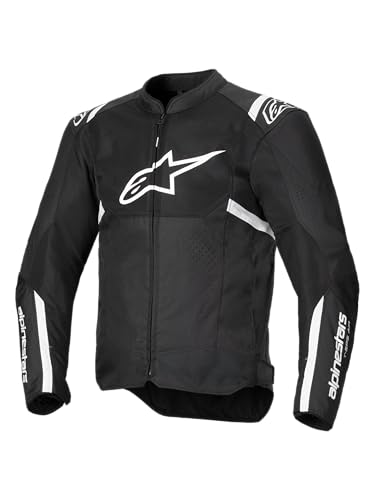
The best motorcycle jacket for most riders in 2026 is the Alpinestars Andes V4 Air for warm-weather versatility, the Alpinestars AMT-10R Drystar XF for premium all-weather touring, and the Icon Airform MIPS as the budget pick. A good jacket does three jobs: it resists abrasion in a slide, carries impact armor at the shoulders and elbows, and keeps you comfortable at the speed and temperature you really ride in. Pick the fabric for your climate first, then check the armor level and fit.
Our top picks


As an Amazon Associate we earn from qualifying purchases at no extra cost to you.
Quick Comparison of the Best Motorcycle Jackets
| Pick | Best for | Type | Armor | Price tier |
|---|---|---|---|---|
| Alpinestars Andes V4 Air | Best overall all-rounder | Ventilated textile | CE-rated shoulder and elbow armor | Mid-range |
| Alpinestars AMT-10R Drystar XF | Best premium touring | Waterproof textile | CE Level 2 armor | Premium |
| REV’IT! Tornado 4 H2O | Best value waterproof | Waterproof textile with liner | CE Level 2 targeted armor | Upper mid-range |
| Klim Induction | Best summer mesh | Karbonite mesh | D3O armor | Upper mid-range |
| Icon Airform MIPS | Best budget | Mesh textile | CE-rated armor | Budget |
| Klim Badlands Pro | Best adventure | Gore-Tex textile | CE-rated armor | Premium |
| Dainese Laguna Seca 6 | Best sport leather | Leather one-piece style | Hard-shell protection | Premium |
Specifications are drawn from manufacturer pages and independent roundups. Armor levels and liners vary by version, so confirm the exact model.
Best Overall: Alpinestars Andes V4 Air
The Andes V4 Air is a ventilated textile jacket that covers commuting, weekend rides and light touring. It has zippered vents, removable armor and a fit that works over a hoodie or base layer. It is often named as the best pick for most riders because it adapts across seasons with an optional liner.
The trade-off is that the vented construction is not fully waterproof. Carry a packable rain shell for sudden downpours.
Best Premium Touring: Alpinestars AMT-10R Drystar XF
This jacket uses a waterproof Drystar membrane and CE Level 2 armor, with versatility that suits all-day, all-weather rides. A serious touring rider who crosses mountains and rain appreciates the removable liner and large vent system.
The trade-off is price and weight. It is a big investment and may be more than a casual rider needs.
Best Value Waterproof: REV’IT! Tornado 4 H2O
The Tornado 4 H2O has a removable waterproof-breathable layer and targeted CE Level 2 armor at a lower cost than flagship touring jackets. It suits commuters who ride in all conditions but do not need the highest abrasion materials.
The trade-off is that it lacks airbag readiness and the top-tier abrasion fabrics seen in premium jackets.
Best Summer Mesh: Klim Induction
The Induction is a mesh jacket using Karbonite fabric and D3O armor. It moves a lot of air and is a standard choice for hot climates. Mesh is cool when moving, though less so in traffic.
The trade-off is zero rain and cold protection, so you must layer when conditions change.
Best Budget: Icon Airform MIPS
The Airform MIPS is a mesh-style jacket aimed at riders on a budget who still want CE-rated armor. It suits warm-weather commuting and new riders building a first kit.
The trade-off is thinner materials and fewer adjustments than the premium options, which means a shorter lifespan with heavy use.
Best Adventure: Klim Badlands Pro
Klim’s Badlands Pro uses Gore-Tex waterproofing and a durable fabric for mixed pavement and gravel. The cut allows room for body armor and layers. It is commonly listed among the best armored adventure jackets.
The trade-off is cost and heat. It is better suited to varied climates than to constant summer heat.
Best Sport Leather: Dainese Laguna Seca 6
Leather remains the benchmark for abrasion resistance. The Laguna Seca 6 serves sport riders who want track-inspired protection and a close fit. Leather also resists snags and cuts better than most textiles.
The trade-off is limited ventilation and rain resistance, and leather requires maintenance. It is also stiffer until broken in.
How to Choose a Motorcycle Jacket
1. Choose material by climate
- Mesh: best above about 25 degrees C (77 F). Needs a rain layer.
- Textile with liners: the all-season default for most riders.
- Leather: top abrasion resistance, good in dry weather and sport riding.
2. Understand abrasion ratings
Under EN 17092 in Europe, garments are rated AAA, AA, A, B and C, with AAA offering the highest protection for touring and sport and lower classes aimed at urban use. The rating describes the entire garment, not just the fabric.
3. Check the armor
Look for CE-marked shoulder and elbow armor, and a back protector pocket. Level 2 armor transmits less force than Level 1 in standard tests. If the jacket ships without a back protector, budget for a certified one.
4. Get the fit right
The armor should sit directly over the joints and not shift when you reach for the handlebars. Sit on the bike or mimic the riding posture in the shop. The sleeves should not ride up past your wrist.
5. Consider future upgrades
If you may add an airbag vest, choose a jacket with enough room, or with airbag-ready design.
Worked Example: Which Jacket for 3 Riders?
| Rider | Typical ride | Best match |
|---|---|---|
| Hot-climate commuter, 30 minutes each way | Stop-and-go, over 28 C | Klim Induction or Icon Airform MIPS |
| All-year rider with mixed weather | Highway and city, 0 to 30 C | Alpinestars Andes V4 Air or REV’IT! Tornado 4 H2O |
| Long-distance tourer | Multi-day, rain, mountains | Alpinestars AMT-10R Drystar XF or Klim Badlands Pro |
Durability and Ownership Realities
- Zippers and stitching fail before the fabric. Lubricate zippers periodically.
- Waterproof treatments fade. Re-proof the outer shell once a year with a spray designed for technical fabrics.
- Armor compresses over time. Replace it if it feels hard or cracks.
- Replace after a crash, even if the jacket looks fine, because stitching may be compromised.
- Washing: remove armor, close zippers and use gentle detergent; avoid fabric softener.
Common Mistakes When Buying a Jacket
- Buying armor-free fashion jackets. A jacket with no armor pockets only protects against light scrapes. Check for shoulder, elbow and back protection before paying.
- Sizing for a hoodie. If the jacket is loose, armor slides off the joint in a fall. Size for the layers you wear most.
- Ignoring the abrasion class. A fabric marketed as tough without a certified class tells you little. Look for EN 17092 labels such as AA or AAA.
- Skipping the liner question. Some jackets ship with a thermal liner and a rain liner, others sell them separately. Check what is included, because it changes the value.
- Forgetting visibility. Dark jackets blend into traffic. Reflective panels or a bright color improve how visible you are at dusk.
Layering Guide by Temperature
| Temperature | Base layer | Jacket setup | Extra |
|---|---|---|---|
| Above 30 C (86 F) | Thin moisture-wicking shirt | Mesh jacket, vents open | Hydration, cooling vest |
| 15 to 25 C (59 to 77 F) | T-shirt | Textile jacket, vents as needed | Packable rain shell |
| 5 to 15 C (41 to 59 F) | Long-sleeve base layer | Textile jacket with thermal liner | Neck warmer |
| Below 5 C (41 F) | Thermal base layer and mid layer | Waterproof jacket with full liners | Heated gloves or vest |
Wind chill at 100 km/h (about 62 mph) makes the air feel much colder than the thermometer suggests, so plan one temperature band colder than the forecast on highway rides.
Frequently Asked Questions
Are leather jackets safer than textile?
Leather has excellent abrasion resistance, but modern high-grade textile can match many leathers in certified tests. The best jacket is the one that fits, has proper armor and that you will actually wear.
What does CE Level 2 armor mean?
It means the armor transmits less impact force in standardized tests than Level 1. Level 2 is usually thicker, but modern materials such as D3O keep it flexible.
Do I need a back protector?
Many jackets include only a foam pad. A certified back protector offers better protection and is generally worth the added cost.
Can I wear a motorcycle jacket in the rain?
Only if it has a waterproof membrane or liner. Mesh and vented jackets will soak through, so carry a rain shell.
How should a motorcycle jacket fit?
Snug but not restrictive. The armor must remain in place over joints, the cuffs should not slide above the wrist in a riding position, and you should be able to wear a thin base layer.



Write Your Review
No reviews yet. Be the first to share your experience!