

Key takeaways
- Open face helmets for cruisers: 6 listings compared across half shell, 3/4 shell and convertible styles, with a shell decoder and a wind-and-eyes checklist.
For cruiser riders the choice among these six comes down to shell style. The Yesmotor and the ILM 205V are half shells with the least coverage, the Daytona and ILM 726X are 3/4 or open face shells that cover more of the head, and the TRIANGLE is a full face helmet whose chin mask detaches. All six are listed as DOT, but open face helmets leave your eyes and face exposed, so plan for eye protection separately. The table lines them up, and a short decoder explains the names that listings use so loosely.
- Lowest-profile look: Yesmotor Hawk style half shell, listed as compact and lightweight.
- Most coverage options: TRIANGLE convertible, where a detachable mask turns full face into 3/4 open face.
- Vintage cruiser look: Daytona 3/4 shell, with a clear visor and vintage design in the title.
- Adjustable fit: ILM 205V half helmet with a dial fit system and sun visor.
- Big heads: Daytona open face in XXX-Large, the only listing with a size that large.
Shell style at a glance
Our top picks


As an Amazon Associate we earn from qualifying purchases at no extra cost to you.
| Model | Key point from title | Best for |
|---|---|---|
| Yesmotor Half Shell, Hawk Style | Half shell, compact, lightweight, DOT approved, size L | Riders who want minimum coverage and a classic profile |
| Daytona Open Face Cruiser, XXX-Large | Open face, dull black, DOT approved, XXX-Large | Cruiser riders with a very large head |
| ILM 726X 3/4 Open Face | 3/4 half helmet, DOT, matte black, L | Riders who want more coverage than a beanie shell |
| TRIANGLE Convertible Full Face | Detachable mask turns it into 3/4 open face, tinted sunshield | Riders who want both a full face and an open face option |
| Daytona 3/4 Shell | 3/4 shell, clear visor, vintage design, adjustable fit | Classic cruiser styling with a visor |
| ILM Half Helmet 205V | Dial fit system, sun visor, quick release buckle | Short rides where adjustability and sun shade count |
Six helmets for the cruiser seat
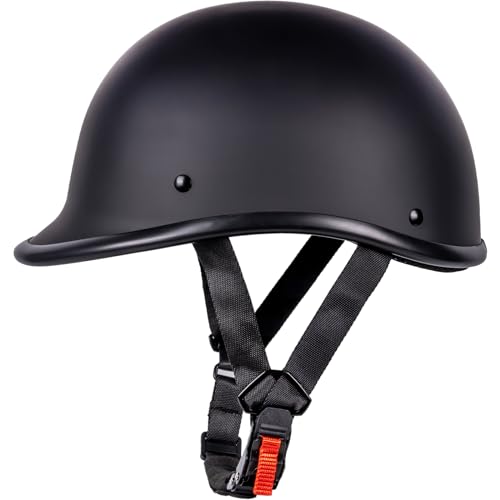
Yesmotor Half Shell Helmet, Hawk Style (L)
The title promises a compact, lightweight open face half shell in Matte Black, size L, aimed at street bike, cruiser and moped use, and states DOT approved. Hawk style generally describes a short, low shell, which leaves the ears and much of the head uncovered. That is part of the look, and it is also the least coverage on this list. The title does not mention a visor, so expect to add eye protection separately. Size L is stated, so take your head measurement with a soft tape and match it to the chart before ordering, as half shells still need to sit level and snug to stay put in a crosswind.
Pros
- Compact and lightweight, per the title
- Classic low-profile shape suits cruisers
Cons
- No visor or sun shield in the title
- Half shell gives the least coverage in this group
Who it’s for: Cruiser riders on short, slow trips who prioritize the low-profile look and will wear separate eye protection.
Daytona Helmets Open Face Cruiser (XXX-Large)
This is the one listing built around an extra-large head: Dull Black, DOT approved, XXX-Large, open face, cruiser. That is it for features, since the title says nothing about a visor, liner or ventilation. Large sizes are scarce in cheap helmets, so if you need XXX-Large this listing may simply be your option. Check the manufacturer documentation for the head range, because brands label their largest sizes differently. It is also worth asking whether the liner is padded evenly, since big sizes on a thin shell can feel loose at the crown, and a loose helmet can drift on the head when the wind picks up.
Pros
- XXX-Large available, rare in this category
- Cruiser styling and DOT claim in the title
Cons
- Almost no features listed
- Not for average heads in this size
Who it’s for: Cruiser riders with very large heads who have trouble finding sizes elsewhere.
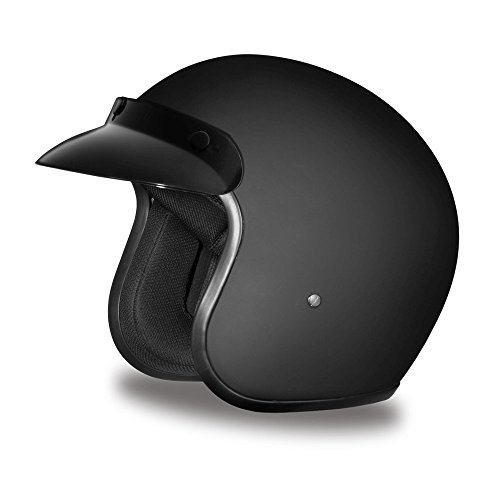
Daytona Helmets 3/4 Shell Open Face Helmet
Here the title lists a 3/4 shell with DOT approval, a lightweight and comfortable build, vintage design for scooter, cruiser and street bikes, an adjustable fit, enhanced ventilation and a clear visor. It is the most fully described pure open face listing, and the clear visor takes care of wind in the eyes. No size is stated, so check the chart. A 3/4 shell covers more of the sides and back of the head than a half shell. The vintage design in the title points to a retro look that tends to suit cruisers, and the visor is a practical bonus, though it is clear and so offers no shade on bright days.
Pros
- Clear visor included, per the title
- Adjustable fit and enhanced ventilation named
Cons
- No size stated in the title
- Clear visor offers no sun shade
Who it’s for: Cruiser riders who like vintage styling and want eye protection already built in.
ILM 726X Open Face 3/4 Half Helmet (L)
The title describes an open face 3/4 half helmet for dirt bike, moped, ATV, UTV, motocross, electric cruiser and scooter use, in DOT, Matte Black, size L. The “3/4 half” phrasing is a mixed label, so treat the coverage as unconfirmed and check the photos. The use list is very broad, from motocross to scooters, and a motocross claim for an open face shell deserves caution. Verify the certification label inside. If you ride a cruiser and not an off-road bike, the extra use categories add nothing, so judge it as a plain 3/4 shell. The dirt bike wording is the seller’s choice of keywords, not a feature.
Pros
- Wider coverage than a plain half shell, if photos agree
- Size L stated
Cons
- Confusing 3/4 half wording
- Use list is broader than an open face helmet should be assumed to cover
Who it’s for: Cruiser and scooter riders who want more coverage than a beanie, after reading the photos.
ILM Half Motorcycle Helmet 205V (Dial Fit)
This half helmet lists a dial fit system, a sun visor, a quick release buckle, a lightweight build and a removable inner, for ATV, cruiser, moped, scooter, motorbike, motocross and e-bike use. The dial lets you tighten the fit without swapping pads, which is handy if several riders share it. “DOT 205V” appears in the title and reads as a model code mixed with a certification term; do not treat it as a standard until the label is checked. The removable inner helps with washing, and the quick release buckle is handy with gloves, but fasten it properly on every ride because it is easy to leave half closed.
Pros
- Dial fit system for easy adjustment
- Sun visor and quick release buckle
Cons
- Certification wording in the title is unclear
- Half helmet, so limited coverage
Who it’s for: Short-ride cruiser riders who want adjustability and a sun visor in a half shell.
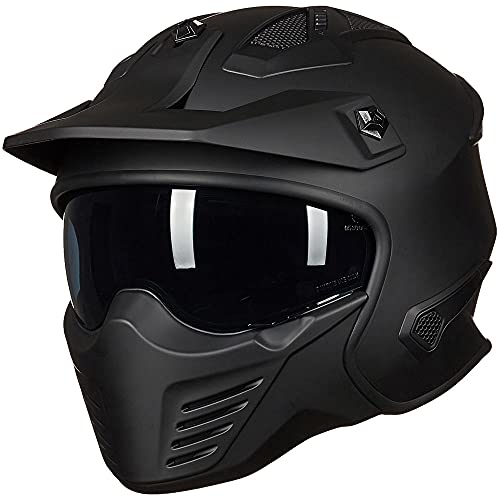
TRIANGLE Convertible Full Face Motorcycle Helmet
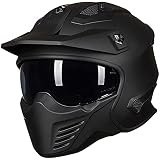
This listing is not an open face helmet at first glance; the title calls it a convertible full face with a detachable mask that turns it into a 3/4 open face. It also lists DOT approval, an internal tinted sunshield, a removable liner and a storage bag. The convertible idea gives cruiser riders a closed helmet for highway sections and an open one for town. Check how the mask attaches and whether the maker says the helmet is certified in both configurations, because a removable part changes how the shell behaves. A storage bag helps protect the visor and the detached mask in transit.
Pros
- Two configurations in one helmet
- Tinted sunshield and removable liner
Cons
- More parts to manage than a simple shell
- Convertible helmets can be heavier than half shells
Who it’s for: Riders who want a full face helmet for highways and an open face look in town.
How we picked these
We read each title for shell style, certification claim, visor and fit features, then grouped the six by coverage from half shell to convertible. Nobody on the team used or measured these units. Our basis is published specifications, manufacturer documentation and buyer reviews, and the product facts here come from the listing titles alone. Several titles use style words such as Hawk and 3/4 half loosely, so where the title is unclear we flag it. We have not ranked beyond the picks list; each model has its own use.
What to look for in an open face helmet for a cruiser
Shell style decoder
Listings use a handful of words for roughly three shapes, and the table below turns them into plain coverage terms. When a title mixes names, as with “3/4 half”, rely on the product photos and ask the seller.
| Name in listing | Usually covers | Leaves open |
|---|---|---|
| Half shell, beanie, Hawk style | Crown and upper forehead | Ears, lower sides, face |
| 3/4 shell, open face | Crown, sides, ears, lower back | Face and jaw |
| Convertible | Full face, or 3/4 with the mask off | Face when the mask is removed |
Eyes, wind and noise
Open face helmets do not protect your eyes by themselves. Some include a visor or sun visor, but a short sun visor shades more than it shields. If none is included, add goggles, glasses rated for riding or a clip-on shield, and check local rules, which can require eye protection. Wind noise is also higher with an open shell, so many cruiser riders consider ear protection.
Fit and retention
Dial systems, quick release buckles and chin straps all affect how securely the helmet sits. A quick release buckle is easy with gloves but should be fastened every ride. If the helmet lifts at the back in wind, the size or strap fit is wrong. A worked example: if the strap leaves more than a finger of slack under the chin, tighten it and tug the back of the helmet upward; if it rolls off your forehead, choose a smaller size.
Liner, ventilation and weight
A removable liner makes washing easier, which matters in hot weather when an open shell still gets sweaty. Weight is rarely given in titles, so check the product page; a lighter shell reduces neck fatigue over a long cruise, though very light shells may also feel less planted in crosswinds. Vents help in summer but let in cold air in autumn.
Highway-speed checklist
- Confirm a DOT label sits inside the helmet.
- Check that the strap does not slip in wind.
- Pack eye protection and a spare.
- Expect noise and wind blast to rise with speed.
- Do not buy a half shell if you plan long highway stretches.
Mistakes buyers make
Choosing by looks only. A low Hawk-style shell is good looking, but it is also the lowest coverage on the list.
Forgetting the eyes. Wind, bugs and grit reach your face. Buy eye protection together with the helmet.
Trusting a vague label. “3/4 half”, “205V” and similar words are easy to misread. Check the photos and the certification label.
Skipping a fit check. Even a dial-fit helmet needs the correct shell size first, and an open face shell will show every fit problem as lift or shift in the wind.
Ignoring weather. Cold, rain and sun hit an open face hard, so plan layers and a visor.
Verdict
Pick the shell style first. For minimum coverage, the Yesmotor half shell fits; for more coverage with a clear visor, the Daytona 3/4 shell has the fullest description. The TRIANGLE convertible is the flexible choice, the ILM 205V adds a dial fit, and the Daytona XXX-Large serves big heads. Whichever you choose, add eye protection, verify the label inside, and decide whether you will take highway rides in it. If so, the TRIANGLE convertible is the one to consider.
Related guides
- Full Face Motorcycle Helmet For Small Heads
- How To Measure Head Size For A Motorcycle Helmet
- Quiet Motorcycle Helmets For Highway Riding
Frequently asked questions
What is the difference between a half helmet and a 3/4 helmet?
A half helmet covers the top of the head and leaves the ears and lower sides open. A 3/4 helmet extends over the ears and further down the sides and back, so it covers more. Listing names are used loosely, so confirm the actual coverage from the product photos before ordering, and ask the seller if the description is unclear.
Do open face helmets protect the face?
Not by themselves. The face, jaw and eyes are open, so a visor, goggles or glasses rated for riding are important. Even then, an open face helmet gives less coverage than a full face helmet. Choose based on the speeds and the roads you ride, and follow local rules on eye protection and helmet type.
Is a sun visor the same as eye protection?
No. A short sun visor mainly reduces glare and does little against wind, grit or insects. A clear visor or goggles give more protection. If the helmet only has a sun visor, add proper eye protection and check local rules. Keep a clear option available for evening rides, when a tinted shield is a poor choice.
Are convertible helmets a good idea for cruisers?
They can be, because you can ride in a closed configuration on the highway and remove the mask in town. The trade-offs are extra parts, possibly extra weight and a need to check how the mask locks. Read the maker’s instructions before relying on either mode, and check that the mask locks securely every time you put it on.
How can a buyer check a helmet carries a DOT label?
Look for the DOT marking on the helmet, usually inside or on the back, and compare it with the maker’s documentation. A listing that says DOT approved is a seller claim. If you cannot find a label or the marking looks wrong, return the helmet and contact the seller, as a missing or odd marking is a good reason to stop.



Write Your Review
No reviews yet. Be the first to share your experience!