

For most ATV riders, a DOT-certified full-face helmet with a built-in communicator such as the Sena Outforce is the simplest Bluetooth choice, the modular Sena Outrush 2 suits riders who want mesh intercom and a flip-up chin bar, and a Bluetooth-ready helmet fitted with a separate Sena or Cardo unit is best for riders who already own a communicator. The deciding factors are certification, group size, noise and whether the helmet suits trail riding in the first place.
ATV riding differs from road riding. Speeds are lower, but trails are rough, dusty and loud, and riders are often in groups with mixed equipment. A helmet that works for a street rider may leak dust, fog in the cold or suffer from engine and wind noise. This guide looks at the options independent outlets and makers describe, and explains what to confirm before buying a helmet whose electronics will sit against your ears for hours.
Our top picks


As an Amazon Associate we earn from qualifying purchases at no extra cost to you.
Bluetooth Helmet Options at a Glance
| Option | Best for | Reported specs | Limits |
|---|---|---|---|
| Sena Outforce | Full-face protection with built-in comms | DOT full-face; polycarbonate ABS shell; Bluetooth 5.1 per Sena, 5.0 per some retailers; HD intercom about 900 m; up to 12 hours talk time | Intercom range shorter than mesh units; a full-face has no chin bar to lift |
| Sena Outrush 2 | Group riding and flip-up convenience | Modular; Bluetooth 5.2; Mesh Intercom 3.0 reaching about 1.2 km open terrain; up to 24 in a group mesh; 20 hours talk time; Pinlock 70 ready | Modular helmets are heavier at the chin; check the certification label for your region |
| Scorpion EXO-AT960 with a Sena 10R | Adventure and dual-sport styling | Bluetooth-ready with speaker pockets; Sena 10R fitted without pressure points per a reviewer | Communicator sold separately |
| Bell SRT Modular or LS2 Valiant II | Riders who want to choose their own system | Compatible with Cardo or Sena units, per Rokform and It’s Better On The Road | Two purchases; wiring and speaker placement matter |
| Cardo Packtalk series | Weatherproof add-on communicator | Rokform lists 1.6 km range, 15 riders and IP67 weather protection | Helmet bought separately |
| Cardo Freecom 4X or Sena 30K | Mid-range communicator | Described by Rokform as offering most premium features at a reasonable level | Fewer riders in group mode than top models |
Built-In Versus Add-On Communicators
A helmet with an integrated communicator like the Sena Outforce or Outrush 2 comes with speakers and microphone already placed in the shell, which gives a cleaner look and often better fit. The downside is that if the electronics fail or the technology moves on, you replace the helmet. An add-on unit on a Bluetooth-ready helmet can be upgraded separately and moved between helmets, and it is the usual choice for riders who already use Cardo or Sena in a riding group.
Compatibility between brands is a practical issue on mixed groups. According to the kiddofspeed guide, the Sena Outrush 2 works with Sena’s Wave Intercom, which can talk to other brands of headsets over cellular networks. That is helpful if friends use Cardo, though Wave depends on phone coverage, and many trails have none.
Sena Outforce
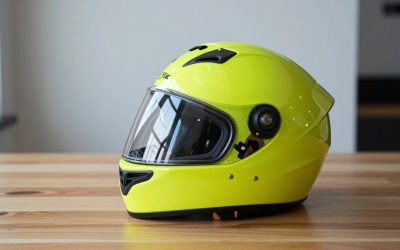
The Outforce is a DOT-rated full-face with a built-in four-way Bluetooth intercom. Retailers describe it as the North American DOT version of the ECE-rated OutRide. The shell is polycarbonate ABS over a multi-density EPS liner, a medium weighs about 1,600 grams, and it has a retractable sun visor, quick-release shield, top, chin and exhaust vents and a removable washable liner. The listed intercom distance is about 900 meters with talk time up to 12 hours, and charging takes about 2.5 hours. The maker lists an operating temperature from minus 10 to 55 degrees Celsius.
Sena Outrush 2
Sena launched the Outrush 2 in 2025 as a modular helmet with Mesh Intercom 3.0 and Wave Intercom. Specifications reported by retailers and Ultimate Motorcycling include an ABS shell with multi-density EPS, a built-in tinted drop-down visor, Pinlock 70 readiness, Bluetooth 5.2, Mesh range of 1.2 kilometers in open terrain and 20 hours of talk time. Sena advertises P/J dual homologation, but Ultimate Motorcycling reports the US version is DOT-certified only, so the certification you get depends on where you buy. Read the label on the helmet you receive.
A modular helmet is convenient on a quad, since you can lift the chin bar during stops, but the hinge mechanism adds weight and some riders prefer the extra rigidity of a one-piece full-face for rough terrain. Do not ride with the chin bar open unless the maker states the helmet is certified for that.
Adventure and Bluetooth-Ready Helmets
Riders who already own a communicator can look at Bluetooth-ready helmets with built-in speaker pockets. The Scorpion EXO-AT960 is described as fitting the Sena 10R in its 50 millimeter speaker pockets without pressure on the ears. The HJC i90 and i91 are designed around HJC’s Sena-built Smart units, and the Schuberth C5 is pre-wired for Sena’s SC2 system. Whether any of these suits ATV use depends on peak shape, ventilation and eye port size; adventure peaks help against sun and branches on a trail.
What to Check Before Buying
- Certification: Look for DOT in the US, and ECE 22.06 or 22.05 elsewhere. A helmet without a certification mark is not a safe choice, whatever its electronics.
- Fit: Speakers sit by your ears, so check for pressure points after an hour. Wear the helmet at home before deciding.
- Group size: Mesh systems handle large groups. Bluetooth-only intercoms are usually limited to a handful of riders.
- Noise: Engines and wind noise are loud on a quad. Noise control and good speakers matter more than headline range.
- Battery and charging: Long days need long talk time. Add a power bank if a unit cannot be charged mid-ride.
- Dust and water: IP-rated units like the Cardo Packtalk are intended for wet and dusty conditions.
Budget, Mid-Range and Premium Tiers
- Budget: A Bluetooth-ready helmet with a mid-range communicator such as the Cardo Freecom 4X or Sena 30K. Reviewers describe these as offering most premium features.
- Mid-range: The Sena Outforce for a combined helmet and intercom.
- Premium: The Outrush 2 with mesh and Wave, or a premium helmet with a Packtalk or Sena 50 series unit.
Pick X If You Want…
| If you want… | Pick | Why |
|---|---|---|
| A DOT full-face with comms ready to ride | Sena Outforce | Integrated four-way intercom |
| Large group trail rides | Sena Outrush 2 | Mesh Intercom 3.0 and Wave Intercom |
| Keeping your existing Cardo | Bluetooth-ready helmet, Packtalk unit | Mixed hardware, IP67 weather protection |
| An adventure style with sun peak | Scorpion EXO-AT960 with a Sena unit | Speaker pockets and peak |
| A low cost way into comms | Sena 30K or Cardo Freecom 4X in a ready helmet | Mid-range features |
Fit, Safety and Care
An ATV helmet should be snug, with no movement when you shake your head, and it should not press on the forehead or cheeks. Never modify a helmet shell by drilling or gluing unless the maker approves it, because modification can reduce protection. Keep cables clear of the liner’s energy-absorbing areas, and follow the manual for speaker placement.
Clean the liner according to the maker’s directions, and let electronics dry fully before charging. Replace the helmet after any significant impact and at the interval recommended by the maker, since materials age. Remember that a communicator is a distraction tool as well as a convenience. Keep calls and music low on rough terrain and avoid fiddling with controls while moving. Many trail systems and local rules also ban or limit riding with headphones, so find out the rules where you ride.
Alternatives to Consider
- Open-mesh intercom add-ons: The Cardo and Sena mesh units can be moved from helmet to helmet.
- Handheld radios: A cheaper way to keep a group in touch on a trail, though they need a hand or a clip-on speaker.
- Motocross helmets with a separate headset: Common among ATV riders, but make sure the unit is designed to fit an open-face shape.
- HJC i90 or i91: Built around HJC’s Smart communicator line.
Frequently Asked Questions
Can I use a motorcycle Bluetooth helmet on an ATV?
Yes, a DOT-certified helmet is generally acceptable, but ATV riding is dustier and rougher. Choose good ventilation, a visor that suits trail glare and electronics rated for wet and dusty conditions.
Should I buy a helmet with built-in Bluetooth or add a unit?
Built-in is cleaner and ready to use. An add-on is more flexible, since you can upgrade or move it. If your group already uses Cardo or Sena, matching their brand makes pairing simpler.
What range can I expect from a helmet intercom?
Makers list long ranges, such as about 1.2 kilometers for the Outrush 2 mesh in open terrain, but trees, hills and other riders reduce real range. Treat the figures as best-case numbers.
Do Sena and Cardo work together?
Not directly in their native modes. Sena’s Wave Intercom can connect different brands over cellular, but it needs phone signal. Some units also support a universal intercom pairing with limited features.
How long do the batteries last?
The Outforce lists up to 12 hours of talk time and the Outrush 2 about 20 hours. Cold, loud conditions and heavy use shorten it, so bring a charger for multi-day trips.
Is it safe to listen to music while riding?
It can distract you from engine sounds and other riders. Keep the volume low, prefer voice prompts over music on technical terrain, and follow local rules on headphones.






Write Your Review
No reviews yet. Be the first to share your experience!