

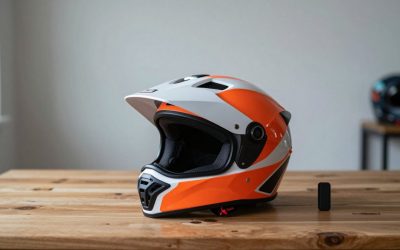
The best ATV helmets in 2026 are motocross-style, full-face helmets with a certified shell (DOT in the US, ECE 22.06 where applicable), good airflow and a fit that stays steady over rough ground. The Fox Racing V3 RS and Bell Moto-10 Spherical lead on protection, the 6D ATR-2 on impact-management technology, and the Fly Racing Formula CC on value.
Our top picks


As an Amazon Associate we earn from qualifying purchases at no extra cost to you.
Quick comparison of top ATV helmets
| Pick | Best for | Key specs (approximate) | Price tier |
|---|---|---|---|
| Fox Racing V3 RS | Best overall protection | Carbon shell, MIPS, about 1,200-1,300 g | Premium |
| Bell Moto-10 Spherical | Rotational protection | Spherical liner, about 1,300-1,400 g | Premium |
| 6D ATR-2 | Multi-impact management | Dual-density liner, about 1,300-1,400 g | Premium |
| Troy Lee Designs SE5 | Style and fit | Composite shell, MIPS option, about 1,300-1,400 g | Upper mid-range |
| Fly Racing Formula CC | Best value | Carbon composite, about 1,300-1,400 g | Mid-range |
Best overall: Fox Racing V3 RS
The V3 RS pairs a carbon shell with MIPS and a streamlined design, offering low weight and strong airflow. It fits riders who push hard on trails and sport ATVs. The trade-off is the premium price, and the fit leans toward an intermediate oval head.
Best rotational protection: Bell Moto-10 Spherical
The Moto-10 Spherical uses a ball-and-socket-style liner designed to manage rotational forces. It is a safety-driven pick with a comfortable fit for a wide range of heads. Its downside is cost and slightly higher weight than the lightest rivals.
Best for impact management: 6D ATR-2
6D’s omni-directional suspension system separates the inner and outer shells to manage different impact types. The result is a distinctive design with high safety interest among riders. It costs more and has a fit that varies by head shape.
Best for style and fit: Troy Lee Designs SE5
The SE5 delivers a light composite shell, many graphic choices and good ventilation. It suits riders who prioritize fit and aesthetics along with solid protection.
Best value: Fly Racing Formula CC
The Formula CC offers a carbon-composite shell and a well-ventilated interior at a lower tier than the leaders. It is a smart choice for casual trail and farm riders who still want serious protection.
How to choose: ATV-specific criteria
- Certification: look for a DOT label in the US or ECE 22.06 in Europe. Some motocross helmets carry both.
- Peak and goggles: choose a helmet that fits your goggles with no gap on the nose bridge.
- Weight: under 1,400 g reduces neck strain on long trail days.
- Chin bar: an extended chin bar boosts protection but needs good vents to reduce heat.
- Cold or wet riding: consider an adventure or snow-ready helmet instead; motocross helmets are ventilated for heat.
Fit by head circumference
| Size | Head circumference |
|---|---|
| Small | 55-56 cm |
| Medium | 57-58 cm |
| Large | 59-60 cm |
| X-Large | 61-62 cm |
Measure with a soft tape about 2 cm above the brow, then check the maker’s chart because brands differ. A correct fit feels snug and does not slide when you shake your head.
Decision matrix
| Rider | Choose | Why |
|---|---|---|
| Aggressive trail or sport rider | V3 RS or ATR-2 | Light, advanced liner systems |
| Safety-first family rider | Moto-10 Spherical | Rotational focus, comfortable fit |
| Weekend farm or utility use | Formula CC | Strong protection, lower cost |
| Style-conscious rider | SE5 | Wide graphic options |
Durability and ownership realities
Dust, mud and sweat quickly wear liners, so choose a helmet with removable, washable pads. Replace the helmet after any significant impact and typically after 5 years. Keep screws tight, check strap stitching and store the helmet in a breathable bag, away from fuel and solvents which can degrade materials. Goggle foam and nose guards are the first consumables to wear out.
A Step-by-Step Way to Pick Your ATV Helmet
Most riders shop by brand or graphics first and think about fit later. Reverse that order. A helmet that does not match your head shape will never protect as well as the maker intended, no matter how advanced the liner is. Work through these steps in sequence and the shortlist usually narrows to one or two models without much effort.
- Define the riding you actually do. Tight wooded trails, open desert, sport track days, farm chores and family rides each ask for something slightly different. Be honest about the speed, the terrain and the number of hours you spend in the seat each month.
- Confirm the safety label. Check for a DOT sticker in the United States, or an ECE 22.06 label where that standard applies. A helmet without a visible label is not worth considering, however good it looks in photos.
- Measure your head and read the size chart. Use the tape method described earlier in this guide, then compare against the specific maker chart. Do not assume that a medium in one brand equals a medium in another.
- Decide how much rotational protection matters to you. The Fox V3 RS uses MIPS, the Bell Moto-10 uses its Spherical liner, and the 6D ATR-2 uses its own suspension design. All aim at the same problem: twisting forces on the brain during an angled impact.
- Check goggle compatibility. Bring your goggles, or at least know their frame size, and verify that the eyeport does not press on the nose bridge or leave a gap at the brow.
- Weigh comfort over a full day. A helmet that feels fine in a shop for five minutes can become a pressure-point problem on hour three. Look for soft cheek pads, a smooth neck roll and padding that does not bunch.
- Set a tier and stick to it. Premium helmets buy lighter shells, finer adjustment and extra liner technology. Mid-range options such as the Fly Racing Formula CC cover the essentials well. Pick the tier first, then compare within it.
If two helmets tie after all seven steps, choose the one that is more comfortable on your head. Comfort decides whether you keep the helmet on, keep the strap fastened and keep riding safely for years.
Who Should Think Twice Before Buying a Motocross-Style Helmet
The helmets in this guide are built for warm, dusty, vigorous riding. They are not the answer for every ATV owner, and it is better to know that before spending money.
- Cold-weather and snow riders. The large vents that keep you cool in summer also let in freezing air. If you plow snow or ride in near-freezing mornings, an enclosed adventure or snow-rated helmet with a breath box and a shield is more comfortable and safer for your eyes.
- Riders who wear prescription glasses all day. Goggles over glasses can be awkward. Try a helmet with a generous eyeport and shallow cheek pads, or consider whether a visor-equipped design suits you better.
- Very occasional users with a long gap between rides. If you ride twice a year, the best helmet is the one that fits correctly and is stored well, not necessarily the most advanced. A sensible mid-range option beats a premium one that sits in a hot garage.
- Riders who need one helmet for multiple vehicles. If the same helmet must serve on the road, on a motorcycle and on the ATV, a dual-sport or adventure style with a visor may be a better compromise than a pure motocross shell.
- Anyone with an unusually round or very narrow head. The Fox leans toward an intermediate oval, so a rounder head may feel pressure at the temples. In that case, try other shapes before settling.
None of this means the picks above are wrong. It means the right helmet is the one matched to the person wearing it.
Fitting and Setup Checks Before Your First Ride
Unboxing a new helmet and heading straight to the trail is a common mistake. Spend ten minutes on setup at home and you will catch most fit problems while a return is still simple.
The shake and roll tests
Fasten the chin strap so that you can slip one finger between the strap and your chin. Shake your head side to side and nod up and down. The helmet should move with your head, with the skin of your forehead moving along with the padding. Next, grip the back of the helmet and try to roll it forward off your head. If it rotates down over your eyes or comes off, the size is too large or the strap is too loose.
Pressure points and hot spots
Wear the helmet for at least twenty minutes indoors. A mild, even squeeze across the cheeks is normal because pads compress over the first few rides. A sharp ache at the forehead, temples or the top of the head is not normal and usually signals the wrong shape or size.
Goggle seal
Put your goggles on over the helmet and look straight ahead and then upward. The foam should sit flush against the face with no gap at the top and no pressure on the nose. Adjust the strap so it sits over the back of the shell instead of slipping down toward the neck.
Strap routing and buckle
Check that the strap lies flat and is not twisted. Test the D-ring or buckle several times. If it feels stiff or sticky out of the box, work it open and closed until it moves smoothly, because you will use it with gloves on.
Peak angle
Many motocross shells have an adjustable peak. Set it so it blocks the sun without limiting your view upward on hills. A peak set too low can also catch wind at speed and tug at your neck.
Matching a Helmet to Your Terrain and Riding Style
Instead of repeating the decision matrix, here are practical scenarios that point to the products already covered in this guide.
- Technical wooded trails with low branches. A secure fit and strong chin protection matter most. The Fox V3 RS or the Troy Lee Designs SE5 suits this style because both are light enough to reduce neck fatigue during constant steering input.
- Fast open desert and dunes. Airflow and visibility win. The V3 RS handles heat well, and the Bell Moto-10 Spherical gives a comfortable fit when riding for hours with goggles and a neck brace.
- Sport riding with aggressive cornering. The 6D ATR-2 is aimed at riders who accept higher risk and want a liner design built around multiple impact types. It is also the one to try on carefully, since head-shape compatibility varies.
- Farm, ranch and property work. Slow speeds, frequent stops and long days mean comfort and ventilation count more than race features. The Fly Racing Formula CC is a practical choice here, and its lower tier keeps budget available for gloves, boots and eye protection.
- Family trail rides with mixed experience levels. If the group includes newer riders, a Bell Moto-10 Spherical for the adult in charge is a sensible safety-first choice, while everyone else should wear a properly sized certified helmet of their own, never a hand-me-down that does not fit.
- Riders who like to stand out. The SE5 offers many graphics, which can help friends spot you on a crowded trail. Bright colors also help with visibility to other vehicles at crossings.
Whatever you choose, pair the helmet with the rest of the kit. Eye protection, gloves, boots, a chest protector and long sleeves reduce injuries that a helmet cannot address on its own.
Cleaning, Storage and Care Habits That Extend Helmet Life
Good habits cost almost nothing and keep padding fresh, buckles working and the shell free from hidden damage.
- Wipe it down after every muddy ride. Use a damp cloth and mild soap. Harsh solvents, gasoline and strong cleaners can weaken the shell and the foam, so avoid them completely.
- Remove and wash the pads regularly. Hand wash in cool water with gentle soap, rinse thoroughly and let them air dry. Do not use a dryer, which can shrink foam and loosen stitching.
- Dry the inside fully before storage. A damp liner breeds odor and bacteria. Leave the helmet upside down on a stand or in a ventilated spot after rinsing or sweating.
- Store in a cool, shaded place. A shelf in a garage next to the fuel can or a hot truck cab shortens the life of the materials. A soft helmet bag keeps dust off and protects the finish.
- Never hang it by the strap on a handlebar. Rough placement and drops can cause hidden damage. Treat a dropped helmet with suspicion and inspect it, especially if it hit concrete.
- Handle stickers and paint with care. Some adhesives and paints react with the shell material. Use stickers designed for helmets, and ask the maker if you are unsure.
- Inspect before each season. Look for cracks, dents in the foam, fraying straps and loose rivets. If anything looks questionable, retire the helmet.
Common Problems and Simple Fixes
| Problem | Likely cause | What to try |
|---|---|---|
| Goggles fog constantly | Poor airflow at the nose bridge or sweat on the foam | Check the gap, clean the lenses, use an anti-fog treatment and make sure the helmet vents are open |
| Headache after an hour | Shell shape does not match head shape, or the size is too small | Try a different shape or the next size, and review the cheek pad thickness |
| Helmet shifts on bumps | Loose strap or oversized shell | Tighten the strap, or fit thicker cheek pads if the maker offers them |
| Wind noise or buffeting | Peak angle or visor position | Lower or raise the peak slightly and test on a short ride |
| Musty smell | Sweat trapped in the liner | Wash the pads, dry the helmet fully and rotate between two sets if you ride often |
| Strap feels rough on the neck | Webbing is stiff or twisted | Re-route the strap flat, and consider a soft strap cover |
If a problem persists after these adjustments, speak with the retailer about an exchange. Living with a poor fit is not worth it.
More Questions Buyers Ask
Should my child wear an adult-sized helmet to grow into it?
No. A helmet that is too large moves during an impact and cannot protect properly. Choose a youth helmet that fits now, check it every season and replace it when the child outgrows it.
Is a neck brace necessary with an ATV helmet?
It is not required, but aggressive trail and sport riders often use one. A brace works with the helmet by limiting extreme head movement, so check that your helmet and brace work together before you ride.
Can I add a communication system or camera to the helmet?
Many riders do, but drilling or gluing to the shell can interfere with the structure and may void the warranty. Use clamp-style mounts and follow the manufacturer guidance on attachments.
Does a lighter helmet always mean a safer helmet?
No. Lower weight reduces fatigue, but protection depends on the shell, liner and fit. Choose a certified model that fits well first, then compare weight within that group.
What should I do with an old helmet?
If it has been in a crash or is past its recommended age, retire it. Cut the strap so nobody reuses it, and recycle or dispose of it according to local rules. Do not sell or donate a helmet with an unknown impact history.
Frequently Asked Questions
Can I use a motorcycle helmet for ATV riding?
Yes, a certified full-face helmet works, but motocross-style helmets offer better ventilation and a peak that helps with sun and debris on trails.
Do ATV riders need goggles?
Goggles protect your eyes from dust, mud and branches when you use an open-face motocross style helmet. If your helmet includes a visor, goggles are less necessary.
Is MIPS necessary for an ATV helmet?
It is not required, but it adds rotational protection many riders value. Spherical and similar systems are alternatives that serve the same goal.
How often should I replace an ATV helmet?
Replace after any crash or heavy impact and generally within 5 years, since materials age with sun, sweat and heat.
What size ATV helmet should I buy?
Measure your head about 2 cm above your eyebrows and match the result to the maker’s chart. The helmet should feel snug without pressure points.
More from Amazon
Programs that pair well with the guide above. Offers and eligibility are set by Amazon and may change.
Free shipping on eligible items, Prime Video and more. Eligible new members can start with a free trial.
Start a Prime free trialA Prime membership for ages 18-24 with a trial period. Eligibility is set by Amazon.
See Prime for Young AdultsAudiobooks and podcasts to listen to on the go. Eligible new members can start with a free trial.
Try Audible freeAd-free music streaming. Eligible new subscribers can start with a free trial.
Try Music Unlimited freeAs an Amazon Associate we earn from qualifying purchases.





Write Your Review
No reviews yet. Be the first to share your experience!