

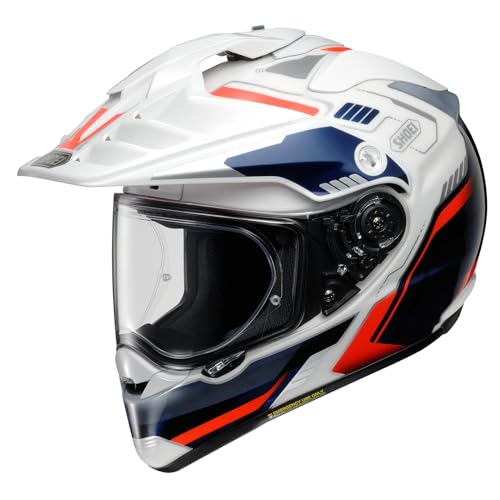
The best adventure motorcycle helmets in 2026 balance on-road comfort with off-road airflow, a peak that handles sun and roost, and a shell light enough for all-day riding. The Shoei Hornet X2 is the benchmark all-rounder, the Klim Krios Pro is the lightest premium option, and the Scorpion EXO-AT960 is a modular choice for riders who want a flip-up chin bar.
Our top picks



As an Amazon Associate we earn from qualifying purchases at no extra cost to you.
Quick comparison of adventure helmets
| Pick | Best for | Key specs (approximate) | Price tier |
|---|---|---|---|
| Shoei Hornet X2 | Best overall | Multi-density EPS, about 1,500-1,600 g, drop-down sun visor | Premium |
| Arai XD-4 | Safety and build quality | Rounded shell, about 1,600-1,700 g, large visor | Premium |
| Klim Krios Pro | Lightweight, hot-weather | Carbon composite shell, about 1,300-1,400 g | Premium |
| AGV AX9 | Road-biased touring | Carbon-aramid shell, about 1,400-1,500 g | Upper mid-range |
| Scorpion EXO-AT960 | Modular riders on a budget | Flip-up chin bar, about 1,700 g, drop-down sun visor | Mid-range |
Best overall: Shoei Hornet X2
The Hornet X2 is a long-standing benchmark. It manages wind noise well, offers strong ventilation and has a drop-down sun visor. It handles long highway stretches and light off-road use. The trade-off is weight and a price that sits at the top of this group.
Best for build quality: Arai XD-4
The XD-4 follows Arai’s round-shell philosophy and uses a large eyeport and carefully tuned ventilation. It suits riders who prefer Arai’s feel. The disadvantage is the firmer fit and higher weight compared with carbon-based rivals.
Lightest premium: Klim Krios Pro
The Krios Pro uses a carbon composite shell to cut weight and fatigue. It carries a ratchet-style visor and a removable peak for different riding conditions. It suits warm-weather and technical riders who want less neck strain. It is less quiet than the Hornet on pure highway runs.
Best road-leaning: AGV AX9
The AX9 emphasizes aerodynamics and ventilation, a sleek shape and a quiet ride for long road sections. It is a good fit when most of your riding is on pavement. Its peak is less aggressive for heavy dirt use.
Best modular option: Scorpion EXO-AT960
The EXO-AT960 offers a flip-up chin bar, a sun visor and a peak, giving practical flexibility for tours with frequent stops. Modular helmets weigh more and a hinged chin bar is a theoretical weak point compared with a fixed full-face shell, so choose this only if the convenience matters.
How to choose: key criteria
- Weight: every 100 g adds noticeable strain over a 10-hour day. Aim for under 1,500 g if you ride rough terrain.
- Ventilation: look for chin, forehead and exhaust vents that can be operated with gloves on.
- Peak: a movable peak blocks sun and roost; remove or tuck it for highway speeds, where it can lift.
- Goggle compatibility: check that the eyeport accepts your goggles if you plan to ride without the visor.
- Comms readiness: speaker pockets save time later.
Decision matrix
| Situation | Choose | Why |
|---|---|---|
| Mostly highway, some gravel | AGV AX9 or Hornet X2 | Quiet, stable at speed |
| Technical off-road, hot climate | Klim Krios Pro | Lowest weight and strong airflow |
| Frequent stops, glasses wearer | Scorpion EXO-AT960 | Flip-up chin bar |
| Round head | Arai XD-4 | Intended fit geometry |
Durability and ownership realities
Peaks and visor screws take most of the wear in off-road use, and bent peak screws are a common failure after a tip-over. Keep a spare set of screws and a spare visor in your luggage. Clean vents with a soft brush after dusty trips, wash liners by hand and let the helmet dry away from direct heat. Replace the helmet after a significant impact and typically after 5 to 7 years.
How to Choose an Adventure Helmet Step by Step
An adventure helmet sits between a road helmet and an off-road helmet, which makes it easy to choose badly. A methodical approach narrows the field before you ever try one on.
- Define your riding mix. Estimate the share of highway, gravel and technical trail. A rider who spends most days on pavement should lean toward a quiet, aerodynamic shell such as the AGV AX9, while a rider on rough terrain may prefer the lighter Klim Krios Pro.
- Measure your head shape. Most people are round oval, intermediate oval or long oval. Round-shell helmets like the Arai XD-4 suit rounder heads, while many others suit a more intermediate shape. A helmet that fits the shape of your head is more comfortable and safer than one you force into place.
- Set a weight limit. Decide how much strain your neck will tolerate over a long day, then compare the weights in the table above.
- Choose the chin bar style. A fixed full-face shell is simpler, while a modular design like the Scorpion EXO-AT960 offers convenience at the price of added weight.
- Check the visor and peak. A drop-down sun visor suits touring, and a removable peak suits mixed terrain.
- Test glasses and goggle compatibility. If you wear glasses, make sure the temples slide in without pressure.
- Try before you commit. If you can, wear the helmet for at least fifteen minutes in a shop to find pressure points.
Following this sequence keeps you focused on fit and use rather than on brand loyalty.
Who Should Skip an Adventure Helmet
Adventure helmets are versatile, but versatility comes with compromises that some riders do not need.
- Pure commuters and sport riders. A road helmet is generally quieter and more aerodynamic at speed, and it avoids the buffeting a peak can cause.
- Dedicated off-road riders. A motocross style helmet offers more airflow and a lower weight for hard, slow riding, although it lacks a visor and road comfort.
- Riders who dislike a protruding peak. A peak catches wind at highway speeds and can cause lift for some riders.
- Anyone with a strong preference for a certain brand’s shape that is not available in an adventure model. Fit matters more than category.
- People who ride mainly in cold, wet conditions may prefer a fully enclosed touring helmet with strong sealing and a pinlock-ready visor.
Choosing a helmet for your actual riding saves you from owning an expensive compromise.
Fit and Comfort Checks
The best helmet in a review is the wrong one if it does not fit you. These checks help you judge fit at home or in a shop.
Snugness and pressure
A new helmet should feel snug, with the cheek pads pressing gently on your face. Foam compresses over time, so a helmet that feels slightly tight at first usually loosens a little. A helmet that feels loose when new will be loose after a few months.
The movement test
With the strap fastened, grip the helmet and try to rotate it left and right. Your skin should move with it. If the helmet slides over your face, it is too big. Then tilt your head forward and shake it. A properly fitted helmet will not shift.
Hot spots
Pressure on the forehead, temples or crown becomes painful on a long ride. Wear the helmet for a while indoors and note any spots. A tight forehead usually means the wrong shape rather than the wrong size.
Peripheral vision
Look over each shoulder with the visor down and check how much of the view is blocked. Adventure helmets generally have wide eyeports, but chin bars and peaks vary.
Retention strap
Check that the buckle is easy to operate with gloves. A strap that digs into your neck becomes tiresome over time.
Safety Standards and Certification
Standards give you a minimum baseline, but they differ by region and do not tell the whole story.
- DOT is the standard typically required for road use in the United States, based on manufacturer self-certification and spot testing.
- ECE 22.06 is the European standard, which includes more testing, such as rotational impact checks and a wider range of impact points. It is widely respected around the world.
- Snell is a voluntary standard with more demanding impact requirements, and some riders favor it, although helmets that meet it may be firmer.
- Independent ratings from consumer safety programs can add context by testing helmets under additional conditions.
Look for a clear label inside the helmet and check that it matches the standard you want. Remember that a certified helmet only protects you if it fits correctly and has not been damaged. The cheapest certified helmet still needs a good fit, so do not trade fit for a badge.
Common Problems and Fixes
| Problem | Likely cause | What to try |
|---|---|---|
| Wind noise at highway speed | Peak lift, loose fit or neck gap | Remove or tilt the peak, add a neck roll or ear plugs, check fit |
| Visor fogs up | Humid air, breath escaping upward | Use a breath guard, open vents, or fit an anti-fog insert if supported |
| Headache or pressure spots | Wrong shape or too small | Try a different head shape fit or size |
| Peak vibrates or flutters | Loose screws or aerodynamic lift | Tighten screws and adjust the angle |
| Dust inside the helmet | Vents open or visor loose | Close vents in dusty zones and check visor seal |
| Sweat smell or stained liner | Dirty padding | Remove and hand wash the liner, then dry it away from heat |
Many complaints trace back to fit and set up, not to helmet quality, so adjust before you give up on a model.
Picking by Rider Type
Use the helmets already covered in this guide as a map for typical riders.
- The long-distance tourer who mixes highways and gravel: the Shoei Hornet X2 is a long-standing benchmark with strong ventilation and a drop-down sun visor.
- The rider who values build quality and has a rounder head: the Arai XD-4 follows a round-shell philosophy and a large eyeport.
- The technical rider in warm climates: the Klim Krios Pro offers the lowest weight in this group and strong airflow, at the expense of some highway quiet.
- The road-biased rider who occasionally takes a dirt road: the AGV AX9 gives aerodynamics and a quiet ride, though its peak is less suited to heavy dirt use.
- The glasses wearer or frequent stopper: the Scorpion EXO-AT960 gives a flip-up chin bar for quick conversations and fuel stops, at a more modest price tier.
If two helmets seem equal, choose the one that fits your head better, because comfort determines whether you will actually wear it on long days.
Care, Storage and When to Replace
A helmet is a piece of safety equipment, and its materials age. Proper care extends the useful life.
- Clean the shell with mild soap and water. Avoid solvents and strong cleaners, which can weaken the shell or the visor coating.
- Wash the liner by hand following the maker’s directions, and let it dry naturally.
- Store the helmet in a cool, dry place, away from direct sunlight, fuel fumes and hot cars.
- Never hang the helmet on a mirror or handlebar where it can fall, since impacts can cause hidden damage.
- Inspect the visor mechanism and screws before each trip, and replace scratched visors, since scratches scatter light at night.
- Replace the helmet after any significant impact, even if it looks fine, and consider replacement when the padding is compressed or the shell shows damage.
Good care keeps the helmet comfortable and ready to do its job on every ride.
More Questions Buyers Ask
Is a more expensive helmet always safer?
Not necessarily. Higher tiers usually bring lighter materials, better ventilation and refined comfort, while all certified helmets meet baseline standards. Fit and correct use matter more than the price tier.
Should I buy a used helmet?
It is better to avoid it. You cannot know whether it has been dropped or crashed, and hidden damage can reduce its protection. A new helmet gives you a known history and a fresh liner.
How tight should the chin strap be?
Snug enough that you can fit only a finger or two between the strap and your throat. A loose strap lets the helmet roll off in a crash, while a very tight one is uncomfortable.
Can I add a communication headset to any adventure helmet?
Many support them, and some have dedicated speaker pockets. Check the shell shape and padding, and make sure the speakers sit comfortably without pressing on your ears.
Do I need a different helmet for hot and cold weather?
A single helmet can work year-round with accessories. A balaclava or neck warmer handles cold, while open vents and a moisture-wicking liner handle heat. If your climate is extreme, a second helmet may be worth considering.
Frequently Asked Questions
What is an adventure helmet?
An adventure helmet blends a road helmet’s visor and noise control with an off-road helmet’s peak and ventilation. It is designed for mixed pavement and dirt riding.
Can I wear goggles with an adventure helmet?
Many allow it by removing the visor, but check the eyeport size and the manufacturer’s guidance. Dust protection is better with a visor fitted.
Are modular adventure helmets safe?
They are certified to legal standards, but a hinged chin bar is a potential weak point compared to a fixed full-face design. Choose by your priorities.
Does the peak cause noise at highway speed?
It can create lift and buffeting, particularly above 100 km/h. Many riders remove or adjust the peak for road sections.
How much should an adventure helmet weigh?
Between 1,300 and 1,700 g is typical. Lighter helmets reduce fatigue, although premium lightweight models cost more.
More from Amazon
Programs that pair well with the guide above. Offers and eligibility are set by Amazon and may change.
Free shipping on eligible items, Prime Video and more. Eligible new members can start with a free trial.
Start a Prime free trialA Prime membership for ages 18-24 with a trial period. Eligibility is set by Amazon.
See Prime for Young AdultsAudiobooks and podcasts to listen to on the go. Eligible new members can start with a free trial.
Try Audible freeAd-free music streaming. Eligible new subscribers can start with a free trial.
Try Music Unlimited freeAs an Amazon Associate we earn from qualifying purchases.







Write Your Review
No reviews yet. Be the first to share your experience!