

Key takeaways
- Measure your head. Wrap a soft tape around the widest part, about two fingers above the eyebrows. Compare with the maker’s size chart, because sizing is not standardized across brands.
- Look at the safety system. MIPS or similar rotational-impact liners are listed on several models. Standards also differ by region, such as CE and CPSC. Choose a helmet that carries the mark required where you ride.
- Snug, level, and stable. The helmet should sit low on the forehead, shake only with your head and not on it, and the straps should form a V under each ear.
- Replace after a crash. Makers advise replacing a helmet after any significant impact, even if no damage is visible, and after the period stated in the manual.
- Clean gently. Use mild soap and water on the shell and pads. Avoid solvents that can weaken foam.
- Sunglasses. Check that your frames fit under the shell and straps without pressure.
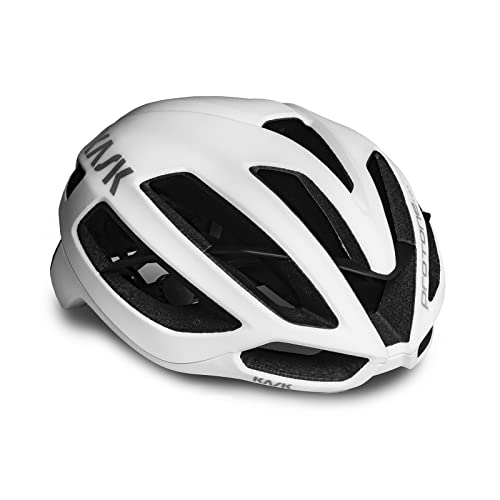
For a road racer or fast group rider who wants measurable drag savings, the Specialized S-Works Evade 4 and the Sweet Protection Tucker III 2Vi are the helmets reviewers and makers pitch most strongly on aerodynamics, the Giro Eclipse Spherical Pro is the lighter choice that also leans on cooling, and the Kask Utopia Y suits riders who put comfort first. If you mostly ride hot, hilly routes, a well-vented all-rounder such as the Giro Aries Spherical or Specialized Prevail 3 may serve you better than any aero shell.
Our top picks



As an Amazon Associate we earn from qualifying purchases at no extra cost to you.
What an aero road helmet actually does
An aero road helmet uses a smoother shell, fewer and smaller vents, and often a tail shaped to keep air attached behind the head. The aim is less drag at race speeds, usually 40 kilometers per hour and above. Cycling outlets rank these helmets in wind tunnels and give results as watts saved against a baseline helmet at 40 kilometers per hour. Those numbers are useful for comparison but they come from specific test setups and rider positions, so treat them as relative rather than as a promise for your own body.
The trade-off is heat. Fewer vents usually mean a warmer head, which is why the newest generation of aero helmets focuses on opening up airflow without giving back the savings. For a rider who stays below racing pace most of the time, the drag advantage shrinks while the heat penalty remains.
At a glance: the current contenders
| Model | Best for | Reported or stated specs | Limits |
|---|---|---|---|
| Specialized S-Works Evade 4 | Racers who want aero plus better cooling | Maker says it matches the Evade 3 on drag with about 2.4 percent less heat build-up; claimed weights of 290 grams (CE) and 330 grams (CPSC) in medium | Heavier than the Evade 3; reviewers note the older model is often discounted |
| Sweet Protection Tucker III 2Vi | Riders chasing the maker’s aero claims | Maker claims about 10 watts saved over its Falconer Aero 2Vi at race speeds; Cyclingnews measured 332 grams in medium; worn by the Uno-X Mobility team | Not wind-tunnel tested by Cyclingnews; reviewer criticized limited strap adjustment near the ears and an awkward rear dial |
| Giro Eclipse Spherical Pro | Lighter aero-leaning helmet with MIPS Spherical | Maker claims 17 percent less drag than the Eclipse Spherical | Drag claim is the maker’s own; one outlet describes it as trading some cooling for speed |
| Giro Eclipse Spherical | Quiet, well-ventilated aero-style option | Cyclingnews measured 266 grams in medium and 1.12 watts saved in its test | Ranked low on pure aero in the same test |
| Kask Utopia Y | Comfort-focused aero helmet | Cyclingnews reports 6.37 watts saved and 264 grams in medium | Ranked 12th in that test; BikeRadar notes no MIPS and a fit mechanism it considers below par |
| Giro Aries Spherical | Hot-weather all-rounder | Sizes S, M, L; MIPS Spherical; Virginia Tech score of 8.40 per Cyclingnews | Not designed to be aero |
| Specialized S-Works Prevail 3 | Maximum airflow | Bikerumor says it ventilates better than any helmet it has assessed | Another outlet finds its fit less secure on narrow heads |
Numbers above are drawn from the makers’ statements and from Cyclingnews, Bikerumor, BikeRadar, and similar outlets. Watts-saved rankings come from one outlet’s tunnel and do not guarantee identical outcomes elsewhere.
Specialized S-Works Evade 4
The Evade line has long been a benchmark for aero road helmets. For the fourth generation the maker says it kept drag at the Evade 3 level while cutting heat build-up by about 2.4 percent. A wind tunnel operator quoted by Cyclingnews called it a smidge more aerodynamic by less than half a watt. The trade-off is weight: it is heavier than the Evade 3, with claimed figures of 290 grams for the European CE version and 330 grams for the American CPSC version in medium. FeedTheHabit measured 320 grams in medium. Reviewers praise comfort and cooling, and note that the cheaper previous generation, which Cyclingnews ranked fourth at about 7 watts saved, remains a strong rival if you can find it discounted.
Sweet Protection Tucker III 2Vi
Sweet Protection claims this helmet saves about 10 watts at race speeds relative to its own Falconer Aero 2Vi. The claim has not been confirmed by Cyclingnews in the tunnel. The earlier Tucker 2Vi ranked 16th, saving 5.97 watts, which gives a sense of the family’s potential. Cyclingnews measured 332 grams for a medium, 44 grams heavier than the Giro Eclipse Pro, and criticized limited strap adjustment around the ears and an awkward rear dial. It surprised the reviewer with how airy it feels for an aero shell.
Giro Eclipse Spherical and Eclipse Pro
The standard Eclipse Spherical is quiet and well vented, but in Cyclingnews’ tunnel it ranked far down the table, saving 1.12 watts. The Pro version is Giro’s attempt to fix that. Giro says it cuts drag by 17 percent compared with the Spherical, worth roughly 5 watts at 50 kilometers per hour. That figure comes from the maker, and In The Know Cycling describes the helmet as a swap of some cooling for speed. It keeps the MIPS Spherical safety system.
Kask Utopia Y
The Utopia Y is a genuine aero design, but newer rivals have overtaken it. Cyclingnews placed it 12th, saving 6.37 watts, with a 264 gram medium. It is very comfortable, with a leather-look chin strap praised by In The Know Cycling, yet BikeRadar lists the lack of MIPS and a fit mechanism it considers sub-standard as drawbacks.
When an all-rounder beats an aero helmet
The Giro Aries Spherical and Specialized Prevail 3 are not aero helmets. They are premium ventilated models, and they do well in safety testing. Cyclingnews gives the Aries a Virginia Tech score of 8.40, and Bikerumor calls it the best-performing helmet ever assessed by that lab. GearJunkie rates its ventilation 9.3 out of 10 with 24 vents. The Prevail 3 ventilates even better by Bikerumor’s account. Two Wheel Tales notes the Prevail 3 suits wider heads, while the Aries gets a stable fit. For climbs, summer rides, and mixed-pace group rides, one of these may beat an aero shell.
Fit, safety, and care notes
- Measure your head. Wrap a soft tape around the widest part, about two fingers above the eyebrows. Compare with the maker’s size chart, because sizing is not standardized across brands.
- Look at the safety system. MIPS or similar rotational-impact liners are listed on several models. Standards also differ by region, such as CE and CPSC. Choose a helmet that carries the mark required where you ride.
- Snug, level, and stable. The helmet should sit low on the forehead, shake only with your head and not on it, and the straps should form a V under each ear.
- Replace after a crash. Makers advise replacing a helmet after any significant impact, even if no damage is visible, and after the period stated in the manual.
- Clean gently. Use mild soap and water on the shell and pads. Avoid solvents that can weaken foam.
- Sunglasses. Check that your frames fit under the shell and straps without pressure.
Pick X if…
| If you… | Pick | Why |
|---|---|---|
| Race and want proven aero with improved cooling | Specialized S-Works Evade 4 | Maker says it matches the Evade 3 on drag with less heat |
| Want a team-proven aero shell | Sweet Protection Tucker III 2Vi | Maker claims about 10 watts saved over its prior aero model |
| Want lighter weight and MIPS Spherical | Giro Eclipse Spherical Pro | Maker claims substantial drag reduction |
| Value comfort and a cushioned strap | Kask Utopia Y | Praised for comfort despite older design |
| Ride hot climbs more than flat races | Giro Aries Spherical or Specialized Prevail 3 | Top ventilation and strong safety scores |
| Want to save money | Previous-generation Evade or Eclipse | Often discounted; check size availability |
Budget tiers in plain terms
Almost every helmet on this list sits in the premium tier. Mid-range aero-styled helmets from major brands give much of the shape with fewer features. Budget helmets can meet the same safety standards, but generally do not carry wind-tunnel development. If you only ride recreationally, a mid-range ventilated helmet is the more sensible spend.
Alternatives to consider
- Time trial and triathlon helmets. Faster in a tucked position, but not appropriate for group riding or climbing.
- Aero-styled mid-range helmets. Smoother shells with moderate vents at lower cost.
- Aero helmet covers. Some makers sell overlays for vented helmets. Confirm the helmet maker approves the combination.
Frequently Asked Questions
Is an aero helmet really faster?
In a wind tunnel, yes, and outlets report single-digit watts saved at 40 kilometers per hour for the better models. In real riding the benefit depends on speed, position, and how much of the ride is at race pace.
Are aero helmets hotter?
Often, because they have fewer and smaller vents. Newer designs such as the Evade 4 aim to improve cooling, and the maker claims about 2.4 percent less heat build-up than the previous version.
Do aero helmets have MIPS?
Some do and some do not. The Giro Eclipse Spherical uses MIPS Spherical, while BikeRadar notes the Kask Utopia Y has no MIPS. Check each maker’s specification.
Which is better for hills, an aero or a vented helmet?
Reviewers favor vented helmets for climbing and hot weather. The Prevail 3 and Aries Spherical are the ones most often named for airflow.
How do I know which size to buy?
Measure your head circumference and compare it with the maker’s chart, as brands differ. If you fall between sizes, try both in person and adjust the dial and straps.
When should I replace my helmet?
After any crash or hard impact, and after the interval stated in the maker’s manual. If foam is cracked or straps are frayed, replace it regardless of age.



Write Your Review
No reviews yet. Be the first to share your experience!