

Key takeaways
- Three clinical lab centrifuges with verified rotor locking, compared on speed, force, tube capacity and lid safety, using Amazon US listing specs.
A clinical centrifuge is not a purchase to make on speed alone. The real decision is whether the rotor stays locked until it has fully stopped, because a lid that opens mid-spin can throw tubes across the bench and expose staff to aerosols from blood samples. A locking mechanism that is stated on the listing, with an interlock that holds the lid shut while the rotor turns, is the feature that separates a lab instrument from a spinning box.

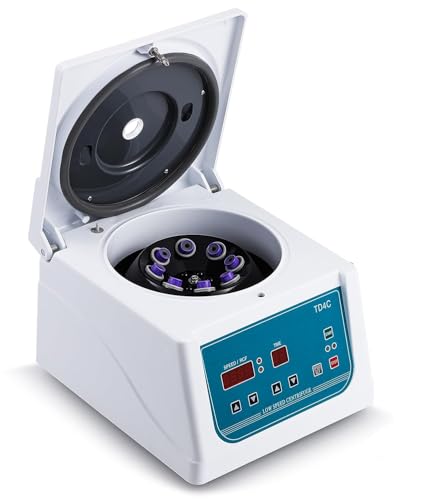
This guide is for small clinical labs, hospital side labs, PRP clinics and teaching labs that run routine separations every day. Each centrifuge below was chosen from the name and specifications on its Amazon product page, and the rotor locking on every pick is stated on that listing rather than assumed from the shape of the lid.
Quick Picks
As an Amazon Associate we earn from qualifying purchases
| Product | Best for | Key spec from title |
|---|---|---|
| ONiLAB Lab PRP Centrifuge DM0506 | A small clinic that wants a proven lid interlock | 300-5000 RPM, 2600xg, 6x15ml |
| LAB FISH LC-8S Centrifuge | A lab that needs stronger force for denser samples | 500-5000 RPM, 3074xg, 8 tubes |
| CGOLDENWALL Centrifuge Machine Lab PRP | A busy lab that wants larger batches at low speed | 100-4000 RPM, 1880xg, 8x15ml |
How to Choose
How the rotor lock actually works
A rotor lock is not the same as a lid that closes. A real locking mechanism holds the lid shut while the rotor turns and releases it only after the rotor has stopped, and the listing should say so in plain words. Look for terms such as lid interlock, electronic lock or automatic lid-lock release in the feature list, and check whether the lock is described as holding during the run rather than simply latching the lid. The three machines in this guide all state their locking behaviour on the listing, which is the minimum a clinical buyer should accept.
Match speed and force to the protocol
Speed in RPM and force in relative centrifugal force are different numbers, and the protocol a lab follows is written in force, not in revolutions. A machine that reaches 5000 RPM with a maximum force of 2600xg suits routine serum and plasma separation, while a machine reaching 3074xg handles denser samples that need a harder spin. Buying far more speed than the protocol calls for adds vibration and wear without improving the separation, so match the maximum force on the listing to the work the lab actually runs.
Tube capacity and rotor type
Capacity decides how many samples move through the lab in one run, and the rotor decides which tubes fit. A fixed-angle rotor with adaptors can take 15ml conical tubes and smaller vacuum collection tubes in the same run, which suits a clinic that receives mixed sample types. Check the exact tube sizes the listing names, because a rotor that holds eight 15ml tubes is a different machine from one that holds eight small vacuum tubes, and the adaptors that come in the box matter as much as the headline count.
Where budget models cut corners
Low-cost centrifuges often cut the safety systems first, and those cuts are hard to spot in a photo. A machine may spin to the same top speed while missing overspeed detection, imbalance shutoff, automatic self-testing or a malfunction alarm, and each missing system is one less layer between a mistake and a damaged sample. Check the listing for each protection by name before ordering, and treat a listing that hides its safety features behind vague wording as a reason to keep looking.
The 3 Best Options
ONiLAB Lab PRP Centrifuge DM0506
The ONiLAB DM0506 is the most complete safety package of the three, built around a lid interlock that keeps the door shut until the rotor has stopped spinning, with an automatic lid-lock release once the run ends. Its brushless DC motor runs from 300 to 5000 RPM with a maximum force of 2600xg, and the LCD display shows speed by RPM or G-force alongside a timer that runs from 30 seconds to 99 minutes or continuously. Two stored programs, P1 and P2, start a routine protocol with one key, which suits a small clinic that repeats the same spin all day.
Specs
- Speed range 300-5000 RPM, maximum RCF 2600xg
- Fixed-angle rotor with adaptors for 15ml, 10ml, 7ml and 1.5-5ml tubes, 6 tubes
- Timer 30 seconds to 99 minutes or continuous mode
- LCD digital control and display, two programs P1 and P2
- Safety door lid-interlock prevents opening until the rotor has stopped spinning
- Automatic lid-lock release after running, overspeed detector, automatic internal self-testing
- Brushless DC motor, noise 56dB, cast iron base with vacuum suction feet
- Conforms to CE, cTUVus and FCC standards
- Dimensions 11.8 x 9.5 x 7.1 inches, item weight 11.4 pounds
Best for: A small clinic that repeats the same blood separation protocol every day and wants the strongest stated locking system.
Watch out for: The fixed rotor holds six tubes, so a lab that regularly runs larger batches will need a second run or a larger machine.
LAB FISH LC-8S Centrifuge
The LAB FISH LC-8S is the pick for labs that need more force than a standard low-speed unit, with a maximum of 3074xg from a brushless motor that runs from 500 to 5000 RPM. Its secure intelligent electronic lock holds the lid through the run, and an automatic malfunction alarm calls out faults instead of letting a bad run finish quietly. The aluminium alloy fixed-angle rotor takes eight tubes from 2ml to 15ml, and an instantaneous centrifugation button starts a quick spin with one press and stops it on release, which suits short spins between full protocols.
Specs
- Speed range 500-5000 RPM, maximum RCF 3074xg
- Aluminium alloy fixed-angle rotor, 8 tubes in 2ml, 5ml, 10ml and 15ml sizes
- Timer 10 seconds to 99 minutes 59 seconds
- LCD digital display for time and speed
- Secure intelligent electronic lock and automatic malfunction alarm
- Instantaneous centrifugation function with press-and-release control
- Low-speed brake, brushless motor
- Item model number LC-8S-1
Best for: A lab that separates denser samples and wants the highest force in this guide with a stated electronic lock.
Watch out for: One listing Q&A answer states a lower top speed than the listing title, so confirm the 500-5000 RPM range on the listing before ordering.
CGOLDENWALL Centrifuge Machine Lab PRP
The CGOLDENWALL is the gentle low-speed worker of the three, running from 100 to 4000 RPM with a maximum force of 1880xg, which suits labs that spin delicate samples and want a slow, steady separation rather than a hard one. Its lid lock keeps the machine closed during operation, and the LED display shows speed, force and time together so a technician can check all three at a glance. Eight 15ml tubes fit in one run, and the 1-99 minute timer also runs continuously, which covers both short spins and long protocols without a second machine.
Specs
- Speed range 100-4000 RPM, maximum RCF 1880xg
- Capacity 8 x 15ml tubes, also takes 5-10ml vacuum blood collection tubes and 10-15ml centrifuge tubes
- Timer 1-99 minutes or continuous mode
- LED digital display showing speed, RCF and time
- Lid lock system keeps the machine closed during operation
- Noise level 65dB or below
- Model DT4C
Best for: A busy lab that runs larger batches at gentle speeds and wants a simple LED display with a stated lid lock.
Watch out for: The maximum force is the lowest of the three, so check the lab protocol first if any separation needs more than 1880xg.
Which One Fits Your Situation
A small clinic running daily blood spins
Pick the ONiLAB DM0506. Its lid interlock and automatic release handle the safety question outright, and the two stored programs mean the same protocol starts with one key every morning. Six tubes per run is enough for a small daily load, and the brushless motor with a cast iron base keeps vibration low on a shared bench.
A lab separating denser or larger sample loads
Pick the LAB FISH LC-8S. The 3074xg maximum force is the strongest here, and the eight-tube aluminium rotor takes a wider range of tube sizes than the other two. The electronic lock and malfunction alarm add the protection a heavier workload needs, and the instant-spin button covers quick checks between full runs.
A shared lab where many hands use one machine
Pick the CGOLDENWALL. The LED display shows speed, force and time together, so any technician can read the run at a glance without hunting through menus. Eight tubes per run keeps queues short, and the lid lock plus the gentle low-speed range suit a bench where the machine is used by staff with different experience levels.
Quick one-off spins between full runs
Pick the LAB FISH LC-8S. Its instantaneous centrifugation button starts the rotor with one press and stops it on release, which is made for short spins that do not need a full timed program. The electronic lock still holds the lid through these quick runs, so a fast spin gets the same protection as a long one.
Common Mistakes
- Buying on RPM alone and ignoring the maximum RCF the protocol actually calls for
- Assuming any lid that closes is a locked lid, instead of checking the listing for an interlock or electronic lock
- Loading tubes of different weights opposite each other instead of balancing the rotor symmetrically
- Skipping the overspeed detection, imbalance shutoff and malfunction alarm checks before ordering
- Using tube sizes the rotor listing does not name, then finding the adaptors do not fit
Frequently Asked Questions
What does rotor locking do on a clinical centrifuge?
Rotor locking holds the lid shut while the rotor turns and releases it only after the rotor has stopped. It stops anyone from opening the chamber mid-spin, which protects staff from aerosols and flying tubes and protects the sample from being disturbed. Every centrifuge in this guide states its locking mechanism on the Amazon listing.
Is a lid latch the same as a rotor lock?
No. A latch only keeps the lid closed while the machine sits idle, while a lock is tied to the rotor and cannot open until the spin ends. A listing that says lid lock, lid interlock or electronic lock describes the stronger system, and a listing that only mentions a latch does not promise the same protection.
How much force do routine blood separations need?
Routine serum and plasma separation runs at moderate force, and the exact figure sits in the lab protocol sheet rather than in a buying guide. The machines here reach 1880xg, 2600xg and 3074xg, so match the maximum force on the listing to the protocol before ordering and do not buy far more force than the work needs.
Can one centrifuge handle both 15ml tubes and small vacuum tubes?
Yes, when the listing says so. The ONiLAB and LAB FISH rotors take 15ml tubes with adaptors for smaller sizes, and the CGOLDENWALL takes 5-10ml vacuum collection tubes alongside 10-15ml centrifuge tubes. Check the exact tube sizes the listing names, because adaptors that come in the box are the ones the lab can rely on.
More from Amazon
Programs that pair well with the guide above. Offers and eligibility are set by Amazon and may change.
Free shipping on eligible items, Prime Video and more. Eligible new members can start with a free trial.
Start a Prime free trialA Prime membership for ages 18-24 with a trial period. Eligibility is set by Amazon.
See Prime for Young AdultsAudiobooks and podcasts to listen to on the go. Eligible new members can start with a free trial.
Try Audible freeAd-free music streaming. Eligible new subscribers can start with a free trial.
Try Music Unlimited freeAs an Amazon Associate we earn from qualifying purchases.


Write Your Review
No reviews yet. Be the first to share your experience!