

Key takeaways
- Intermediate oval dominates. Nearly every premium helmet above is described that way. If you have a rounder or longer head, trying on matters more than any review.
- Check the standard. ECE 22.06 is the newer European standard; DOT is the US minimum. Snell is a separate voluntary standard.
- Try with your riding gear. Wear glasses, ear plugs and a communicator when fitting. A pressure point that appears after twenty minutes will be worse after two hours.
- Replace after impact. Makers advise replacing a helmet after a significant impact and after the service interval stated in the manual.
- Keep the visor clean. Wash shields with mild soap and a soft cloth, and avoid abrasive cleaners. Replace scratched shields since they scatter light.
- Wash the liner as instructed. Most premium helmets have removable liners that can be hand washed; follow the manual.
For long-distance riding, the Shoei GT-Air 3 suits riders who want a full-face helmet with an internal sun shade and strong ventilation, the Schuberth C5 or Shoei Neotec 3 suit riders who want a flip-up front and the quietest ride, and the Sedici Sistema 3 or Scorpion EXO-AT960 suit those who want touring features at a lower tier. Which one is right depends mostly on head shape, noise tolerance, whether you wear glasses, and whether you plan to add a communicator. Reviewers rate comfort and noise control above all else for touring, because a helmet that feels fine for an hour can wear on you by hour six.
Our top picks


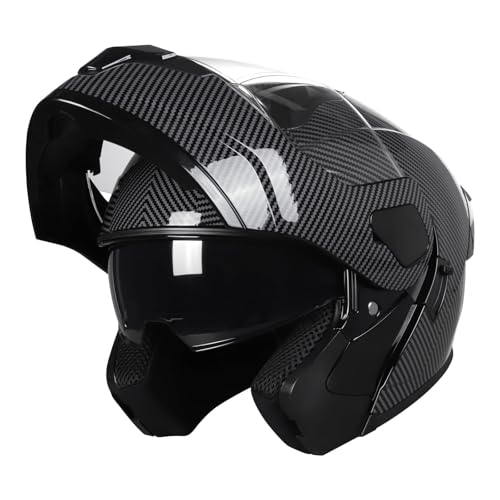

As an Amazon Associate we earn from qualifying purchases at no extra cost to you.
Touring helmets at a glance
The table draws on specifications relayed by It’s Better on the Road, thelidtest, GearJunkie and similar outlets. Weights are approximate and vary by size and shell. Confirm certification markings on the helmet you are buying.
| Helmet | Style | Reported weight | Certification noted | Sun visor | Best for | Limits reported |
|---|---|---|---|---|---|---|
| Schuberth C5 | Modular | About 3.8 lb | DOT, ECE 22.06 | Internal | Quiet, plush long-haul comfort | Heavier than full-face rivals; early visor mechanism refinement |
| Shoei Neotec 3 | Modular | About 3.8 to 4.1 lb | DOT, ECE 22.06 | Internal | Easy glove-friendly operation | Higher weight; stiff faceshield lock for some |
| Shoei GT-Air 3 | Full-face | About 3.6 lb | DOT, ECE 22.06 | Internal plus Pinlock | Fast sport-touring and glasses wearers | Minor light bleed at sun visor |
| Schuberth S3 | Full-face | About 3.6 lb | DOT, ECE 22.06 | Internal | Ventilation and optics | Snug neck roll; conservative styling |
| AGV K6 S | Full-face | About 2.95 lb, about 1,255 g per thelidtest | DOT, ECE 22.06 | None internal | Light weight, less neck fatigue | Fiddly vents with gloves; compact sizing |
| Bell Lithium MIPS | Full-face | About 3.8 lb | DOT, ECE 22.06 | Internal plus Pinlock 70 | Value with MIPS | Polycarbonate shell; moderate wind noise |
| Sedici Sistema 3 | Modular | About 3.9 lb | DOT, ECE | Internal | Budget modular | Noisier at speed; Pinlock sold separately |
| Scorpion EXO-AT960 | Modular adventure | Not confirmed here | DOT, ECE 22.06 | Drop-down | Mixed road and gravel touring | Peak adds wind noise at speed |
What matters on a tour
Noise
Wind noise is the main fatigue factor on long days. Reviewers consistently describe the Schuberth C5 and S3 as the quietest in this group, with the GT-Air 3 and Neotec 3 close behind. Budget modulars and helmets with peaks are described as noisier. Even a quiet helmet benefits from riding-rated earplugs, and the neck roll, collar seal and windscreen height on your bike all affect what you hear.
Weight and balance
Weight matters over a day. The AGV K6 S is reported at roughly 1,255 grams, which is about 2.8 pounds, though It’s Better on the Road lists about 2.95 pounds, another example of variation between measurements. Modular helmets tend to be heavier because of the hinge and chin-bar mechanism. A heavier helmet is not necessarily worse if its balance and aerodynamics suit your bike and posture.
Ventilation
Hot weather touring rewards good intake and exhaust venting. The GT-Air 3 and Schuberth S3 are praised for ventilation, while the AGV K6 S is also credited with excellent airflow though vent sliders can be fiddly with gloves. Riders heading to cold regions may value a snug neck roll and a breath guard more.
Sun visor and visor system
An internal sun visor saves stopping to swap glasses at tunnel exits or at dawn and dusk. Pinlock-ready shields reduce fogging. The Bell Lithium MIPS ships with a Pinlock 70 insert according to a review, while the Sedici Sistema 3 sells the insert separately.
Communication
Touring often involves navigation prompts and rider-to-rider talk. The Schuberth C5 and S3, Shoei Neotec 3 and several others are described as comms-ready, with speaker recesses and microphone channels. Shoei’s GT-Air II is noted by GearJunkie as less easily compatible with other intercom systems, so confirm compatibility before choosing a communicator.
The main picks in detail
Schuberth C5
It’s Better on the Road ranks the C5 as best overall touring helmet and calls it the quietest modular touring helmet, with a plush interior and seamless comms integration. The shell is lighter than older modulars, but reviewers still note extra weight compared with full-face options. It sits in the premium tier.
Shoei Neotec 3
thelidtest ranks the Neotec 3 first for touring modulars, scoring it 9.2 and calling it the modular the class is measured against. It lists DOT and ECE 22.06 certification. GearJunkie notes smooth flip-up action, improved aerodynamics and easy operation with gloves, and some owners find the faceshield lock stiff. It is among the heavier helmets here.
Shoei GT-Air 3
Described as balancing aggressive aerodynamics with touring comfort, it has an internal sun shade, Pinlock support and excellent ventilation, and is described as eyeglass-friendly. A reviewer reports 2,400 miles with it and still rates it the best touring helmet they had worn; treat that as one rider’s opinion. A small drawback is minor sun-visor light bleed.
Bell Race Star DLX Flex
GearJunkie names it best touring and street helmet, praising its acoustics, dynamic lens tinting and easy washability for multi-day trips. It leans toward sport-touring and sits at the premium end.
Shoei RF-1400 and RF-SR
thelidtest calls the RF-1400 the full-face benchmark, while It’s Better on the Road lists the older RF-SR as sturdy and good value but without an internal sun visor and not the quietest. If you prefer a no-nonsense full-face shell, these are the sort of designs to compare.
Value choices
The Sedici Sistema 3 is the budget modular, with 5 EPS sizes and 3 shell sizes but noisier highway behaviour. The HJC i91 is cited as the best-value modular with Pinlock. Scorpion’s EXO-AT960, listed around the mid tier, combines a flip-up chin bar, drop-down sun visor and removable peak. HJC’s RPHA 71 Carbon is named by Big Bike Tours as a best-value premium helmet.
Pick this if you want this
| If you… | Consider | Why |
|---|---|---|
| Put quiet first and want a flip-up | Schuberth C5 | Reviewers name it the quietest modular |
| Want glove-friendly modular operation | Shoei Neotec 3 | Smooth flip-up and easy controls reported |
| Wear glasses and want ventilation | Shoei GT-Air 3 | Eyeglass-friendly, strong airflow |
| Are sensitive to neck fatigue | AGV K6 S | Lightest in this group, no internal sun visor |
| Want MIPS on a mid-range budget | Bell Lithium MIPS | Sun visor and Pinlock insert included |
| Need touring features on a budget | Sedici Sistema 3 or HJC i91 | Modular layout at lower tiers |
| Ride gravel as well as pavement | Scorpion EXO-AT960 | Peak, flip-up chin bar, drop-down visor |
Fit, safety and care
- Intermediate oval dominates. Nearly every premium helmet above is described that way. If you have a rounder or longer head, trying on matters more than any review.
- Check the standard. ECE 22.06 is the newer European standard; DOT is the US minimum. Snell is a separate voluntary standard.
- Try with your riding gear. Wear glasses, ear plugs and a communicator when fitting. A pressure point that appears after twenty minutes will be worse after two hours.
- Replace after impact. Makers advise replacing a helmet after a significant impact and after the service interval stated in the manual.
- Keep the visor clean. Wash shields with mild soap and a soft cloth, and avoid abrasive cleaners. Replace scratched shields since they scatter light.
- Wash the liner as instructed. Most premium helmets have removable liners that can be hand washed; follow the manual.
Budget tiers explained
Premium touring helmets from Schuberth, Shoei and AGV generally use fibreglass or carbon composite shells, offer multiple shell and liner sizes, and invest heavily in aerodynamics and noise control. Mid-range helmets such as the HJC i91, Bell Lithium MIPS and Scorpion EXO-AT960 usually trade some weight and refinement for useful touring features like sun visors and Pinlock readiness. Budget modulars such as the Sedici Sistema 3 give a flip-up layout at the lowest tier, though reviewers report more wind noise and some durability concerns. If you tour for many hours at a time, spend the most on fit and noise, since those two factors shape every mile.
Alternatives to consider
- Adventure helmets. If your touring includes gravel, the Schuberth E2, Arai XD-5 or Scorpion EXO-AT960 offer peaks and large eye ports.
- Sport-touring full-face helmets. The Shoei RF-1400 and Bell Race Star DLX Flex lean toward the sporty end while remaining comfortable.
- Lower-cost full-face helmets. The Shoei RF-SR and Bell Lithium MIPS provide proven shells at lower tiers.
Frequently Asked Questions
Are modular helmets good for touring?
They can be. Reviewers rate the Schuberth C5 and Shoei Neotec 3 among the best touring helmets because they are quiet, comfortable and convenient at stops. The trade-offs are extra weight and mechanical complexity compared with a full-face.
Is a heavier helmet worse for long rides?
Not automatically. Fit and balance matter as much as grams, and a well-fitted modular may feel better than a lighter helmet that presses on your forehead. Still, a lighter shell like the AGV K6 S is reviewed as helping reduce neck fatigue.
Do I need an internal sun visor?
It is convenient for changing light and avoids carrying a second pair of sunglasses. Some riders prefer a lighter helmet without it and wear sunglasses under the shield, though this can be tricky with certain fits.
How do I reduce wind noise?
Start with a helmet known for quietness, fit it snugly, adjust the windscreen on your bike and use riding earplugs. Reviewers note that noise differs significantly between bikes and riders.
Can I add a Bluetooth communicator later?
Yes, on comms-ready helmets such as the Neotec 3 and C5. Make sure you choose a unit the helmet maker lists as compatible.
How often should I replace a touring helmet?
Replace it after a significant impact and when the maker’s recommended service life ends, which many makers set at around five years. Liners compress with use, so a loose fit is another sign to consider replacement.






Write Your Review
No reviews yet. Be the first to share your experience!