

Key takeaways
- Check whether hip armor is included. On some pants, such as the Fly Racing Terra Trek and REV’IT Cargo 2 jeans, hip protectors are sold separately.
- Look at the armor material. Flexible foams and viscoelastic armors feel more comfortable on a long ride than rigid shells.
- Replace armor and garments after a serious crash or fall, as many makers advise.
For daily riding, a pair of certified class AA riding jeans or cargo-style pants with knee armor is the practical choice, adventure and touring riders who meet rain and heat do better in a laminated or membrane-lined textile pant such as the Klim Carlsbad or Alpinestars Andes V4 Drystar, and riders who want the highest abrasion rating on the street look at class AAA options like the Pando Moto Mark AAA jeans. Whatever you choose, riding pants only work if they fit well in the riding position, carry the right armor and stay in place in a slide. Figures below are the makers’ and reviewers’ statements, not independent crash data.
Our top picks

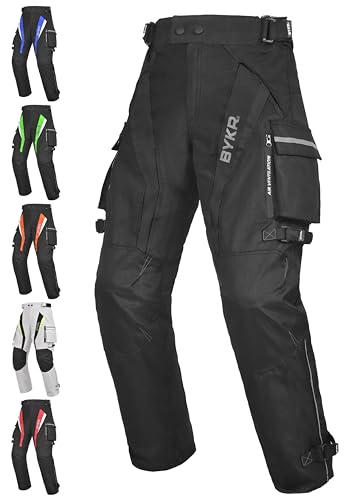
As an Amazon Associate we earn from qualifying purchases at no extra cost to you.
Comparison of popular motorcycle riding pants
| Pant | Best for | Stated protection and features | Limits |
|---|---|---|---|
| Alpinestars Andes V4 Drystar | All-round cargo style commuting and touring | CE Category II, A class (EN 17092-4) per one reviewer, CE Level 1 Nucleon Flex Plus knee armor, Drystar waterproof membrane, thigh vents | Class A is the lightest tier, cargo pockets only water-resistant |
| Alpinestars Bogota Pro Drystar | Four-season street riding | Reported class AA, CE Level 2 knees, Bio-Flex hips, Drystar membrane, removable thermal liner of about 100 g | Adds bulk off the bike |
| Alpinestars Copper V2 Denim | Casual denim look | Slim Bio-Flex knee armor, CE Category II as stated | Less weather protection |
| Dainese Tempest 3 | Winter and all-season | D-Stone stretch fabric, D-Dry waterproof membrane, flexible CE Level 2 knee armor | Check which hip armor is included for your size |
| Klim Badlands Pro (A3) | Hard adventure and touring | GORE-TEX Pro, Level 2 armor, ceramic-infused Superfabric in abrasion zones per one outlet | Premium tier, heavy, needs break-in, outlets disagree on AA or AAA rating |
| Klim Carlsbad | Most adventure riders | Laminated GORE-TEX with vents as described | Still a premium-tier garment |
| Klim Dakar | Cargo-style adventure | Cordura build, CE Level 2 armor | Mid to premium tier |
| Pando Moto Mark AAA | Street riders wanting jeans with top abrasion class | Class AAA, D3O Ghost CE Level 1 knee and hip armor per one outlet | Premium tier jeans, no waterproofing |
| Tourmaster Trek | Touring on a budget | CE Level 1 knees, removable EVA hip pads, waterproof and thermal liners, six vents as listed | Around 5.5 pounds, Level 1 only |
| Fly Racing Terra Trek | Entry-level adventure | CE Level 1 knee armor, waterproof membrane, vents | Hip armor sold separately |
Understanding certification: A, AA and AAA
Under the European standard EN 17092, garments are tested for abrasion, seam strength and tear resistance, then graded A, AA or AAA. AAA is the highest, AA is the middle tier and A is the lightest. A garment takes the rating of its weakest tested zone, so a stated class describes the whole pant, not just the best panel. One guide, Denimotto, suggests AAA for highway use and AA for city riding. Class A garments are intended for lighter-duty use, and the standard treats hip armor as optional for A but expected for AA and AAA.
These classes are laboratory standards. They show a garment met a defined test, not that it prevents injury. If a maker lists a rating, look for it on the garment label and in the manual, and remember that some pants ship without armor inserted even though they are certified with armor fitted. Read what comes in the box.
Armor: Level 1 versus Level 2
Knee and hip armor are rated under EN 1621. Bikes and Bays notes that Level 2 absorbs more impact energy than Level 1. Level 2 knee armor appears on several of the pants above, such as the Bogota Pro Drystar and Dainese Tempest 3. Level 1 appears on the Andes V4 and Tourmaster Trek. More protection is not automatically better if it does not stay in place, so check the adjustment system. Alpinestars describes adjustable armor pockets that let you fine-tune the knee protector position, which matters because armor that sits too high or low can miss the joint in a fall.
- Check whether hip armor is included. On some pants, such as the Fly Racing Terra Trek and REV’IT Cargo 2 jeans, hip protectors are sold separately.
- Look at the armor material. Flexible foams and viscoelastic armors feel more comfortable on a long ride than rigid shells.
- Replace armor and garments after a serious crash or fall, as many makers advise.
Fit and sizing
Fit decides performance. Try pants on in a riding position, not just standing. Knees should line up with the armor, the waist should be secure without a belt, and the legs should not ride up when you reach for the bars. Dainese Classic jeans come in Slim and Regular cuts, and reviewers note a snug fit and slimmer armor that may sit differently if you have heavier legs. A reviewer on the Combat jeans warns that a baggy fit lets the knee protectors drift.
Wear the base layers you plan to ride in when trying on. Alpinestars suggests leaving enough room for layers without making the pant baggy. Lengths matter too: pants that are short will ride up over your boots on the bike, exposing your ankles. Overpants are designed to go over regular clothes and boots, so they run roomier and are good for commuters who change at work.
Weather and comfort
Membrane-lined textile pants like the Andes V4 Drystar and Dainese Tempest 3 keep out rain but can run warm in summer. Look for thigh vents with zippers, as on the Andes V4, and for removable thermal liners if you ride into the cold. Perforated leather and mesh options exist for hot climates but have little water resistance. Jeans with a stretch aramid or UHMWPE lining are comfortable off the bike, but they are not built for heavy rain.
Ventilation, liners and waterproofing add weight and bulk. The Klim Badlands Pro is described by reviewers as heavy and in need of a break-in period, a trade-off for its premium weather and abrasion protection.
Pants, jeans or overpants: choosing a style
Dedicated riding pants have panels cut for a seated position, which keeps the knees and hips aligned and avoids bunching at the waist. Riding jeans trade some of that cut for everyday looks, so they suit riders who want to walk into a cafe or office without looking geared up. Overpants go on top of normal trousers and boots, which is handy for commuting, though the fit is looser and the armor can move if the underlying clothes shift.
Think about how you actually ride. If most trips are short and urban, comfort and quick on-off matter, which favors jeans or cargo-style pants with an AA rating. If you tour for days, a pant with waterproofing, vents and a removable liner saves you from changing clothes at every weather shift. If you ride off the pavement, abrasion-resistant knee and shin areas and generous articulation matter more than a casual look. Reviewers also point out that no single pant does everything, so many riders own a vented summer pair and a lined winter pair.
Finally, check the small details: waist adjusters, belt loops that accept a belt, strong YKK-style zippers, reflective elements for night visibility and knee-armor pockets that can be moved up or down. They cost nothing extra and make a daily difference.
Budget, mid-range and premium tiers
Budget pants such as the Tourmaster Trek or Fly Racing Terra Trek offer Level 1 armor and waterproof liners but are heavier and less refined. Mid-range options like the Alpinestars Andes V4, Bogota Pro and Dainese Tempest 3 give a better fit and stronger certifications. Premium pants such as the Klim Badlands Pro and Pando Moto Mark AAA add top-tier abrasion materials and advanced construction.
Pick X if you …
| If you … | Pick | Why |
|---|---|---|
| Commute daily in mixed weather | Alpinestars Andes V4 Drystar or Bogota Pro Drystar | Waterproof membrane, vents or liner |
| Ride adventure routes off road | Klim Carlsbad or Badlands Pro | Laminated GORE-TEX, abrasion zones |
| Want denim in town | Alpinestars Copper V2 or Pando Moto Mark AAA | Street look with armor |
| Ride in winter | Dainese Tempest 3 | Waterproof membrane, flexible Level 2 knees |
| Watch the budget | Tourmaster Trek | Liners and Level 1 armor at a lower tier |
| Want top street abrasion class | Pando Moto Mark AAA | Class AAA, slim armor |
Alternatives to consider
- Leather pants or one-piece suits. Higher abrasion resistance for sport riding, less everyday flexibility.
- Armored overpants. Slip over normal trousers for commuting.
- Kevlar or aramid-lined jeans. Lighter feel but variable certification, so check the label.
- Armored base-layer shorts. Add hip protection beneath normal trousers, though they do not substitute for abrasion-rated outer layers.
Frequently Asked Questions
Are riding jeans as safe as textile or leather pants?
It depends on certification and construction. A class AA or AAA denim pant with armor can be a strong choice, but the rating is the key, not the fabric. Check the label and ask what is included.
What is the difference between AA and AAA?
AAA is the highest abrasion class under EN 17092. AA is the middle class and suits many city riders. A guide suggests AAA for highway speeds.
Do I need hip armor?
AA and AAA garments expect hip armor, and several makers sell pants without it. If your pants omit hip armor, look for compatible protectors or a pair that includes them.
Can I wear riding pants in summer?
Yes, with vented or mesh-style pants. Membrane-lined pants run warmer, so look for thigh vents and removable liners.
How should I care for them?
Follow the label. Remove armor before washing, avoid fabric softener on waterproof membranes, and air dry.
When should I replace riding pants?
After a crash or any damage to seams, abrasion panels or armor. Many makers advise replacement because the protection may be reduced even if damage is not obvious.



Write Your Review
No reviews yet. Be the first to share your experience!