

Key takeaways
- Compare the best dual sport tires for pavement, gravel and trail, with street-biased and 50/50 picks from Michelin, Shinko, Dunlop, Kenda and IRC.
A dual sport tire is always a negotiation. The tread blocks that dig into a gravel climb have to stay composed at highway speed, and the compound that grips wet pavement wears faster in the dirt. Manufacturers describe that compromise with ratios: an 80/20 tire spends most of its life on pavement, while a 50/50 tire splits its time evenly between road and trail. The right choice depends on your riding, your bike’s sizes, and whether your wheels run tubes.
The five listings below cover that spectrum in specific, buyable sizes: a premium street-biased rear tire, a value all-rounder that fits either wheel, a matched set for smaller dual sports, and two trail-leaning options for lighter machines. Every pick is a real listing in the size named, because with tires the size is the product.
As an Amazon Associate, we earn from qualifying purchases.
Quick answer
For most mixed riding, start with the Shinko 705 in 130/80-17: a street-biased front-or-rear tire with a four-ply carcass and a tear-resistant compound. Big-bike riders who live on pavement should look at the Michelin Anakee Adventure rear in 180/55R17. Riders on smaller dual sports who split time evenly between road and dirt should consider the Dunlop D605 set, the Kenda K270, or the IRC GP-1.
Michelin Anakee Adventure Rear Tire 180/55R17

The Anakee Adventure is Michelin’s street-biased entry in this group, designed around an 80/20 split that favors pavement and treats gravel and hard-packed dirt as the secondary surface. This listing is the 180/55R17 rear, the wide fitment used by larger adventure machines, built as a radial with a silica-enhanced compound. Silica is the ingredient Michelin leans on for wet-weather grip, which matters because a street-biased tire still has to brake and corner on cold, wet asphalt where a knobbier tire can feel vague.
The tread pattern follows the same brief. Instead of tall, widely spaced knobs, it uses a grooved, geometric pattern that keeps more rubber on the road, giving it composed highway manners. The listing covers tubeless and tube-type fitments, with load and speed capacity sized for heavy touring machines.
Choose it if your dual sport riding is really adventure touring: long paved miles, occasional forest roads, and a premium on wet grip and stability when loaded. Skip it if your weekends involve mud, sand, or rocky trails, where the shallow tread runs out of bite. Pair it with the matching front size for your bike.
Shinko 705 Front/Rear Tire 130/80-17

The Shinko 705 is the budget anchor of the dual sport category, and this listing is its most flexible version: a 130/80-17 approved for either the front or the rear wheel. The listing data describes a bias-ply tire with a four-ply rated carcass, a load index of 65, an H speed rating, and tubeless construction, with a tread compound built to resist tearing off pavement. That explains its popularity on mid-size singles and older adventure bikes.
On the road, the 705’s tread is a connected, street-leaning pattern that Shinko rates for wet and dry adhesion, and it runs smoother and quieter than a true knobby. Off road it is a gravel-and-hardpack tire whose blocks are too closely spaced to clear mud or paddle through sand. The four-ply carcass tolerates rocky tracks and potholes that cut lighter tires.
This is the pick for riders who commute on a dual sport during the week and explore unpaved roads on weekends, and who would rather replace tires more often at a lower cost per tire than stretch a premium set. Confirm the load index suits your bike and luggage; a bias-ply tire will not feel as planted at sustained highway speeds as the radial above.
Dunlop D605 Dual Sport Combo Set
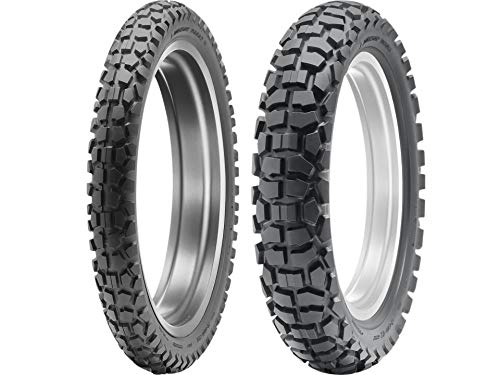
Most dual sport tires are sold one at a time, which makes this Dunlop listing unusual: it pairs a 2.75-21 front tire with a 120/80-18 rear, the classic sizing for smaller Japanese dual sports. The D605 is Dunlop’s affordable DOT-approved dual sport tire, built with a full-depth knobby tread that leans harder toward dirt than the two picks above. A matched set removes the guesswork of pairing a front and rear from different product lines.
The tread is a genuine block pattern, with knobs tall enough to bite into loose surfaces and spaced widely enough to shed dirt. On pavement those knobs mean more vibration, more noise, and a less settled feel in fast corners than a street-biased tire, the honest trade of a 50/50-leaning design. Both tires are tube type, matching the spoked wheels nearly every bike in this size class runs.
Buy the set if your smaller dual sport runs 21-inch and 18-inch wheels and your riding alternates between pavement and trail in the same trip. Skip it if your bike uses different sizes, runs tubeless rims, or spends nearly all its miles commuting on asphalt, where a street-biased tire will feel better and last longer. Verify both sizes against your owner’s manual before ordering.
Kenda K270 Dual Sport Trail Tire 120/80-18
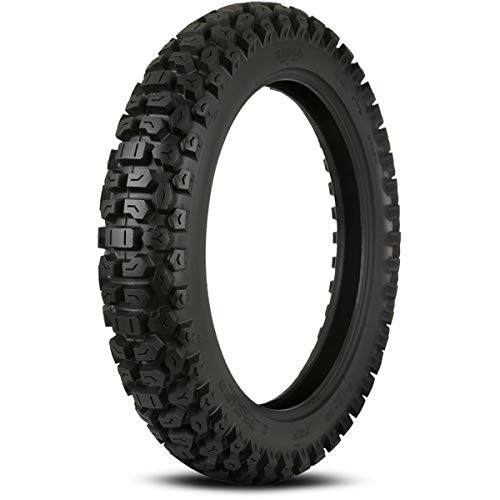
The Kenda K270 has been a default answer for lightweight dual sports for decades, and its appeal is simplicity. This listing is the 120/80-18 size, a rear fitment for smaller trail bikes and older dual sports, with a DOT approval that keeps it legal on the road between trails. The tread uses medium-height knobs in a pattern that splits the difference between a street tire and a dirt tire, the classic K270 compromise.
That middle-ground design is why the K270 keeps its following. The knobs find traction on gravel, dirt roads, and moderate trails, while the pattern stays dense enough that the tire does not wander or howl on pavement. It is a tube-type tire, as expected for the spoked wheels it fits, and the simple construction keeps it light and easy to mount with tire irons on a trip.
Pick the K270 if you ride a smaller machine, value a proven and inexpensive replacement, and split your riding between back roads and trails. It is a rear tire in this size, so front fitments use a different listing. Riders on heavy adventure bikes should look elsewhere: the K270’s sizes and load capacities are aimed at light and middleweight singles, not fully loaded big bikes.
IRC GP-1 Rear Tire 4.10-18

The IRC GP-1 is the traditionalist in this group. Its tread copies the classic trials pattern, with rows of small, closely spaced blocks that put a large amount of rubber on the ground. This listing is the 4.10-18 rear, an inch-based size that fits older and smaller dual sports built before metric sizing took over the category. IRC positions the GP-1 as a road-biased dual sport tire, roughly an 80/20 split, and the tread design backs that up.
On pavement, the trials-style pattern is the GP-1’s strength. The dense blocks roll quietly, wear evenly, and give predictable grip where vintage dual sports spend most of their time. On dirt it works on hardpack and gravel, where the many small edges find purchase, but it packs with mud quickly. It is a tube-type tire, matching the wheels in this fitment class.
Choose the GP-1 if you are keeping an older dual sport, a small commuter trail bike, or a vintage scrambler on the road and want a period-correct tire for daily use. The 4.10-18 size fits a narrow set of rims, so confirm your sidewall markings before ordering. Riders who need genuine off-road traction should choose a knobbier option above.
How to choose
Start with the size, because nothing else matters if the tire does not fit. Read the full sidewall designation on your current tires or in the owner’s manual, including load index and speed rating, and match all of it. Inch sizes such as 4.10-18 and 2.75-21 are not interchangeable with metric sizes that merely look close, and a matched set like the D605 combo only makes sense when both of its sizes match your bike.
Next, be honest about your road-to-dirt ratio. An 80/20 tire like the Anakee Adventure or the GP-1 feels secure and quiet on pavement and manages gravel, but gives up real traction in mud, sand, and loose climbs. A 50/50-leaning tire like the D605 or K270 reverses that trade. Most riders overestimate their dirt time, so bias one step toward the road when in doubt.
Then check construction and fitment type. Radials generally run cooler and steadier at highway speed, while bias-ply tires are common and entirely appropriate on smaller bikes. Confirm whether your wheels need tubes: a tube-type tire must never be run tubeless. Load capacity matters too, especially on a rear tire carrying luggage or a passenger.
Finally, check the DOT date code on any tire you buy. Its last four digits give the week and year of manufacture. Date codes matter for safety as well as freshness: in 2022, Continental recalled TKC80 tires produced between January 2019 and April 2022 for tread-groove cracking, which is why that tire does not appear in this guide. The date code confirms you are getting current production.
Who should skip
Skip this entire category if your riding is effectively all pavement. A sport-touring or road-focused adventure tire will brake shorter, corner with more confidence, and last longer than any dual sport compromise. Also skip these picks for serious single-track or deep sand: a DOT knobby from the dirt category is the right tool there.
Skip individual picks that do not match your hardware. The Anakee Adventure listing is a wide 17-inch rear for larger machines, the D605 set fits one specific size pairing, and the GP-1’s inch sizing belongs to older bikes. If your motorcycle uses 19-inch fronts or 150-section rears, none of the five listings may fit; find the same tire models in your size rather than forcing a near match.
FAQ
What does an 80/20 or 50/50 tire ratio actually mean?
It is the manufacturer’s shorthand for the intended mix of pavement and off-road use. An 80/20 tire spends most of its life on the road, with enough tread for gravel and hard dirt. A 50/50 tire accepts more noise, vibration, and wear on pavement in exchange for real traction off road. Ratios are not standardized between brands, so treat them as a guide to intent, not a measured specification.
Can I mix a front tire from one brand with a rear from another?
It is common in this category, and generally acceptable when both tires are the correct sizes and similar in intent. Avoid extreme mismatches, such as a full knobby at one end and a street-biased tire at the other, because the grip difference can make the bike feel inconsistent. When a matched set exists in your sizes, it is the simpler choice.
How long should a dual sport tire last?
It depends on the road-to-dirt ratio and the compound. Street-biased tires on moderate bikes commonly deliver several seasons of mixed use, while aggressive knobs used mostly on pavement can wear to the point of poor wet grip surprisingly quickly. Inspect tread depth and check for cracking rather than relying on mileage alone; rubber also hardens with age even when tread remains.
Do these tires need tubes?
The Kenda K270, the IRC GP-1, and the Dunlop D605 set are tube-type tires for spoked wheels. The Shinko 705 listing is a tubeless tire, and the Michelin Anakee Adventure listing covers tubeless and tube-type use. The deciding factor is your wheel: a rim designed for a tube always needs one, regardless of the tire, so confirm your wheel type before ordering.
Final verdict
The dual sport tire that serves you best is the one whose compromise matches your calendar. If most of your miles are paved with occasional gravel, the Michelin Anakee Adventure rear and the IRC GP-1 cover the premium and classic ends of that brief, and the Shinko 705 remains the value benchmark in a size that fits either wheel. If your riding genuinely splits between road and trail, the Dunlop D605 set and the Kenda K270 give smaller bikes honest dirt traction without giving up road manners. Match the size first, then the ratio.
Product and ASIN Reference
| Product | ASIN |
|---|---|
| Michelin Anakee Adventure Rear Tire 180/55R17 | B09SL5VFM2 |
| Shinko 705 Front/Rear Tire 130/80-17 | B0043Y55S6 |
| Dunlop D605 Dual Sport Combo Set (2.75-21 Front, 120/80-18 Rear) | B08377XPK6 |
| Kenda K270 Dual Sport Trail Tire 120/80-18 | B007RURM2A |
| IRC GP-1 Rear Tire 4.10-18 | B000RG43XM |
More from Amazon
Programs that pair well with the guide above. Offers and eligibility are set by Amazon and may change.
Free shipping on eligible items, Prime Video and more. Eligible new members can start with a free trial.
Start a Prime free trialA Prime membership for ages 18-24 with a trial period. Eligibility is set by Amazon.
See Prime for Young AdultsAudiobooks and podcasts to listen to on the go. Eligible new members can start with a free trial.
Try Audible freeAd-free music streaming. Eligible new subscribers can start with a free trial.
Try Music Unlimited freeAs an Amazon Associate we earn from qualifying purchases.



Write Your Review
No reviews yet. Be the first to share your experience!