

Key takeaways
- Measure first. Use a soft tape just above the eyebrows and around the widest part of the head. Compare with the maker’s chart.
- Head shape matters. One comparison says the Prevail 3 suits wider heads and is less secure on narrow ones, while the Aries gets a stable fit. Shapes vary, so try before you commit if you can.
- Straps. The Y of the strap should sit just below each ear. Cyclingnews criticized limited strap adjustment around the ears on the Tucker III.
- Retention dial. Tighten until snug without a pressure point. A rear dial that is hard to reach is a real annoyance mid-ride.
- Eyewear. Confirm your frames fit under the shell and straps.
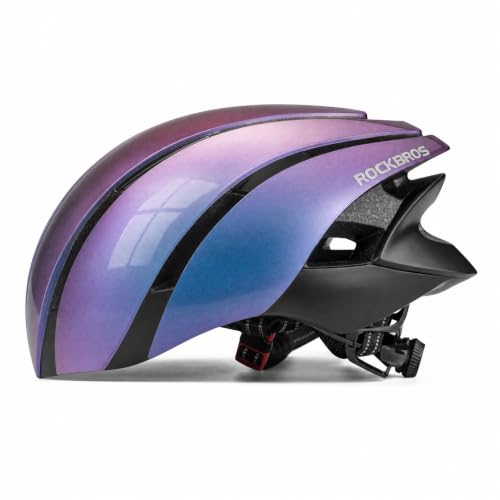
A rider who races, chases Strava segments, or rides fast flat group rides will get the most from an aero bike helmet such as the Specialized S-Works Evade 4, the Sweet Protection Tucker III 2Vi, or the Giro Eclipse Spherical Pro, while a casual or hill-loving rider is usually happier in a ventilated helmet like the Giro Aries Spherical or Specialized Prevail 3. Everyone should start from fit and certification, because an aero helmet that sits badly protects less and gains nothing.
Our top picks



As an Amazon Associate we earn from qualifying purchases at no extra cost to you.
Who actually benefits from an aero helmet
Aerodynamic drag grows quickly with speed, so the benefit of a smoother helmet is mostly at race pace. Reviewers measure it as watts saved against a baseline at 40 kilometers per hour. For a rider holding that speed for long stretches on the flat, a few watts can matter. For someone cruising at lower speeds or climbing, the saving is small and the lower airflow is felt more.
That is why the best guide for a general reader is a two-part decision: how fast do you ride, and how hot does your head get. Fast and cool-tolerant riders lean aero. Slower or hotter riders lean vented.
At a glance: aero and aero-leaning options
| Model | Best for | Reported or stated specs | Limits |
|---|---|---|---|
| Specialized S-Works Evade 4 | Fast riders who want improved cooling | Maker says drag matches the previous Evade with about 2.4 percent less heat build-up; claimed 290 grams (CE) or 330 grams (CPSC) in medium | Heavier than its predecessor |
| Sweet Protection Tucker III 2Vi | Riders who want a team-level aero shell | Maker claims about 10 watts saved over its Falconer Aero 2Vi at race speeds; 332 grams measured in medium by Cyclingnews | Aero claim not confirmed by that outlet; limited strap adjustment noted |
| Giro Eclipse Spherical Pro | Lighter aero-leaning option with MIPS Spherical | Maker claims 17 percent drag reduction over the Eclipse Spherical | Maker claim only; some cooling traded for speed |
| Kask Utopia Y | Comfort-first aero design | Cyclingnews: 6.37 watts saved, 264 grams in medium | No MIPS per BikeRadar; ranked 12th |
| Giro Aries Spherical | Vented all-rounder with strong safety scoring | 24 vents per GearJunkie; Virginia Tech score of 8.40 per Cyclingnews | Not aero optimized |
| Specialized S-Works Prevail 3 | Hot climbs | Bikerumor says it ventilates better than any helmet it has tested | Less secure on narrow heads according to one comparison |
Details come from the makers and from outlets including Cyclingnews, Bikerumor, BikeRadar, GearJunkie, and In The Know Cycling. Where outlets differ, this guide says so.
The aero shell, explained
Look at the shell and you can often tell what the designer wanted. Aero helmets have a smooth, elongated profile, shallow channels, and a tail that tapers to the back. Vented helmets have large open ports, internal air channels, and sometimes a shorter tail. Between the two sit hybrids that open up airflow while keeping a clean surface.
The Evade 4 is a hybrid. The maker says it reduced heat build-up without losing drag performance. The Giro Eclipse Spherical Pro leans further toward speed, and the standard Eclipse Spherical is a quiet, well-ventilated model that did not rank well for aero in one outlet’s tunnel, saving only 1.12 watts.
Safety and certification
All helmets sold for cycling must meet a regional standard, such as CPSC in the United States and CE/EN in Europe. Several of the models above add a rotational-impact system. The Giro helmets use MIPS Spherical, and Bikerumor calls the Aries Spherical the best-performing helmet ever tested at the Virginia Tech lab. Test scores from independent labs are one more input, but no score means a helmet is crash-proof. Always follow the maker’s manual and replace a helmet after a significant impact.
Fit and sizing
- Measure first. Use a soft tape just above the eyebrows and around the widest part of the head. Compare with the maker’s chart.
- Head shape matters. One comparison says the Prevail 3 suits wider heads and is less secure on narrow ones, while the Aries gets a stable fit. Shapes vary, so try before you commit if you can.
- Straps. The Y of the strap should sit just below each ear. Cyclingnews criticized limited strap adjustment around the ears on the Tucker III.
- Retention dial. Tighten until snug without a pressure point. A rear dial that is hard to reach is a real annoyance mid-ride.
- Eyewear. Confirm your frames fit under the shell and straps.
Care notes
- Clean pads with mild soap and water, and let them dry in the air.
- Store away from heat, such as a car in summer, because foam and shells can degrade.
- Replace after a crash or after the interval in the manual, and do not stick adhesives or paint on the shell unless the maker allows it.
Pick X if…
| If you… | Pick | Why |
|---|---|---|
| Race on the road and want a mainstream aero benchmark | Specialized S-Works Evade 4 | Maker says it keeps drag while improving cooling |
| Follow pro-team equipment | Sweet Protection Tucker III 2Vi | Used by a professional team; maker claims big drag savings |
| Want MIPS Spherical with aero tuning | Giro Eclipse Spherical Pro | Drag claim from the maker; lighter than the Tucker |
| Value padding and a comfy strap | Kask Utopia Y | Reviewers praise comfort |
| Ride hot or hilly routes | Giro Aries Spherical or Specialized Prevail 3 | High ventilation and strong lab scores |
| Ride mostly for fitness at moderate speeds | A mid-range vented helmet | The aero saving is small at low speed |
Budget tiers in plain terms
The helmets named here are premium. Mid-range road helmets from the same brands give a certified shell, rotational protection on many models, and decent ventilation. Budget helmets meet the same legal standard but lack refinement in fit and weight. Aero gains per unit of spend fall off quickly, so many buyers do better with a good-fitting mid-range helmet than a top-tier one that fits poorly.
Alternatives to consider
- Previous-generation models. Reviewers note that the older Evade 3 is often discounted and was a strong performer in tunnel tests.
- Vented all-rounders. The Aries and Prevail 3 are the commonly named picks for heat.
- Time trial helmets. For solo events only; they are not suitable for group riding.
Reading the test numbers sensibly
Watts-saved tables look precise, yet they hide context. A tunnel run uses a mannequin or rider in a set position and a fixed yaw angle, so a helmet that wins with the head down may lose when the rider looks up the road. Outlets also test different sizes, and shell size changes drag. Maker claims, such as a stated percentage reduction in drag, are produced by the maker’s own labs against its own earlier model, so they say little about how two competing brands compare. Independent rankings are more useful for comparison, but even those shift as newer models arrive; Cyclingnews, for instance, places the previous Evade in the top handful of its test while noting that the new one is cooler rather than faster.
The practical lesson is to treat a difference of one or two watts as a tie and to give more weight to fit, comfort, weight, and heat. A helmet that you wear every ride, because it is comfortable, will beat a theoretically faster one that stays in the closet.
Heat, noise, and daily use
Closed-front aero shells can run warm in summer, and several outlets describe airflow as the main trade-off. Some riders also notice more wind noise or a different feel in crosswinds, because a long tail catches air differently from a short vented shell. Weight matters too: the Tucker III at 332 grams and the Evade 4 at a claimed 290 to 330 grams in medium are heavier than the 264 gram Kask or the 266 gram Giro Eclipse Spherical, which can matter on long days. If your commute includes stops and starts, a vented helmet is often simpler to live with.
Frequently Asked Questions
Do I need an aero helmet for casual riding?
Probably not. The drag benefit appears at higher speeds, and a ventilated helmet is usually more comfortable on slow or hot rides.
How much can an aero helmet save?
Cyclingnews reports single-digit watts at 40 kilometers per hour for the better models, for example 6.37 watts for the Kask Utopia Y. Results differ by test and rider position.
Is the newest aero helmet always the best?
No. Cyclingnews notes that the Evade 4 is not faster than the Evade 3 but is cooler, and older models may be cheaper and nearly as fast.
Are aero helmets as safe as vented ones?
Every helmet sold legally meets a standard, and some add rotational protection. Safety scores vary between models, so compare independent test data, and see the manual for use guidelines.
What size should I choose?
Choose by head circumference, not by shirt size, and try different brands because shapes differ. The helmet should be snug and level without pressure points.
How long does a helmet last?
Many makers suggest replacing after several years of use and always after a crash. Follow the date and guidance in your helmet’s manual.



Write Your Review
No reviews yet. Be the first to share your experience!