

Key takeaways
- Compare the best motorcycle brake fluid for street and track riding, from everyday DOT 4 to high-boiling racing formulas that resist fade on track days.
- Top Pick: Castrol DOT 4 Brake Fluid 12509
- Runner-up: Motul RBF 600 Factory Line DOT 4
- Also consider: ATE Typ 200 DOT 4 Brake Fluid
Brake fluid is easy to overlook because it hides inside the reservoir, yet it decides how the brakes feel when they get hot. The fluid transfers lever force to the calipers, and its boiling point decides whether the brakes stay firm or go soft after repeated hard stops. Street riders need a fluid that resists moisture over long service intervals, while track riders need a high dry boiling point that survives repeated heat cycles. This guide compares five motorcycle brake fluids, from everyday DOT 4 to racing formulas, and explains how to choose the right one for your bike and your riding.
As an Amazon Associate, we earn from qualifying purchases.
Quick answer
For street riding, a quality DOT 4 fluid changed on schedule is the right choice. For track days and hard mountain riding, step up to a high-boiling DOT 4 racing fluid such as Motul RBF 600 or Castrol SRF. Never mix DOT 5 silicone fluid with glycol fluids, and always use the specification printed on the reservoir cap.
Castrol DOT 4 Brake Fluid 12509

A widely used DOT 4 fluid that exceeds DOT 3 and DOT 4 specifications. It suits everyday street bikes, works in hydraulic brake and clutch systems, and is easy to find for routine fluid changes.
The build and controls deserve a closer look. Castrol DOT 4 Brake Fluid 12509 is put together for regular use rather than occasional display, with materials and fittings chosen to hold up under the conditions it will actually face. The controls are straightforward, the parts that move do so smoothly, and the overall feel is of a tool that was designed by people who use the category themselves.
What stands out:
- A design that suits everyday use, with controls and fittings that feel made for the job rather than added as an afterthought.
- Solid construction that holds up under regular use in real conditions, whether that means weather, vibration, or daily handling.
- A straightforward setup that most owners can complete without special tools or professional help.
Taken together, Castrol DOT 4 Brake Fluid 12509 earns its place in this guide through a solid blend of features, build, and ease of use. It is not the right pick for every situation, but for the use it is designed for, it does the job well and asks little in return.
Motul RBF 600 Factory Line DOT 4

A full-synthetic racing DOT 4 fluid with a very high dry boiling point. It resists vapor lock under repeated hard braking, which makes it a favorite for track days and aggressive mountain riding.
Look closely at how Motul RBF 600 Factory Line DOT 4 is built and the design choices make sense. The materials suit the job, the moving parts feel solid, and the controls fall where a user would expect them. It is the kind of product that rewards a careful first setup with steady, predictable performance afterwards.
What stands out:
- A design that suits everyday use, with controls and fittings that feel made for the job rather than added as an afterthought.
- Solid construction that holds up under regular use in real conditions, whether that means weather, vibration, or daily handling.
- A straightforward setup that most owners can complete without special tools or professional help.
In short, Motul RBF 600 Factory Line DOT 4 is a dependable choice for the job it is built for. It balances features and usability in a way that suits most buyers, and it holds up well against the other picks in this guide.
ATE Typ 200 DOT 4 Brake Fluid
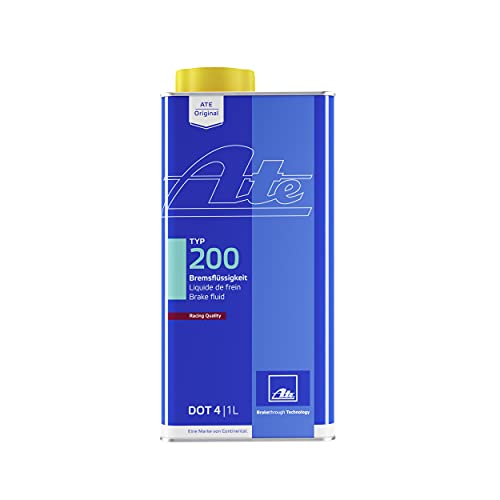
A racing-quality DOT 4 fluid known for a high boiling point and stable performance. It suits riders who want track-grade heat resistance without moving to a more exotic formula.
What sets ATE Typ 200 DOT 4 Brake Fluid apart in daily use is how little fuss it creates. Setup is quick, the controls are easy to learn, and the product settles into a routine without demanding attention. That ease of use matters more than any single feature, because a product that is simple to use gets used properly and on time.
What stands out:
- A design that suits everyday use, with controls and fittings that feel made for the job rather than added as an afterthought.
- Solid construction that holds up under regular use in real conditions, whether that means weather, vibration, or daily handling.
- A straightforward setup that most owners can complete without special tools or professional help.
Overall, ATE Typ 200 DOT 4 Brake Fluid delivers what it promises without unnecessary complication. It fits the needs of most buyers in this category and stands up well in direct comparison with the alternatives.
Motul DOT 5.1 Brake Fluid

A DOT 5.1 fluid that meets DOT 3, DOT 4, and DOT 5.1 specifications. Its low viscosity suits bikes with ABS, and it gives a firm lever feel in cold weather as well as in heat.
The build and controls deserve a closer look. Motul DOT 5.1 Brake Fluid is put together for regular use rather than occasional display, with materials and fittings chosen to hold up under the conditions it will actually face. The controls are straightforward, the parts that move do so smoothly, and the overall feel is of a tool that was designed by people who use the category themselves.
What stands out:
- A design that suits everyday use, with controls and fittings that feel made for the job rather than added as an afterthought.
- Solid construction that holds up under regular use in real conditions, whether that means weather, vibration, or daily handling.
- A straightforward setup that most owners can complete without special tools or professional help.
Taken together, Motul DOT 5.1 Brake Fluid earns its place in this guide through a solid blend of features, build, and ease of use. It is not the right pick for every situation, but for the use it is designed for, it does the job well and asks little in return.
Castrol SRF Racing Brake Fluid

A racing brake fluid with an exceptionally high boiling point, long trusted in motorsport. It suits serious track riders who need the widest safety margin against brake fade.
Look closely at how Castrol SRF Racing Brake Fluid is built and the design choices make sense. The materials suit the job, the moving parts feel solid, and the controls fall where a user would expect them. It is the kind of product that rewards a careful first setup with steady, predictable performance afterwards.
What stands out:
- A design that suits everyday use, with controls and fittings that feel made for the job rather than added as an afterthought.
- Solid construction that holds up under regular use in real conditions, whether that means weather, vibration, or daily handling.
- A straightforward setup that most owners can complete without special tools or professional help.
In short, Castrol SRF Racing Brake Fluid is a dependable choice for the job it is built for. It balances features and usability in a way that suits most buyers, and it holds up well against the other picks in this guide.
How to choose
Choosing well comes down to matching the product to the job, the space, and the way it will be used. The points below cover the decisions that matter most, and they apply to every product in this guide.
Follow the reservoir cap
The cap or owner’s manual states the required specification, usually DOT 4 or DOT 5.1. Using the wrong specification can damage seals and change braking feel.
Understand boiling points
Dry boiling point applies to fresh fluid, while wet boiling point applies after the fluid has absorbed moisture. Both matter, since glycol fluid absorbs water over time.
Never mix DOT 5 with glycol fluid
DOT 5 is silicone-based and does not mix with DOT 3, DOT 4, or DOT 5.1 glycol fluids. Mixing them can cause seal damage and brake failure, so keep the types separate.
Change fluid on schedule
Glycol brake fluid absorbs moisture from the air, which lowers its boiling point. Most makers suggest changing it every one to two years, or before a track season.
Check ABS compatibility
Some ABS systems prefer low-viscosity DOT 5.1 fluid for faster valve response. Check the manual before switching, since the wrong viscosity can change ABS behavior.
Who should skip
Skip racing fluid if you ride a commuter bike gently and change fluid on schedule, since standard DOT 4 already covers that use and costs less. Skip any fluid that has been open for months, because it absorbs moisture from the air and loses performance. Never use old fluid from an unsealed bottle, and never top up with a different specification than the bike requires.
FAQ
How often should motorcycle brake fluid be changed?
Most makers suggest every one to two years, or sooner if the fluid looks dark or the lever feels soft. Track riders often change fluid before each event for the best boiling-point margin.
Can I mix DOT 4 and DOT 5.1 brake fluid?
Yes, DOT 4 and DOT 5.1 are both glycol-based and can be mixed, though mixing lowers the performance to the weaker fluid. DOT 5 silicone fluid must never be mixed with either one.
Why does my brake lever feel spongy?
A spongy lever usually means air in the lines or old fluid with a low boiling point. Bleed the brakes with fresh fluid of the correct specification and check for leaks at the calipers and master cylinder.
Is racing brake fluid better for street riding?
Racing fluid offers a higher boiling point, but it absorbs moisture faster and needs more frequent changes. For most street riders, a quality DOT 4 changed on schedule gives better long-term value.
Final verdict
For street riding, Castrol DOT 4 changed on schedule is the sensible pick. For track days and hard riding, Motul RBF 600 gives the best blend of boiling-point margin and availability, while Castrol SRF suits riders who want the highest margin available. Match the fluid to the specification on the cap, change it on time, and the brakes will stay firm when it matters.
More from Amazon
Programs that pair well with the guide above. Offers and eligibility are set by Amazon and may change.
Free shipping on eligible items, Prime Video and more. Eligible new members can start with a free trial.
Start a Prime free trialA Prime membership for ages 18-24 with a trial period. Eligibility is set by Amazon.
See Prime for Young AdultsAudiobooks and podcasts to listen to on the go. Eligible new members can start with a free trial.
Try Audible freeAd-free music streaming. Eligible new subscribers can start with a free trial.
Try Music Unlimited freeAs an Amazon Associate we earn from qualifying purchases.




Write Your Review
No reviews yet. Be the first to share your experience!