

Key takeaways
- Learn how to choose a motorcycle kidney belt for long rides, with fit, support, ventilation and sizing guidance plus five verified belts for back comfort.
- Top Pick: EVS Sports Celtek BB1 Kidney Belt
- Runner-up: AVESTON Back Support Lower Back Brace
- Also consider: Sparthos Back Support Belt
A motorcycle kidney belt is a wide support belt worn around the lower torso and lower back. On long rides it serves two comfort jobs at once: it adds steady compression and support around the midsection so the lower back feels more stable hour after hour, and it adds a layer of coverage and warmth across the kidney area against wind and road vibration. Riders wear them on touring bikes, cruisers, dual sports, and off-road machines, over a base layer and under or over a riding jacket.
Choosing well matters more than choosing the priciest option. Belts differ in support style, from molded back panels and reinforced stays to simple elastic compression wraps, and the best match depends on riding position, ride length, climate, and what other gear the belt must fit with. This guide explains how to choose a motorcycle kidney belt for long rides, then walks through five verified belts covering the main styles, from molded motorcycle designs to slim lumbar supports worn under a jacket.
As an Amazon Associate, we earn from qualifying purchases.
Quick answer
For long rides, choose a motorcycle kidney belt that fits snugly at belly level, supports the lower back without restricting breathing, and suits your riding style. Molded panel belts suit off-road and mixed riding, while slim stay-reinforced or elastic lumbar belts suit road touring under a jacket. Measure around the belly, not by pant size, before ordering.
EVS Sports Celtek BB1 Kidney Belt

The EVS Sports Celtek BB1 Kidney Belt is the motorcycle-specific design in this group, built by a protective gear brand for riding rather than general wear. Its molded thermoplastic rubber back panels give the lower back a structured, supportive feel, while channeled hex foam is used to keep air moving across the back instead of trapping heat. A reinforced lower spine panel and a perforated bio-foam core balance that structure with enough flex for reaching the bars and shifting body position on the bike.
Fit adjustment comes from a dual pull hook and loop system with grip waist strap adjusters, so compression can be set evenly from both sides and fine-tuned at a fuel stop without removing gloves for long. The low profile construction is made to sit under riding gear, and the elastic used for compression is described by the maker as medical grade elastic, used here simply as a material quality note. Sizing runs by waist range across several sizes, and the belt is light for a paneled design. Riders who want a belt designed first for motorcycles, with real back panel structure and ventilation as priorities, will find this the most purpose-built option here.
AVESTON Back Support Lower Back Brace

The AVESTON Back Support Lower Back Brace represents the slim orthopedic style of support that many road riders adopt as a kidney belt alternative. AVESTON sells this belt line alongside a dedicated kidney belt listing for motorcycle riding and motocross, and the shared design language is clear: a thin, breathable belt with six reinforced plastic stays positioned around the back and sides, triple adjustable compression straps, and a low profile that fits under a riding jacket without visible bulk.
The support feel is firmer and more structured than a plain elastic wrap, because the stays and stiff orthopedic material hold the belt’s shape around the lumbar area while still flexing as the rider leans and turns. Sizing is by belly circumference measured at navel level, and the maker is explicit that pant size is the wrong guide, which matches the sizing advice given later in this guide. The belt is worn over a base layer, fastens with strong hook and loop closures, and stays flat enough for seated touring positions. Riders who spend long highway hours in an upright or slightly leaned posture, and who want firm support in the slimmest possible package, are the natural audience for this style.
Heavy-Tuned Motorcycle Kidney Belt
The Heavy-Tuned Motorcycle Kidney Belt is the traditional stretch kidney warmer style, handmade as a lightweight elastic belt for men and women who ride motorcycles and motocross. Where the paneled and stay-based belts add structure, this design keeps things simple: a wide stretch band that wraps the lower torso, holds warmth around the midsection, and adds gentle, even compression and support across the lower back on cool starts, evening rides, and shoulder-season touring.
That simplicity brings practical advantages. There are no panels to align, no stays to position, and nothing rigid to dig in when seated for long stretches, which makes this style easy to wear over a base layer for a full day and easy to pack in a tank bag or saddlebag when it is not needed. Size choices span grouped ranges from small and medium through larger sizes, in black and other colors. The support level is the lightest in this group, so riders wanting firm structure should look at the stay or panel designs instead. For riders whose main long-ride complaints are wind chill across the lower back and a general wish for light support and coverage, this classic belt format covers the brief at minimal bulk and complexity.
Sparthos Back Support Belt
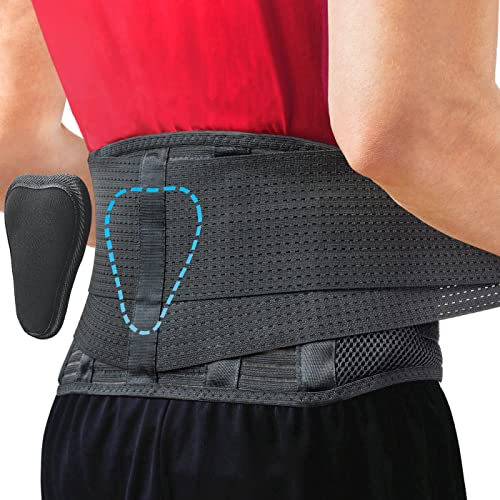
The Sparthos Back Support Belt is a breathable mesh lumbar belt that road riders commonly wear under gear as a kidney belt substitute when all-day seated comfort is the priority. Its defining feature is a removable lumbar pad that can be positioned where the rider wants extra support against the lower back, or taken out entirely for a flatter profile under a close-fitting jacket. Adjustable support straps layer over the main wrap, so the base fit and the final compression can be set separately.
The mesh construction is the hot-weather argument for this belt: air moves through the body of the belt far better than through solid neoprene wraps, which matters on summer touring days when a support belt can otherwise become the warmest layer in the kit. Sizing is by waist measured at navel level across a wide range of sizes, and the belt is made in versions for both men and women. Support sits in the middle of this group, firmer than a stretch warmer and softer than a stay-based brace. Riders who run hot, ride long summer miles, and like the idea of an adjustable lumbar pad will find this the most adaptable comfort-focused option here.
Mueller Lumbar Back Brace with Removable Pad

The Mueller Lumbar Back Brace with Removable Pad is the established sports medicine option in the group, from a brand long associated with athletic supports. It uses a double layer wraparound design: the inner wrap sets the fit around the torso, and the outer layer adds the final compression, which makes the support feel even and secure without a single hard pull. Four steel springs in the back panel add structure, and a removable lumbar pad provides focused support at the center of the lower back when wanted.
For motorcycle use, the appeal is dependable, moderate-to-firm support in a belt that fastens flat, layers under most touring jackets, and adjusts across a broad waist range in its regular size, with a separate plus size version also offered. The breathable fabric and washable construction suit regular seasonal use. It offers no impact panels and no motorcycle-specific shaping, so off-road riders should weigh the EVS design more heavily. For road riders who want a proven, structured lumbar belt from a mainstream support brand, and who value the removable pad for dialing in seated comfort, this is a sound long-ride choice.
How to choose
Start with riding style, because it decides the support type. Off-road and dual sport riders who stand, shift weight, and absorb rough surfaces generally do better with a motorcycle-specific paneled belt that stays structured while moving. Road and touring riders who sit for hours usually do better with a slimmer stay-based, pad-based, or elastic belt that supports the lower back without pressing into the seat or the jacket’s waist.
Next, get sizing right. Measure around the belly at navel level with a soft tape, in riding clothes if the belt will sit over a base layer, and order by that measurement rather than by pant size, which routinely misleads. A correct fit feels snug and supportive while still allowing full, easy breathing and a natural reach to the bars. If the belt rides up, rolls at the edges, or needs constant re-tightening, the size or the style is wrong.
Then weigh ventilation and layering. Hot climates and summer tours favor mesh bodies, channeled foam, and perforations, while cool-weather riders may prefer a warmer stretch belt that also blocks wind across the lower back. Check how the belt sits with the actual jacket, pants, and any back protector already in the kit, since stacked waistbands and overlapping armor are the most common source of discomfort. Finally, favor simple, glove-friendly closures adjustable at a stop without removing half the riding kit.
Who should skip
Skip a kidney belt if short local rides are the whole of your riding and lower back comfort has never been an issue, since the benefit grows with hours in the saddle. Skip the firm stay-based and paneled styles if a very soft, flexible feel is the priority, and skip the light stretch warmers if firm structured support is the goal. Anyone managing an ongoing back condition should treat a belt as riding comfort gear only and follow professional guidance about support wear rather than relying on any belt as a solution.
Frequently asked questions
How tight should a motorcycle kidney belt be?
Snug enough to stay in place and feel supportive around the lower back and abdomen, while still allowing full breathing, easy bending, and a comfortable reach to the handlebars. If it leaves deep marks, restricts breathing, or needs loosening at every stop, it is too tight or the wrong size.
Should a kidney belt be worn over or under a jacket?
Either arrangement works, and the better choice depends on the belt and the weather. Slim belts usually disappear under a jacket for a clean fit and wind protection, while paneled belts are often worn over a base layer or jersey off-road. What matters is that waistbands and armor do not stack into a pressure point.
How is a kidney belt sized?
By belly circumference at navel level, measured with a soft tape while standing naturally. Belt makers repeatedly warn against using pant size, which can differ by several inches from true belly measurement. When a measurement falls between sizes, follow the maker’s chart for that model rather than guessing.
Can a kidney belt be worn on every ride?
Yes, for comfort and support on longer rides many riders wear one routinely, and lighter styles pack small enough to carry just in case. It is sensible to vary use, keep the belt clean and dry between rides, and stop using any belt that causes persistent discomfort rather than pushing through it.
Final verdict
For long rides, the best motorcycle kidney belt is the one matched to riding style and sized by belly measurement, not by habit. The EVS Celtek BB1 is the purpose-built motorcycle choice with molded panels and ventilation, the AVESTON and Mueller belts bring firm, structured lumbar support in slimmer forms, the Sparthos adds breathable mesh with a positionable pad for hot weather, and the Heavy-Tuned covers the classic light stretch warmer role. Choose the support level honestly, confirm the fit with your jacket on, and the belt becomes invisible until the miles where it matters.
More from Amazon
Programs that pair well with the guide above. Offers and eligibility are set by Amazon and may change.
Free shipping on eligible items, Prime Video and more. Eligible new members can start with a free trial.
Start a Prime free trialA Prime membership for ages 18-24 with a trial period. Eligibility is set by Amazon.
See Prime for Young AdultsAudiobooks and podcasts to listen to on the go. Eligible new members can start with a free trial.
Try Audible freeAd-free music streaming. Eligible new subscribers can start with a free trial.
Try Music Unlimited freeAs an Amazon Associate we earn from qualifying purchases.



Write Your Review
No reviews yet. Be the first to share your experience!